On ‘fowl’ days look for frenzied aerial action
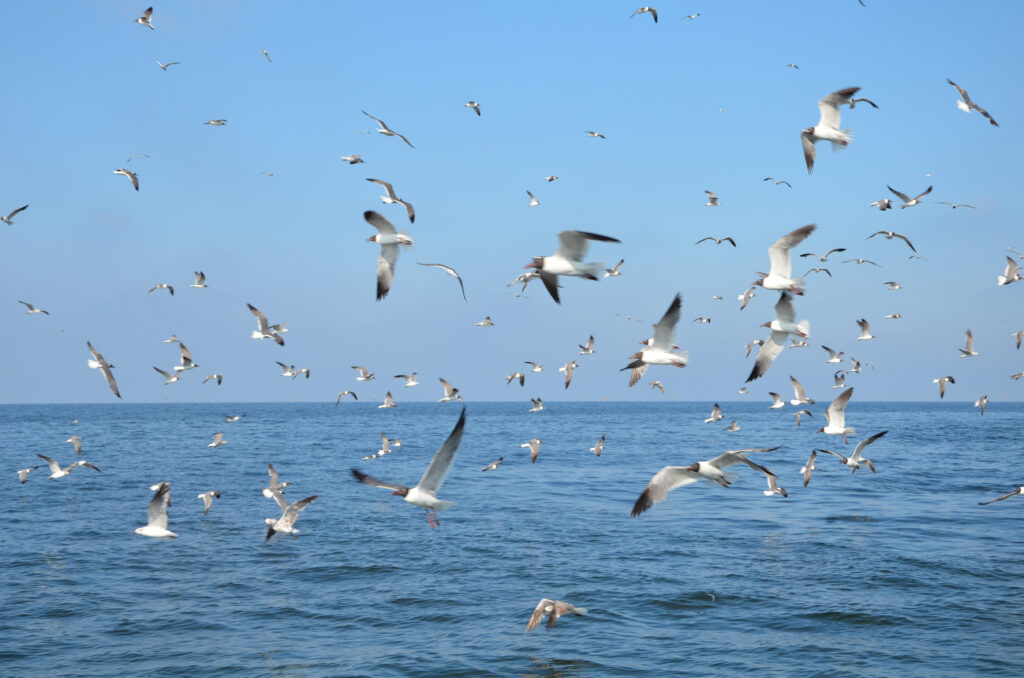
Photo by John N. Felsher
Like a scene from a classic Alfred Hitchcock movie, hundreds of agitated and loudly squawking birds hovered just above the water or dove into it. Beneath the feathered fracas, the surface churned frothy white
with activity.
“Watching birds is a good way to find speckled trout,” says Bobby Abruscato with A-Team Fishing Adventures in Mobile. “In the right spot, it gets insane. People can catch a limit quickly because the fish are in a feeding frenzy.”
Predators herd terrified baitfish and shrimp to the surface where they run out of escape room. From the air, sharp-eyed birds instantly spot any activity and pounce to get their share of protein. At any time along the Alabama coast, anglers might spot diving birds marking a feathered feeding frenzy. Besides speckled trout, anglers might catch redfish, white trout, Spanish mackerel, bluefish and other predatory species.
As quickly as a melee erupts, it could suddenly cease. After an attack, surviving prey species don’t necessarily leave the area. Baitfish scatter, but try to regroup. They find individual safety only in numbers. As long as food stays, predatory fish remain and try to herd the bait back to the surface where vigilant birds watch for renewed activity.
Not every diving bird indicates schooling activity. One bird might dive after a single fish, a dead fish on the surface or even a floating cracker. Terns dive frequently, but habitually go after smaller prey than seagulls, such as tiny shrimp or minnows. Pelicans often go after bigger prey.
“By looking at the bird species, we can usually tell if they are over trout,” Abruscato says. “The laughing gulls really give it away. People can see and hear them from long distances. When they start that laughter, anglers need to pay attention because something is happening.”
‘Read the birds’
Anglers also need to “read” the birds. Seagulls sitting on the water could indicate prey in the area, but they wait for activity to flare up again. One or two diving birds might not mean much, but excited and noisy birds hovering low over the surface probably indicate a feeding fish school.
“I watch for several birds hovering over the water,” Abruscato says. “They get right over the surface waiting for shrimp or baitfish to jump so they can get them. We might see 10 or 20 birds hovering low over the water. Then, suddenly, a couple of them dive. That’s when they see the shrimp or baitfish coming up.”
Nothing shuts down a feeding frenzy faster than a whirring boat propeller. After spotting hot activity, never run full throttle into the fray. Instead, try to determine where the school heads and cut them off. If possible, get upwind. Let the breeze quietly blow the boat toward the school. Run a trolling motor only sparingly for directional control.
“The worst thing anyone can do is run right into the middle of the school with the engine running and start casting,” Abruscato cautions. “The fish will just disappear. Come in from upwind and drift into the fish. Make long casts. Doing it the right way can turn a frenzy into a limit instead of just a couple fish or nothing.”
Frenzied trout might attack anything hitting the water. Many anglers use popping-cork rigs. They bait them with live shrimp, soft-plastic shrimp or minnow imitations. Floating lures can provoke incredibly exciting strikes.
“I prefer to throw a popping-cork rig,” Abruscato says. “The cork sounds like a fish striking the surface when it hits the water. I’ll fish a Gulp! or a Vudu Shrimp about two to three feet under the cork. If we miss a trout or a fish gets off, just leave the bait in the water. Another fish will probably hit it. I use a 7.5-foot rod with braided line so I can make really long casts to get to those schools.”
Schooling trout typically run on the small side, but larger trout and redfish could lurk just beneath the feeding school. Bigger trout and reds don’t want to eat shrimp or small fish. They want to snatch smaller trout. To target bigger fish, use larger baits that sink beneath the school of smaller trout.
Few people leave the dock planning to chase birds all day, but spotting diving feathered fury could put a limit of fish in the boat quickly if anglers can get to the right spot in time!
To book a trip with Abruscato, call 251-661-7696 or visit ateamfishing.com.
John N. Felsher is a professional freelance writer who lives in Semmes, Ala. He also hosts an outdoors tips show for WAVH FM Talk 106.5 radio station in Mobile, Ala. Contact him at j.felsher@hotmail.com or through Facebook.