Take in some of the most beautiful views our state has to offer
By Amber Lanier Nagle
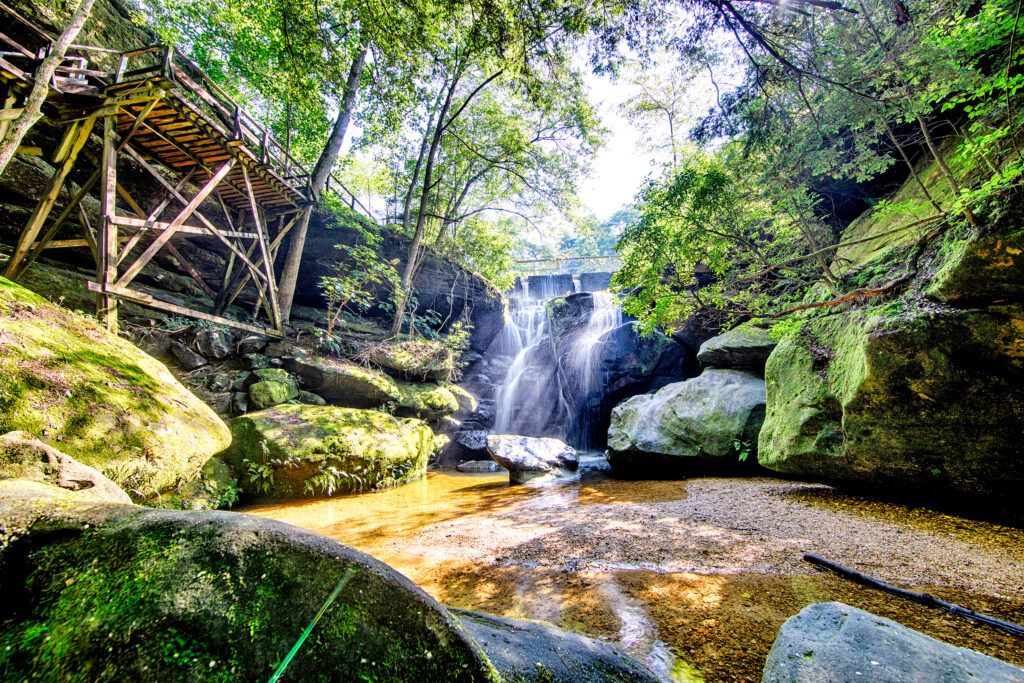
From the sweeping vistas and rim-hugging trails of Little River Canyon National Preserve, to the glowing creatures living in Dismals Canyon, to the behind-the-falls view at Cane Creek Canyon Nature Preserve, northern Alabama is home to three canyons that captivate adventure seekers, nature lovers and restless souls alike.
Canyons and gorges refer to deep valleys with sheer sides that are formed by erosion, geological uplift and melting glaciers. The terms are used interchangeably, though gorges are typically steeper and narrower
than canyons.
Geology aside, these three natural destinations offer heaps of outdoor adventures, history and some of the most breathtaking views in the Southeast. Prepare to
be mesmerized!
Cane Creek Canyon Nature Preserve
Tuscumbia
Where water meets stone over millions of years, nature sculpts some of its most spectacular masterpieces. For eons, Cane Creek relentlessly cut through the sandstone and shale layers of the Little Mountain region, shaping a canyon with a dramatic 350-foot elevation drop. Over time, the creek’s erosive power created near-vertical walls and 15 — sometimes more, depending on rainfall — picturesque waterfalls.
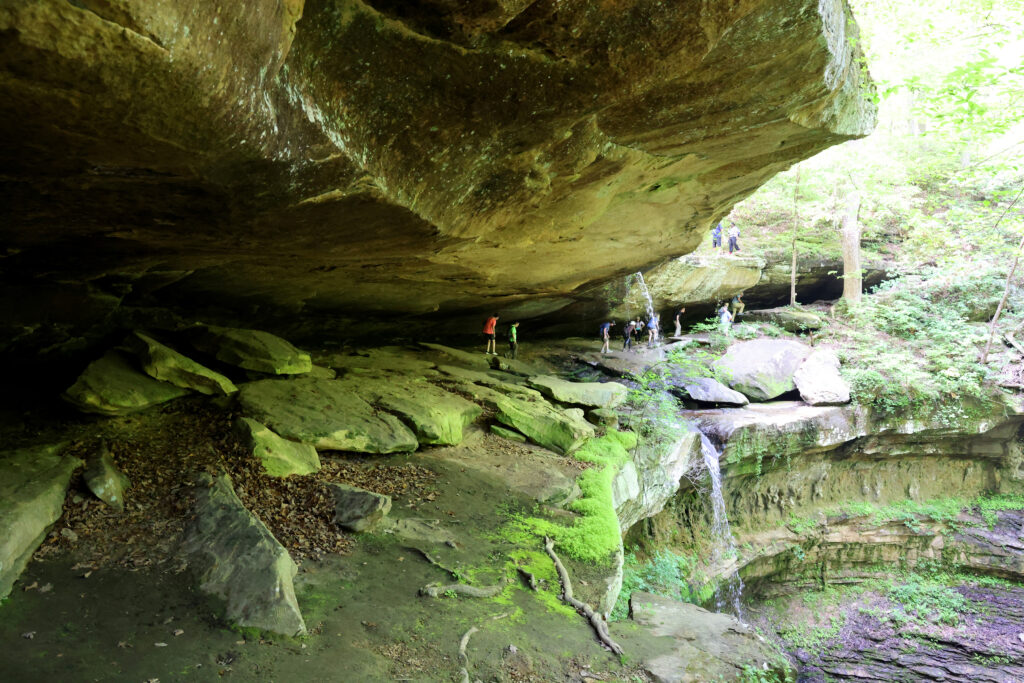
Today, the 693-acre preserve stands as a testament to both geologic forces and human stewardship. Jim and Faye Lacefield purchased an initial 40 acres in 1979 and gradually expanded the property, creating hiking trails throughout these canyonlands. In 2023, they donated their life’s work to the Land Trust of North Alabama, ensuring permanent protection of this ecological treasure hidden in a remote region of the state.
“And because of its secluded nature, the property was once used by bootleggers,” says Abigail Harrison, marketing director of the Land Trust of North Alabama.
During and after Prohibition, uninvited visitors would not have been welcome here. Today, the canyon invites outdoor enthusiasts to explore more than 25 miles of marked hiking trails — both easy and strenuous — each weekend.
“We are one of the only sites in Alabama with French’s Shooting Star,” says Harrison. “Primula frenchii is a rare, protected wildflower that blooms in the spring and grows under the sandstone shelters here. We also have dismalites and occasionally host night hikes to see those.”
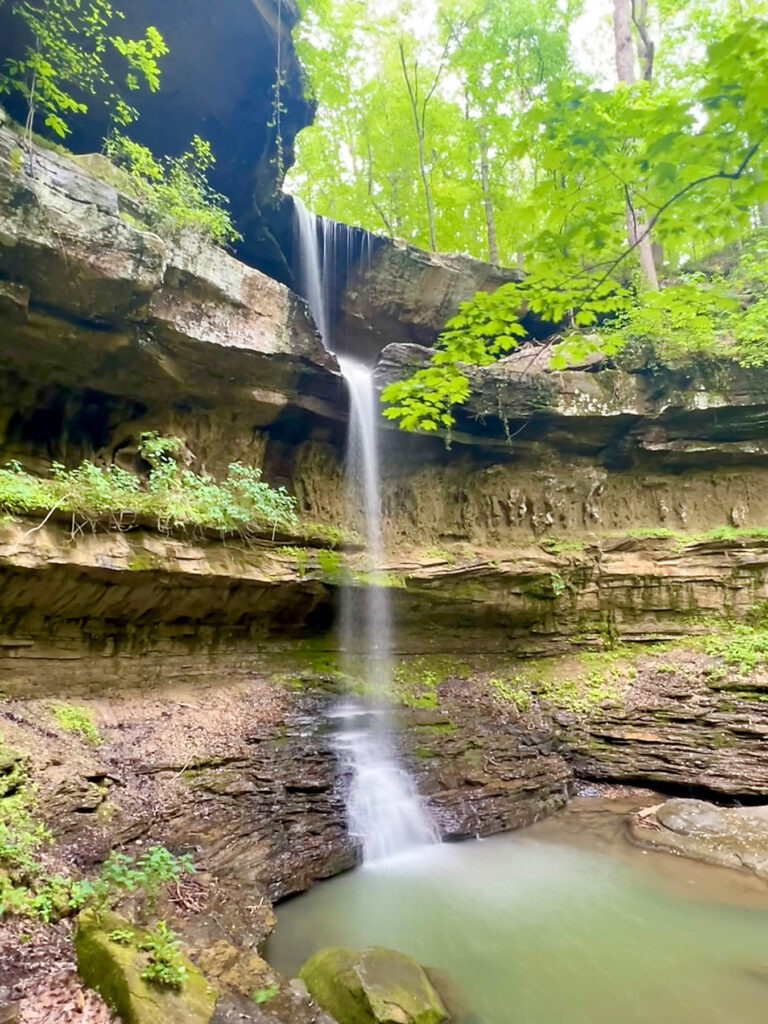
The visitor support station at the entrance stocks maps of the preserve. Harrison suggests the short but scenic hike to Lacefield Falls, with water plunging 60 feet into a bouldery pool. “For more experienced hikers, a seven-mile loop winds by the falls, then to an overlook dubbed Lacefield Point, then down into the canyon and over to Karen’s Falls,” she adds.
Learn more: landtrustal.org
Dismals Canyon
Phil Campbell
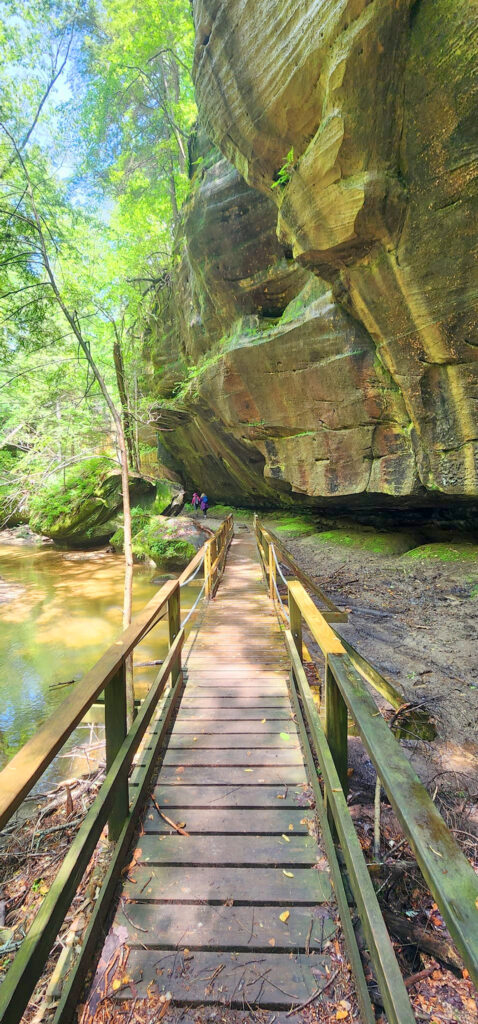
Dismals Canyon is privately owned — a nature conservancy that earned the designation of National Natural Landmark in 1975 — and Kevin Cheek, its chief operating officer, calls it “the only natural arboretum in North America.” Tucked into the northwest corner of the state, 85 acres of ancient forestland descend 80 feet into shadow and stone.
Three hundred million years ago, this was a primeval swamp, lifted skyward by tectonic shifts, and later carved by water into a labyrinth of sandstone grottoes, waterfalls and natural bridges.
Amid moss-covered boulders, wanderers relish the rich diversity of native plant life here, including a stand of old-growth virgin timber of hemlock, tulip poplar, sweetgum, bigleaf magnolia, and beech. But the real rock stars of Dismals don’t come out until after dark. Deep in the gorge, in places like the Witches Cavern, tiny bioluminescent creatures called dismalites emit a blue-green glow.
“They are cousins to the rare glowworms found in Australia and New Zealand,” says Cheek. “They require precise conditions — humidity, darkness, stillness and surfaces for their webs — and Dismals has it all. When they gather on the vertical rock walls, there are so many that they look like constellations of stars.”
Reservations for small, guided night tours to see these spectacles are only available by phone starting on the Sunday before each tour. By day, visitors arrive from across the world to walk the mile-and-a-half loop trail that takes two hours because the beauty of the gorge is so linger-worthy — a “perfect setting for forest therapy,” according to Cheek. The gorge floor typically runs 10 degrees cooler than the surface, which is another welcome surprise for
summertime adventurers.
After their descent into paradise, visitors stop in at the old-fashioned soda fountain for a taste of nostalgia before leaving. And one final note for this year’s travelers: Dismals cabins are closed for renovations this year, but there are plenty of lodging opportunities within 30 minutes of the park.
Learn more: northalabama.org
Little River Canyon National Preserve
Fort Payne
Perched at the southern edge of the Cumberland Plateau, Little River Canyon National Preserve cuts more than 600 feet into the flat top of Lookout Mountain, making it the deepest canyon system in Alabama.
“The Appalachian Mountains are part of the oldest range in the history of the world,” explains Christian Braswell, a science educator at Jacksonville State University Field School, a partner of the National Park Service. “It was here that tectonic plates buckled and rose over 400 million years ago, long before the dinosaurs. The Little River, flowing atop the eroded mountaintop plateau, has spent hundreds of thousands of years sculpting this remarkable gorge — and continues its work today.”
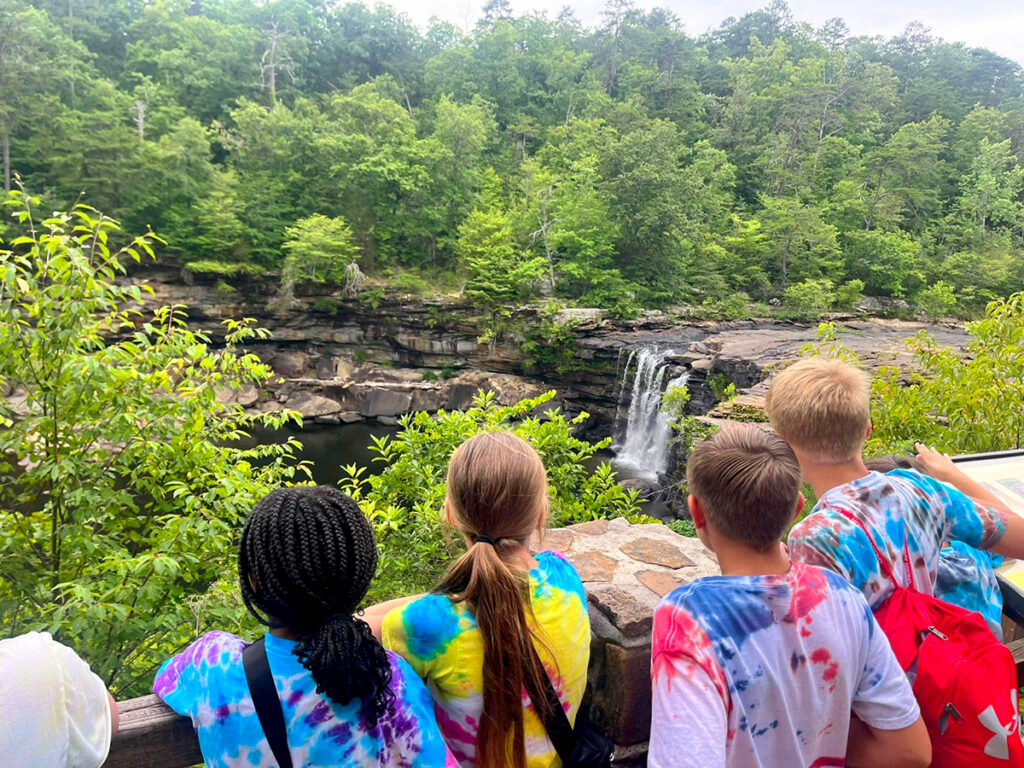
Photo Courtesy JSU Field School
The canyon’s ecosystems support remarkable biodiversity. The green pitcher plant, a carnivorous wonder on the endangered species list, produces nectar that lures insects into its tubular leaves, where they are digested by enzymes. Tiny blue shiners swim in what Braswell calls “some of the purest water in the state.” Green salamanders inhabit the cracks in the canyon walls.
Fossilized imprints of ancient plants appear in the sandstone, evidence of the forests that existed here before humans walked the earth. As for more recent history, the canyon witnessed more than 1,100 Cherokee and Muscogee people cross Little River (near the present-day Highway 35 bridge) in 1838, during the forced Indian removal, also known as the Trail
of Tears.
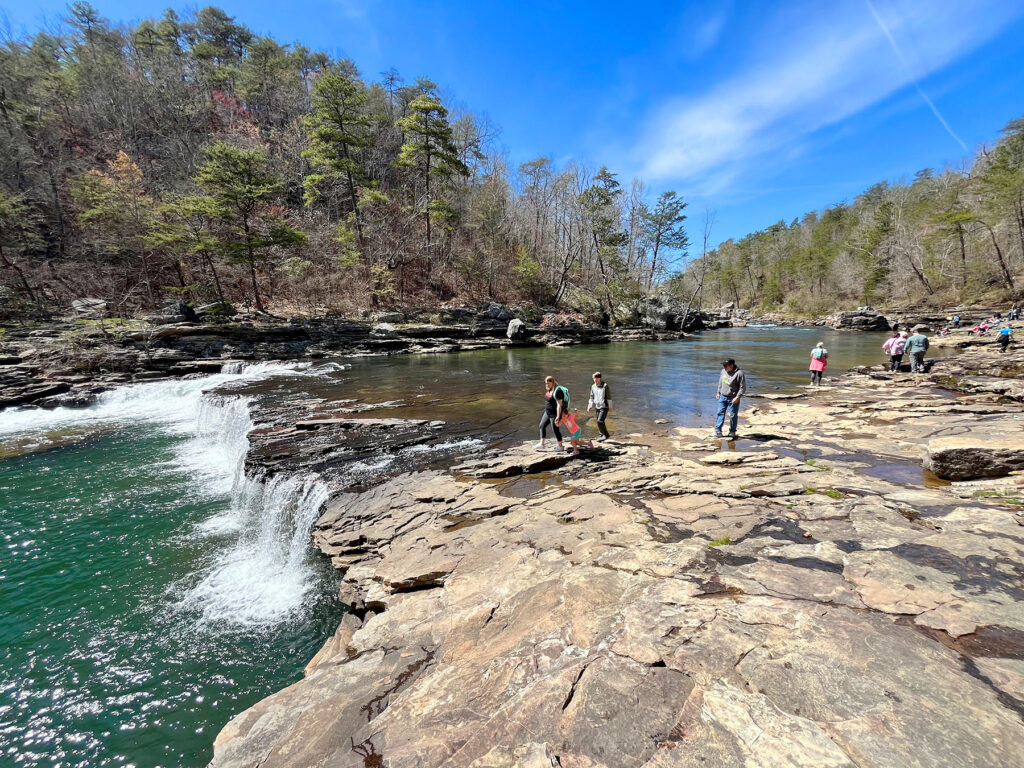
Within the preserve, there are numerous hiking trails, rock-climbing and rappelling opportunities and even a blue hole for swimming. The eleven-mile drive along the Little River Canyon Rim Parkway (Highway 176) offers eight scenic overlooks where visitors can pull over, eat a snack, watch waterfalls tumble over the rocks, and witness eagles and hawks ride the thermals — and all while standing at the edge of something larger than themselves.
Whether seeking a challenging hike, a peaceful retreat or simply a chance to ponder geological heritage, northern Alabama’s canyonlands offer unforgettable experiences for travelers of all ages.
Learn more: northalabama.org