Practically everyone carries a camera nowadays. Even into the bathroom! Cameras on high-end smart phones can take amazing photos, but some photographers want to do better than that.
An award-winning photographer from Tuskegee, Tes Jolly and her husband Ron with Jolly’s Outdoor Visions travel the country shooting photos and videos. Ron filmed hunting videos for Primos Game Calls among other things. Besides photography, they raise money for wild turkey conservation through Turkeys For Tomorrow (turkeysfortomorrow.org).
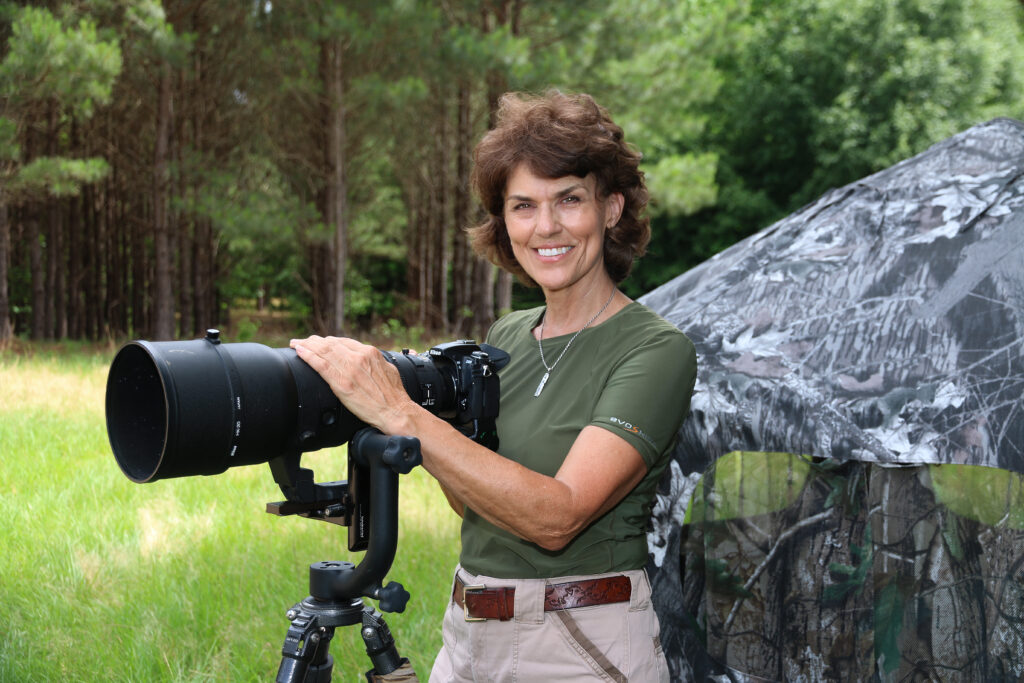
“The technology today is so advanced that anybody who wants to take the time to learn their equipment can take terrific photos,” Tes says. “Now, it’s better, smaller and lighter. People don’t need to spend thousands of dollars to get into photography. I still use my cell phone camera for many things.”
To start getting into wildlife photography, Tes recommends getting “a point-and-shoot bridge camera.” Bridge cameras are versatile digital cameras that “bridge” the gap between simple point-and-shoots and advanced DSLRs or mirrorless cameras. With such a camera, people just need to point it at their subject and press the button. The camera does the rest.
“People could get a very advanced point-and-shoot camera for about $1,000,” Tes says. “These ‘bridge cameras’ have many features. One good thing, people don’t need to swap lenses. These cameras come with a fixed lens that shoots from wide angle to telephoto. They are easy to carry and make super
starter cameras.”
As people become more skilled, they might want to upgrade to better quality equipment and accessories. Buy an upper end camera body with several detachable lenses. A lens that goes from 18 mm to 300 mm can suffice for most photography situations. Nikon, Canon and Sony make the best quality cameras. A Nikon 18-300 mm zoom lens costs about $600.
“The lens is the critical part of a camera,” Tes says. “Get lenses with the best quality glass possible. Something that goes from wide to telephoto is a good starter lens. People can do just about anything they want with it. Photographers can get good deals on slightly used equipment from B&H Photo Video (bhphotovideo.com) in New York. I have purchased several items from them.”
With good equipment in hand, practice, practice, practice. The best thing about digital photography, photographers don’t need to buy film or pay to develop it. Keep shooting photos multiple times of each subject and simply delete the bad images.
“If people really want to get into wildlife photography, find someone who does a great job and get on their social media or webpage,” Tes says. “People can learn a lot from such people. I recommend Steve Perry with Backcountry Gallery (backcountrygallery.com). I’ve learned a lot from him.”
Even with high-tech equipment, people must still practice their wilderness skills to take fantastic photos. Learn as much as possible about the subject. For instance, to take photos of white-tailed deer, learn its habits and habitats. Get as close as possible without disturbing the subject. Go to places like preserves
and parks.
“Go places where people can encounter wildlife,” Tes says. “A lot of great photos come off public lands where animals get slightly habituated to people. Good places include parks and campgrounds. Above all, respect wildlife. Don’t make an animal do something or scare it just to get a photo. Do not stress the animal or the subject. Get that photo, but don’t disturb the animal. That takes patience.”
Fortunately, Alabama photographers can visit many public places all year long where animals become accustomed to people. Wheeler National Wildlife Refuge near Decatur provides an excellent place to photograph waterfowl and other birds, such as bald eagles or sandhill cranes. Many refuges and sanctuaries create viewing areas specifically established for wildlife watching and photography where people can hide and view nature without alarming the animals.
“Any state park could offer great places to get wildlife photos,” Tes says. “Most parks have good wildlife populations. DeSoto State Park offers beautiful scenic views and wildlife. Oak Mountain State Park is another good spot. Even in city parks with ponds, people might be able to shoot photos of waterfowl and other birds or small animals.”
Sanctuaries, such as the Robert G. Wehle Nature Center (alabamaforeverwild.com/wehle-tract) near Midway make wonderful places to take photos of various wildlife species, especially birds. In southern Alabama, visit the Environmental Studies Center (mcpsesc.com) in Mobile.
“I don’t go anywhere without a camera,” Tes says. “When someone goes into the woods, they never know what they might see that day.”
John N. Felsher is a professional freelance writer who lives in Semmes, Ala. He also hosts an outdoors tips show for WAVH FM Talk 106.5 radio station in Mobile, Ala. Contact him at [email protected] or through Facebook.