Take a tour and learn about the Heart of Dixie
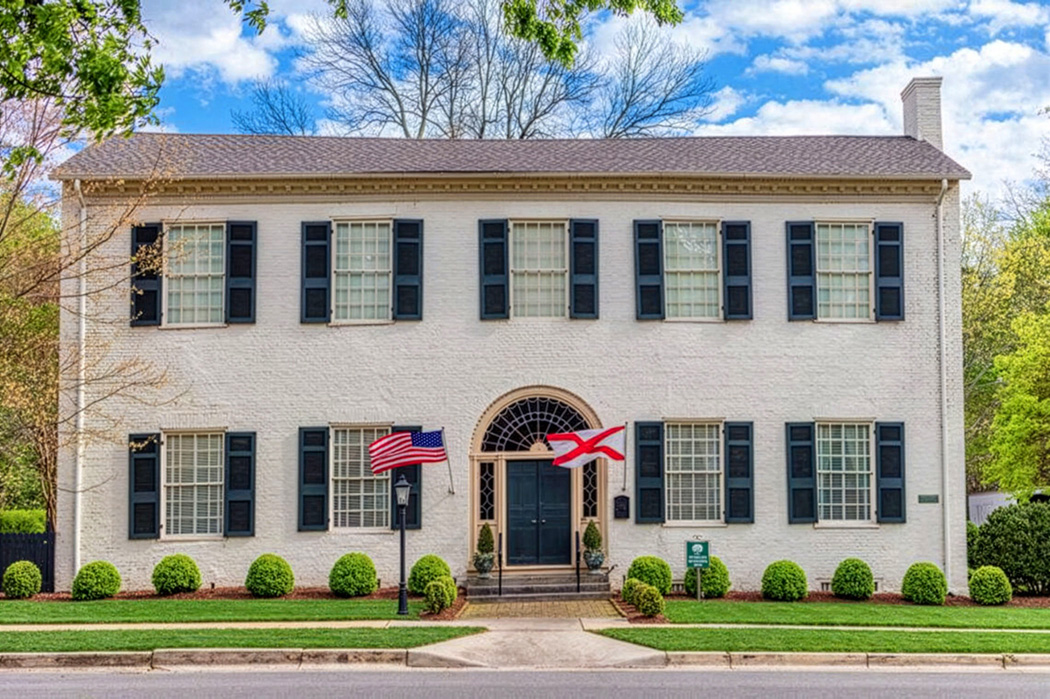
A group congregates at the front of the Jemison-Van de Graaff Mansion, their eyes scanning the porch columns, the ornate trim work and the belvedere positioned at the top of the structure. This Tuscaloosa manor is one of the finest remaining examples of Italianate architecture in the South.
Wearing comfortable walking shoes and speaking into a red bullhorn, historian Will Hawkins addresses the attentive crowd.
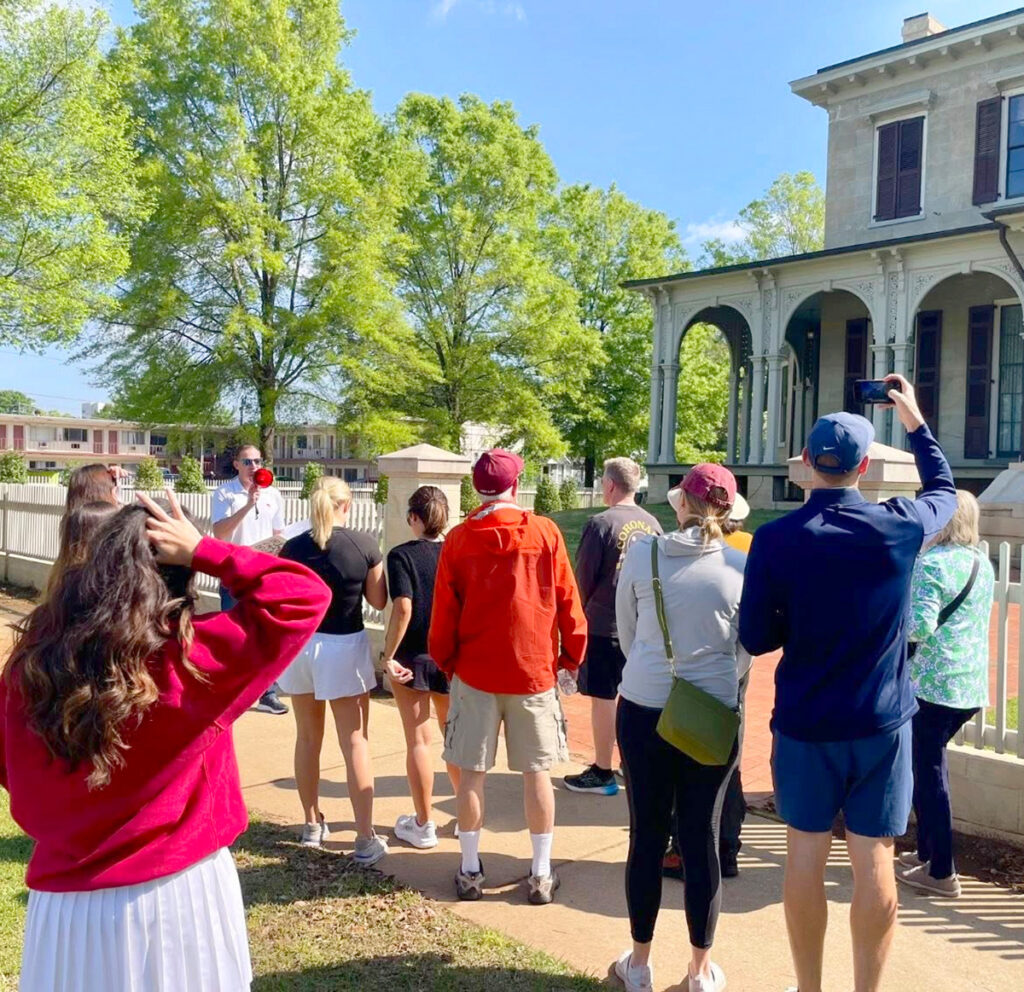
“The mansion was completed in 1862 and was quite technologically advanced for its time,” says Hawkins, executive director of Historic Tuscaloosa. “It had a fully functioning bathroom original to the house — the first in Alabama to feature a built-in bathtub and indoor plumbing with warm water.”
Hawkins’ roadside speech turns to the family lineage, starting with the original owner, Alabama state Sen. Robert Jemison. Jemison’s great-grandson, Dr. Robert Jemison Van de Graaff, born in the mansion in 1901, became a world-renowned physicist and invented the Van de Graaff generator.
“Tuscaloosa is full of history and stories like these,” says Hawkins. “Our walking tour gives people an opportunity to get outside and explore a few of our city’s landmarks while learning about the architecture and our rich history.”
Many places across Alabama invite guests and locals to slow down and experience the soul of their cities through tours, both self-guided and expert-led. City by city, step by step, these pedestrian adventures offer an immersive perspective impossible to capture from a car window. Here are a few.
Tuscaloosa Guided
History comes alive with this free 90-minute walking tour on Saturday mornings in April, beginning at the Jemison-Van De Graaff Mansion and winding down Greensboro Avenue, University Boulevard and Queen City Avenue. The tour is limited to about 20 participants, and interested parties must call Historic Tuscaloosa to reserve spots in advance.
The group strolls to the Bama Theatre, The Murphy-Collins House (home of the Murphy African American Museum), Battle–Friedman House and several churches along the route.
“We stop at the University Club — once the Governor’s Mansion,” says Hawkins. “It’s a Greek Revival-style home built in 1834, and people love to hear that Francis Scott Key (who wrote the poem that would become America’s national anthem) stayed here one time. Down the road, the seven-story Alston Building was Tuscaloosa’s first skyscraper and known in 1909 as America’s ‘tallest building east of Chicago on a dirt road.’ There’s so much to see here!”
Martin Luther King, Jr. Street Selma, self-guided
Known for “Bloody Sunday,” when peaceful protesters were brutally attacked on the Edmund Pettus Bridge, Selma was a turning point in the Civil Rights Movement and the spark that led to the passage of the Voting Rights Act of 1965.
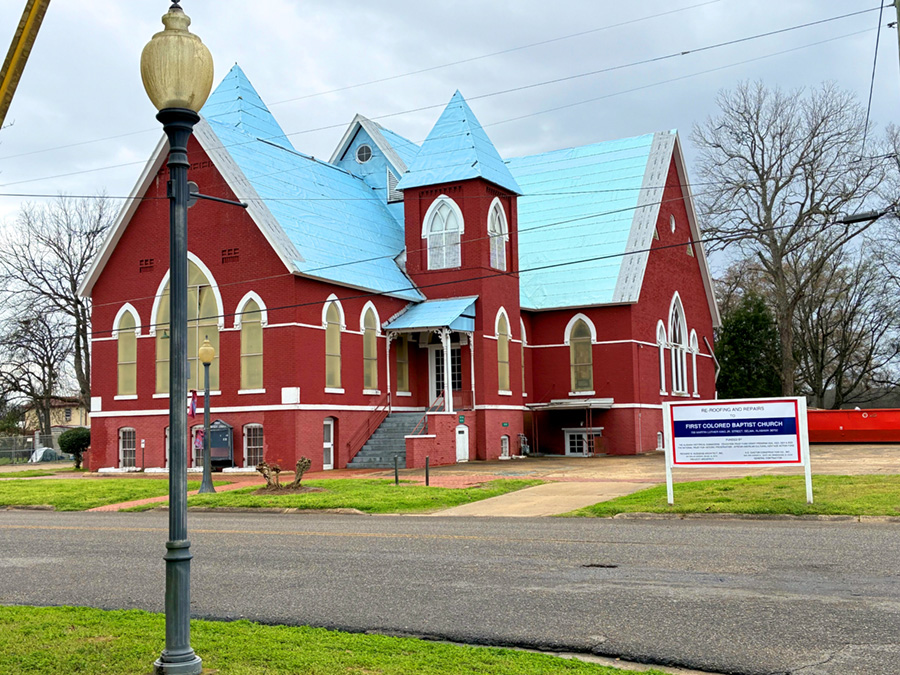
“The Martin Luther King Jr. Street Walking Tour is one way to absorb that history on foot,” says Sheryl Smedley, executive director of the Selma and Dallas County Chamber of Commerce. “There are a series of interpretive signs along the route that provide historical timelines and connect the sites to the Selma marches.”
This free self-guided tour begins at the Centre for Commerce (where maps are available) and winds past 13 stops including the First Baptist Church, which served as Student Nonviolent Coordinating Committee headquarters during the Selma Campaign; the George Washington Carver homes; the Martin Luther King Jr. monument; and Brown Chapel AME Church, the Romanesque Revival landmark built in 1908 that served as the starting point for the marches.
“Those who would rather learn from a personal tour guide can call the Selma and Dallas County Chamber of Commerce,” Smedley says. “We can direct them to tour guides — some with connections to Selma foot soldiers.”
For those sightseers with mobility issues and concerns, the buildings and monument along this city block are easy to see from the comfort and safety of a car.
Downtown Mobile Alliance Tour Mobile, self-guided
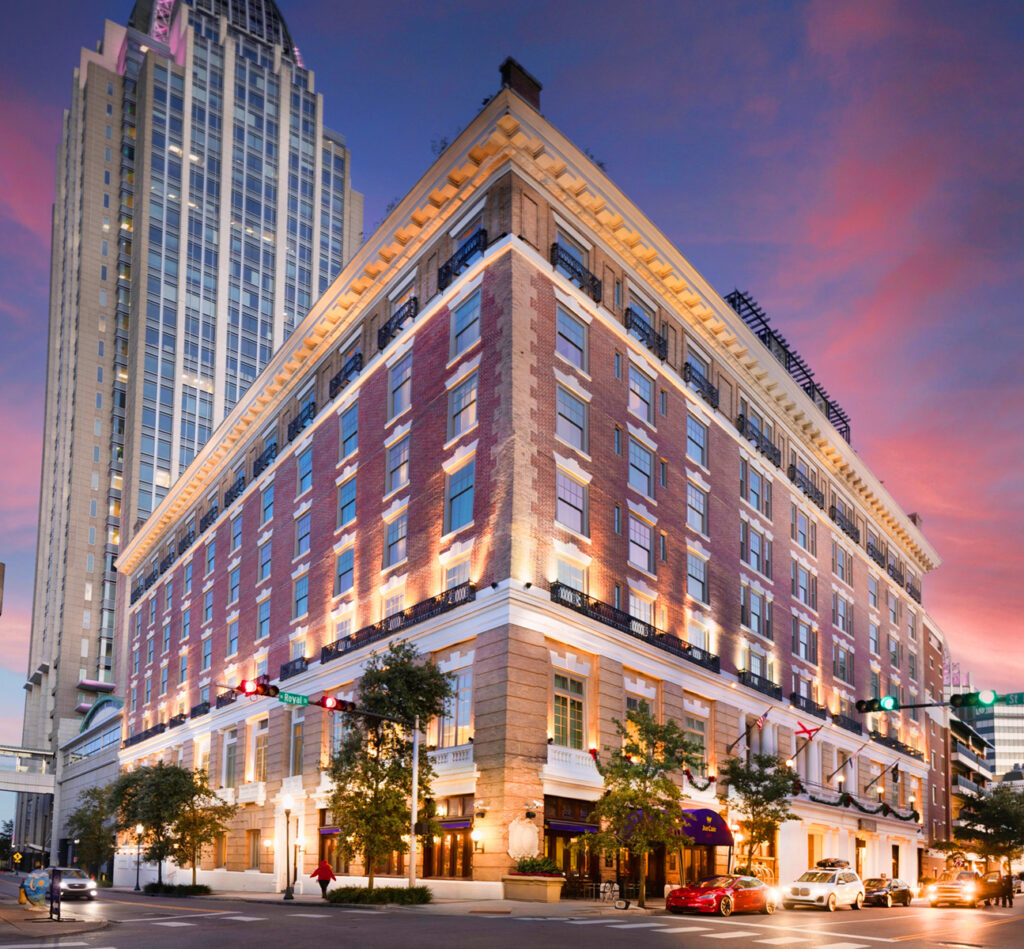
As Alabama’s oldest city, founded in 1702, Mobile carries layers of French, Spanish and Creole heritage that are impossible to absorb in a single visit, which is why the Downtown Mobile Alliance created a self-guided tour spotlighting 50 landmarks — easy to navigate via an online map (at downtownmobile.org) for a half-day, a day, or even a weekend visit. In recent years, Mobile has invested in street and sidewalk improvements to make its historic downtown more walkable and accessible to all visitors.
The tour begins at the Daniels, Elgin & Co. Building (circa 1860), whose prefabricated cast iron façade — modeled after 15th and 16th century Venetian waterfront palazzos — miraculously survived scrap-metal drives during various war efforts. Nearby, the Battle House Renaissance Hotel & Spa (circa 1852, rebuilt in 1906) charms visitors with an interesting acoustic and architectural feature on its second floor.
“The Battle House Hotel has a whispering arch, where visitors can whisper on one side, and people on the other side can hear them,” says Fred Rendfrey, the Alliance’s President and CEO. “It was used for eavesdropping.”
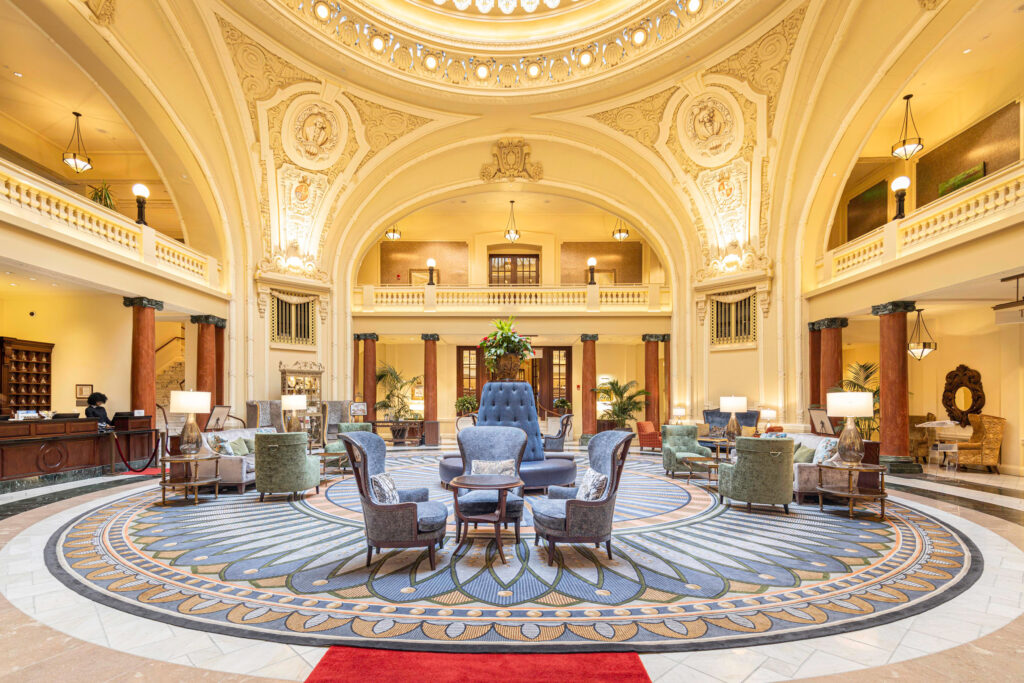
Photo Courtesy Historic Hotels of America and Battle House Renaissance Mobile Hotel & Spa
Further along the mapped route, the Creole Fire House No. 1 (circa 1872) tells a fascinating story of Mobile’s Creole community, whose founding fire company operated much like an insurance company.
“Like insurance, it only provided (fire protection) services to paying members,” Rendfrey says. “The building has changed hands and been different things over the years, but the fire pole is still in there. I’ve slid down it myself.”
Historic Twickenham Huntsville, guided
Erica Matthews, Tourism Sales Manager at the Huntsville/Madison County Convention and Visitors Bureau (CVB), says that Huntsville’s historic districts are best experienced on foot. Since 2003, the CVB’s complimentary guided tours have taken place every Saturday in April at 10 a.m., winding through neighborhoods like Old Town, Five Points and the Twickenham Historic District, one of Alabama’s most significant architectural and political areas.
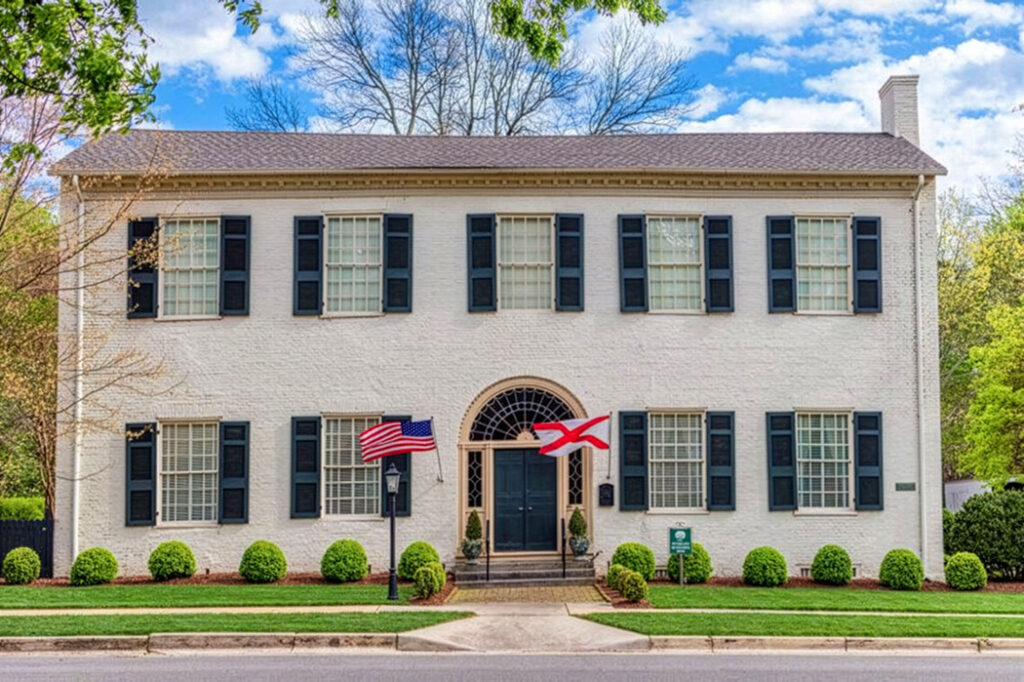
“Our tours typically last between one and two hours, and they are family-friendly for all ages and even welcome leashed pups,” says Matthews. “Most groups draw an average of around 10 participants, though a few have had close to 200. Our tours are extremely popular, and we usually have a great turnout — a mix of out-of-towners and locals alike.”
Founded in 1814, Twickenham boasts the state’s highest concentration of antebellum homes, showcasing styles ranging from Federal and Greek Revival to Queen Anne and Bungalow. Beyond its architectural beauty, the neighborhood holds deep political significance. In 1819, 44 delegates gathered here for Alabama’s first constitutional convention, deliberating the state’s future in the very homes that line these streets.
This tour departs from the Alabama Constitution Hall Historic Park and winds eastward, passing places like the Weeden House Museum (the oldest house in Alabama open to the public) along sidewalks and pavement areas that are wheelchair- and mobility-assistive device accessible. After taking in Twickenham, hungry sightseers are encouraged to stay downtown and try out one of many lunch spots.
Gadsden greatergadsden.com/events/april-2026-gadsden-walking-tours/
Greater Gadsden Area Tourism hosts free guided walking tours each Saturday in April. Visitors are asked to meet at the Greater Gadsden Area Tourism Visitor Center at 9:45 a.m. for a free, guided one-hour walk through beautiful downtown.
Monroeville chamberorganizer.com/Calendar/moreinfo.php?eventid=542400
Every Saturday in April, the Chamber of Commerce presents free walking tours of downtown Monroeville. Meet just before 10 a.m. on the steps of the Monroe County Museum to participate in the 45-minute tours.