Scrappy fighters go on a rampage attacking baitfish
Alabama sportsmen can fish for abundant, widespread, hard-fighting pugnacious powerhouses that outfight many larger species, but few do.
“White bass are widely distributed throughout Alabama,” says Michael P. Holley, a Wildlife and Freshwater Fisheries Division biologist in Eastaboga. “The only place they are uncommon is the coastal plain in southeast Alabama.”
True bass not related to largemouth or smallmouth, which belong to the sunfish family, white bass belong to the temperate bass family with striped bass and yellow bass. Crossing white bass with stripers creates hybrid bass.
Also called sand bass, white bass resemble smaller, stockier versions of striped bass. They can exceed six pounds, but most range about one to three pounds. The Alabama state record stands at 4.75 pounds, a fish caught in the Warrior River on Valentine’s Day.
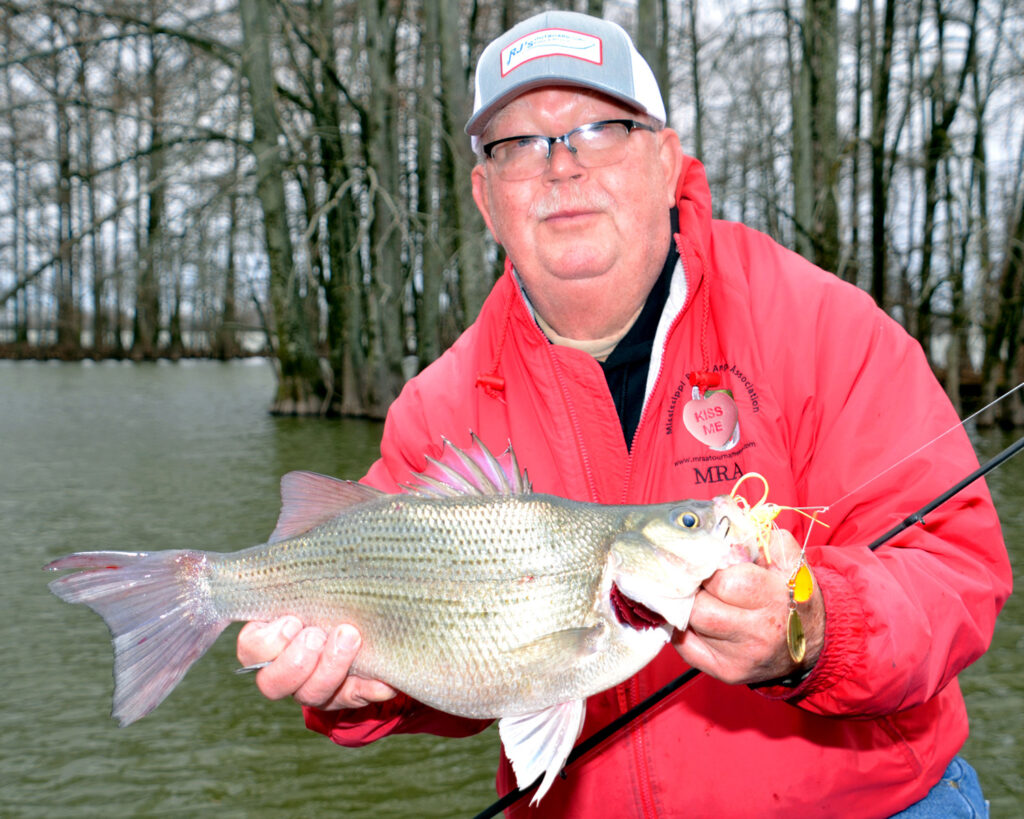
For the best white bass action, fish in late winter or early spring before they spawn. Spawning requires high energy reserves. Therefore, the prolific and highly aggressive striped predators gather in massive schools to gorge themselves before spawning and females carrying roe reach their heaviest weights of the year.
“In February, white bass focus on food sources to prepare for the coming spawning season,” Holley says. “Adult white bass mainly eat other fish, primarily shad. When water temperatures reach the upper 50s, they move into spawning habitat and swim upstream to spawn in reservoirs and rivers. Many creeks in Alabama have good white bass spawning habitat.”
Spawning depends upon water temperature. White bass typically begin spawning when water temperatures measure about 60 degrees. Depending upon the location and weather, spawning could begin in late February or March and might last through late May.
“White bass spend most of their time in open water, staying close to schools of threadfin and gizzard shad that they prefer to consume,” Holley says. “They constantly relate to baitfish schools or congregate around dams when baitfish are there except during spawning season when they move below dams and into creeks and tributaries with rocky shoals.”
The chunky fish provide incredible sport on light tackle. With insatiable appetites, white bass viciously attack anything that resembles a threadfin shad or other small baitfish. Use a light spinning rod with six- to 10-pound-test line. Throw any shiny or white lures that simulate threadfin shad. Some good artificial temptations include lipless or lipped crankbaits, small jerkbaits or spinners, chrome spoons and shiny blade baits. White bass even hit flies that resemble minnows.
“What is really exciting about catching white bass is the fast action they provide when they concentrate on feed before spawning,” Holley said. “Shad is their primary food source, so any lure mimicking a small baitfish works well. My personal favorite white bass lure is a Number 5 Rapala Shad Rap in a shad pattern, but a host of other small crankbaits also work.”
Anglers can also use live shiners or small shad. Fish these on a free line or under a cork. Occasionally pop the cork, but live fish don’t require excessive additional motion. Just the struggling shad on the hook should provide sufficient temptation.
The gregarious fish regularly travel in huge schools when hunting shad and other baitfish. Once anglers find such a school, action can come extremely fast. Since they concentrate in giant schools, readily strike lures or live baits and fight like champions, they make excellent sport fish for children or novice anglers to catch.
“White bass are a great way to introduce kids to fishing,” Holley says. “When white bass congregate below dams or in creeks and tributaries before spawning, they provide fast action and are fun to catch.”
The Tennessee, Coosa and Warrior river systems offer the best white bass action in Alabama, but any flowing streams and associated reservoirs in the state could hold white bass. Anglers might catch some in the Tombigbee and Alabama systems as well. The state worked to improve fishing in some areas.
“Due to lower abundance in our electrofishing surveys and some poor year-class development, we did some recent stockings of white bass on Martin Reservoir and Mitchell Reservoir,” Holley says. “The biggest threat to white bass is siltation and sedimentation on the shoals and rocky habitat they use to spawn in creeks and tributaries.”
In the right spot at the right time, even the youngest anglers frequently catch white bass on every cast and might land boatloads of fish in a short time. More important than that, they will catch great memories.
John N. Felsher is a professional freelance writer who lives in Semmes, Ala. He also hosts an outdoors tips show for WAVH FM Talk 106.5 radio station in Mobile, Ala. Contact him at j.felsher@hotmail.com or through Facebook.