Alabama plants with deep American roots
As the United States prepares to celebrate its 250th anniversary, it’s a meaningful time to reflect on the living pieces of history rooted right here in Alabama’s landscapes.
Beyond historic landmarks and documents, many native plants found across the Southeast quietly supported early settlers’ resilience, and survival — offering a deeper connection to our nation’s story.
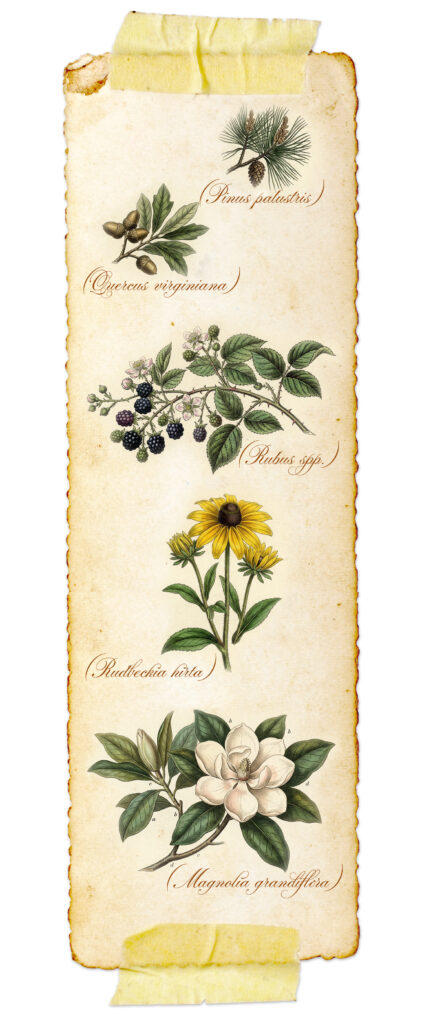
One of the most iconic native trees in Alabama is the longleaf pine (Pinus palustris). Once dominating the Southeastern landscape, longleaf pine forests were vital to early American industry. These trees provided naval stores — tar, pitch, and turpentine — used to waterproof and maintain wooden ships during the Revolutionary War era. In many ways, longleaf pine helped keep early American fleets afloat, making it a true symbol of strength and service.
Equally significant is the live oak (Quercus virginiana), native to southern Alabama’s coastal regions. Known for its dense, durable wood, live oak was essential in shipbuilding. Its natural curves were ideal for constructing hulls of naval vessels, including those used in the early years of the United States Navy. Today, these majestic trees still stand as living reminders of the nation’s endurance and ingenuity.
Alabama’s native food plants also played a critical role in early survival. Native plums (Prunus angustifolia), mayhaw (Crataegus spp.), and blackberries (Rubus spp.) provided seasonal fruit for both Indigenous communities and early settlers. These fruits were not only delicious, but also were dependable sources of nutrition in a time before modern agriculture and transportation systems.
Another important native crop is corn (Zea mays), cultivated for thousands of years by Indigenous peoples long before European settlers arrived. Corn became a foundation of Southern agriculture and was essential for feeding early communities during times of hardship, including the Revolutionary period. Its adaptability to Alabama’s soils and climate made it a cornerstone of food security.
We can’t overlook the ecological importance of native wildflowers like black-eyed Susan (Rudbeckia hirta), purple coneflower (Echinacea purpurea), common yarrow (Achillea millefolium), and blue false indigo (Baptisia australis) — all native to Alabama. While they may seem simple, these plants supported pollinator populations by providing reliable sources of nectar and pollen for bees, butterflies, and other beneficial insects — organisms that were, and still are, critical for food production. Yarrow, in particular, has long been valued for attracting a wide diversity of pollinators as well as predatory insects that help naturally manage pests, strengthening early garden systems. Both yarrow and echinacea also held important medicinal value for Indigenous communities. Echinacea was commonly used to support immune health and treat infections, while yarrow was used to help stop bleeding, reduce inflammation, and promote wound healing. Meanwhile, blue false indigo contributed to early dye production and improved soil health through its nitrogen-fixing ability, enhancing fertility in both native ecosystems and
cultivated fields.
Finally, the southern magnolia (Magnolia grandiflora), though often appreciated for its beauty, represents a deeper cultural connection to the South. Native to Alabama, it has long symbolized hospitality, resilience, and continuity — values that resonate strongly as we mark 250 years of American history.
As we reflect on this milestone anniversary, these native Alabama plants remind us that history is not just something we read, it’s something we grow. By preserving and planting these species, we honor a legacy rooted in the land and ensure it continues to thrive for generations to come.
Bethany O’Rear, a horticulturist for more than 20 years, is a regional agent with the Alabama Cooperative Extension System, specializing in commercial and home horticulture.