Practical strategies that make a difference
In Alabama, we frequently deal with drought conditions. When dry weather sets in, many residents worry about how their landscapes will respond — and how much water is truly needed to keep plants healthy.
Conserving water doesn’t mean neglecting your landscape; it means watering strategically, based on plant needs, weather conditions, and sound horticultural practices.
Trees and shrubs planted within the last year are the most vulnerable during dry periods. These young plants have limited root systems and need consistent moisture to establish successfully. In contrast, well-established and otherwise healthy plants can often tolerate much more drought stress than we expect.
That said, there are exceptions to every rule. Even mature azaleas and hydrangeas may show signs of drought stress. These plants have relatively shallow root systems adapted to semishady conditions and moist soils. When they’re placed in full sun, compacted soils, or other less-than-ideal environments, drought symptoms can quickly appear. Established Japanese Maples and conifers (or cone-bearing evergreens) are also very sensitive to extended periods of dryness.
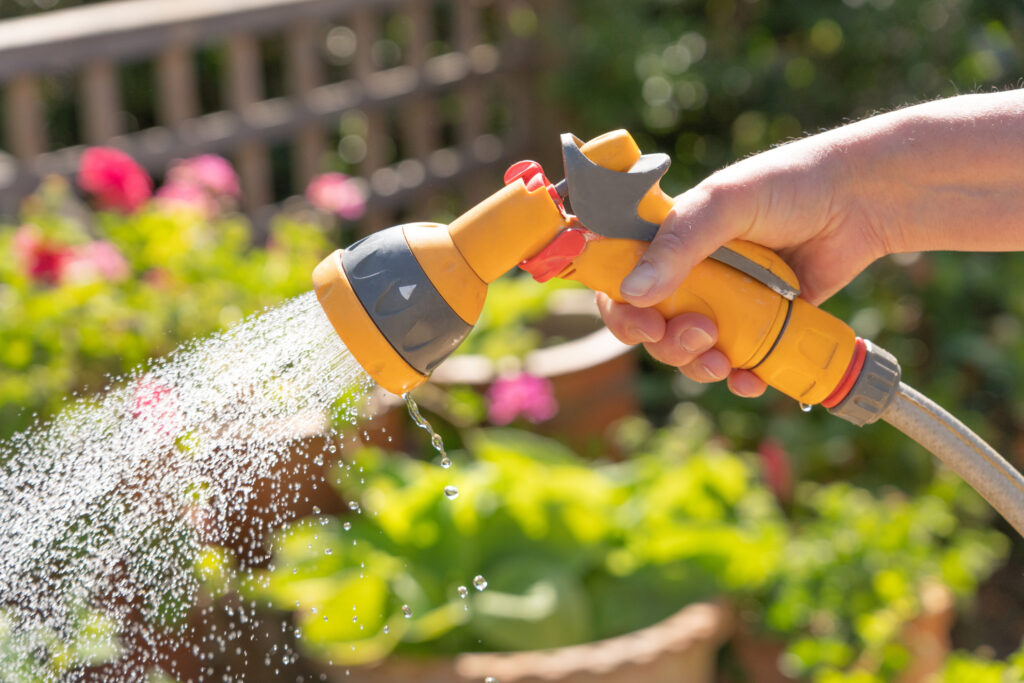
Because every landscape contains a mix of plant types and growing conditions, plant needs should always be considered on a case-by-case basis. Learning about a plant’s specific water requirements before planting can save time, money, and water in the long run.
One of the simplest ways to conserve water is to make sure it goes where it’s intended. If you see irrigation water running down sidewalks or streets, your system likely needs adjustment. Water may be applied too quickly for the soil to absorb, or sprinklers may be poorly aimed. Fixing these issues improves efficiency immediately.
Plants should be watered according to their individual needs, not on a one-size-fits-all schedule. Water garden areas no more than twice per week — and only when rainfall is lacking. Set watering priorities by considering which plants are hardest to replace or will suffer first. Established perennials typically need water about once per week, while large, established trees can go much longer between watering. Matching water to need leads to healthier plants and lower water bills.
Mature warm-season turf grasses are tougher than many people realize. By slightly raising mowing height, reducing fertilization, and watering less often but more deeply, lawns can be trained to tolerate drier conditions. Zoysia and bermudagrass can even be allowed to go dormant during extended dry periods, if permitted in your neighborhood. Centipede grass and St. Augustine grass are less drought-tolerant and may require additional water to survive.
Watering during the coolest part of the day, between 4 a.m. and 10 a.m., reduces water loss from evaporation and lowers disease risk. Always follow local watering regulations. Use drip irrigation for garden beds, as these methods deliver water directly to the root zone and reduce waste from wind and runoff.
Avoid frequent, shallow watering. Instead, water deeply — 8 to 12 inches for trees and shrubs, and 4 to 6 inches for turf and flowers — to encourage deeper, more resilient roots. Adjust watering based on weather, not the clock, and consider rain sensors or rainwater collection systems to further
conserve resources.
Finally, mulch generously but wisely. A 2-to 3-inch layer of mulch helps moderate soil temperature and retain moisture, especially for shallow-rooted plants like dogwoods and azaleas. However, more is not better. Avoid excessive mulching, which can do more harm than good by increasing the risk of rootrot diseases. During drought, minimize pruning, fertilizing, planting, and transplanting, as these activities increase stress. Late fall remains the best time for most landscape improvements.
When you put these strategies into practice, the benefits really add up. A little smart watering goes a long way — helping your landscape stay healthy while protecting our shared water resources.
Bethany O’Rear, a horticulturist for more than 20 years, is a regional agent with the Alabama Cooperative Extension System, specializing in commercial and home horticulture.