Roses are living proof that even Mother Nature sometimes feels the need to show off. Layers of velvety petals unfold from their centers, and intoxicating fragrances carry on the breeze. These beloved blooms have captivated gardeners for millennia. The ancient Chinese pioneered the cultivation of roses around 3000 B.C. to produce rosewater, botanical remedies and confetti made from their petals. Since then, roses have adorned crowns, prom corsages and boutonnieres, bridal bouquets and Kentucky Derby winners. They are woven into our love stories, our religious ceremonies and our funeral rites—all because their beauty speaks to us.
From downtown gardens to public parks to grand estates, there are many spots in Alabama where you can stop and smell the roses. Here are just a few.
Bellingrath Gardens & Home
Theodore
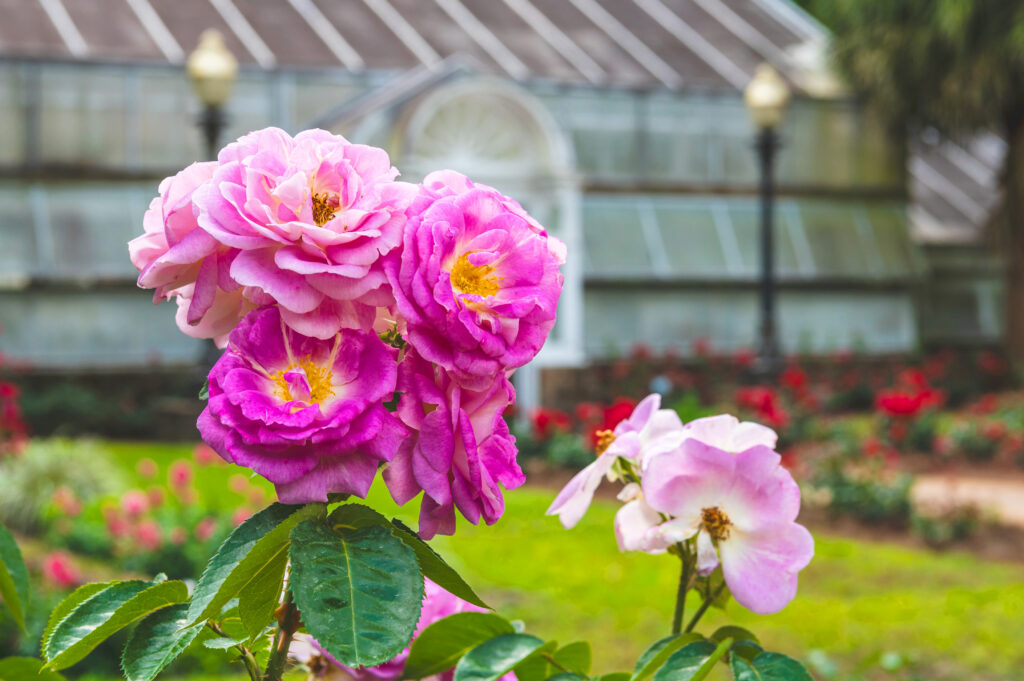
Tucked along the banks of the Fowl River, Bellingrath Gardens & Home has been stopping visitors in their tracks since 1932—and nowhere more so than in its magnificent rose garden. Designed in 1936 as a living tribute to the Rotary Club of Mobile, the garden’s formal layout traces the shape of the Rotarian lapel pin founder Walter Bellingrath wore faithfully throughout his life.
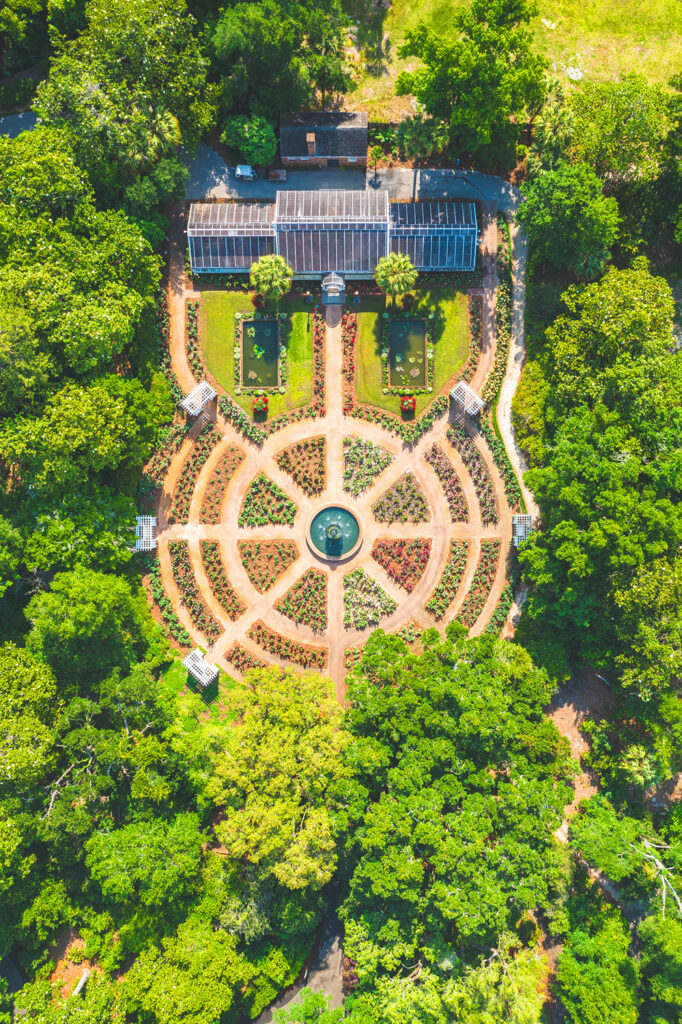
“More than 1,000 plants representing dozens of cultivars grow in the rose garden,” says Olivia Garrett, Bellingrath’s marketing and PR director. She mentions the ruffly, fuchsia-pink, perfumed hybrid tea Dee-Lish, the Double Delight with its creamy white flowers blushed with red and the grandiflora Wild Blue Yonder, whose ruby-red and purple blossoms seem too lovely to be real.
For those who want more than a stroll through the roses, Bellingrath offers its Garden Walk & Talk on the last Wednesday morning of each month. Led by horticulture experts, the tour covers what’s blooming and the rich history woven into every acre of this stunning 65-acre landmark.
Katherine Lee Rose Garden
Monroeville
In Monroeville, quiet beauty has taken root in the small but mighty Katherine Lee Rose Garden. Katherine Lee, who served as clerk of the Monroe County Commission, started it back in the 1960s, and after her passing, the Monroeville Garden Club stepped in to carry on her vision. A 2011 redesign using a plan drawn up by Jason Powell of Petals from the Past brought enhancements like rock pathways, stepping stones, an arbor and benches for taking in the beauty and fragrance of the space.
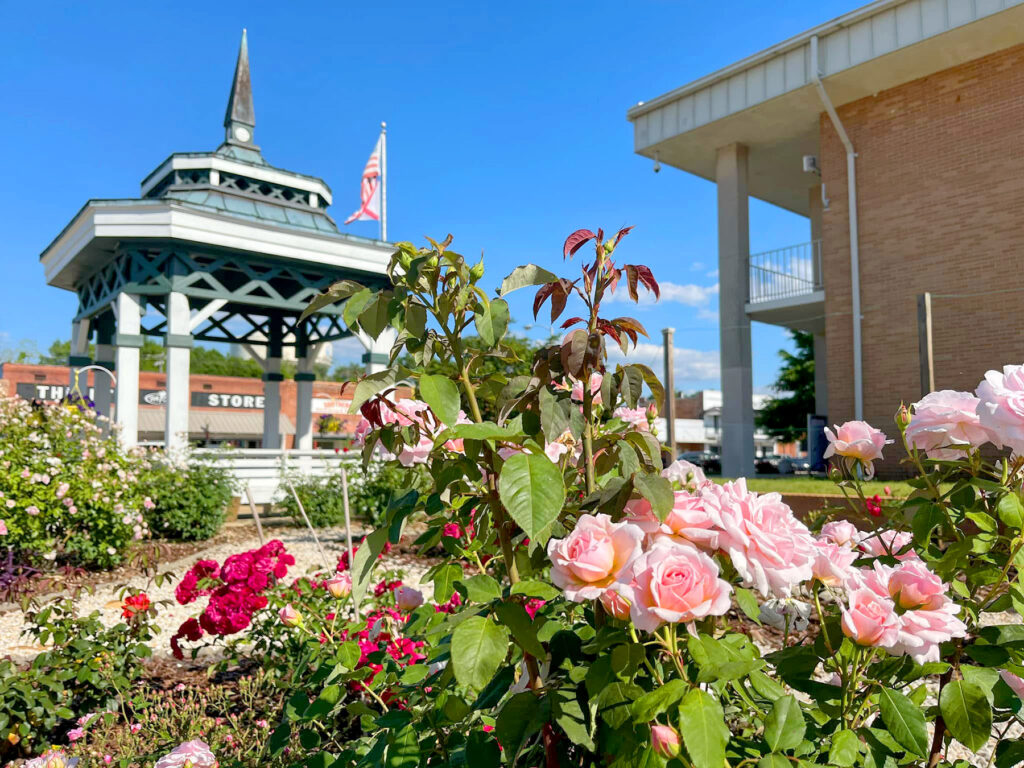
Forty-five roses crowd the tidy beds. Buttery yellow Julia Child roses share space with peachy Abraham Darby specimens. The Lady in Red climbers command attention alongside the sunset hues of the Crazy Love bloomers.
“The plot is anchored at both ends by Mutabilis, an unusual China rose with a name meaning, ‘liable to change,’” says Charlotte Lambert, current president of the Monroeville Garden Club. “They have beautiful single-petal clusters in yellow, pink and purple perfection.”
Dothan Area Botanical Gardens
Dothan
Deep in Alabama’s Wiregrass region, the rose garden at the Dothan Area Botanical Gardens holds bragging rights as a must-see horticultural stop along the Alabama Garden Trail.
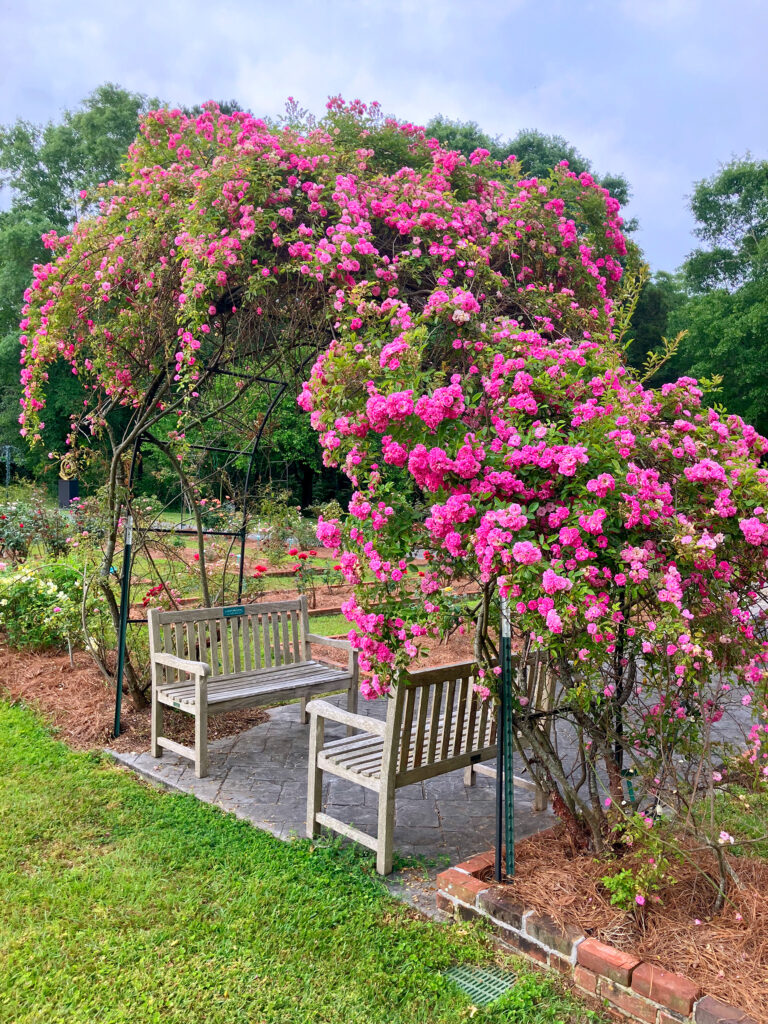
Photo by Mickey Breedlove
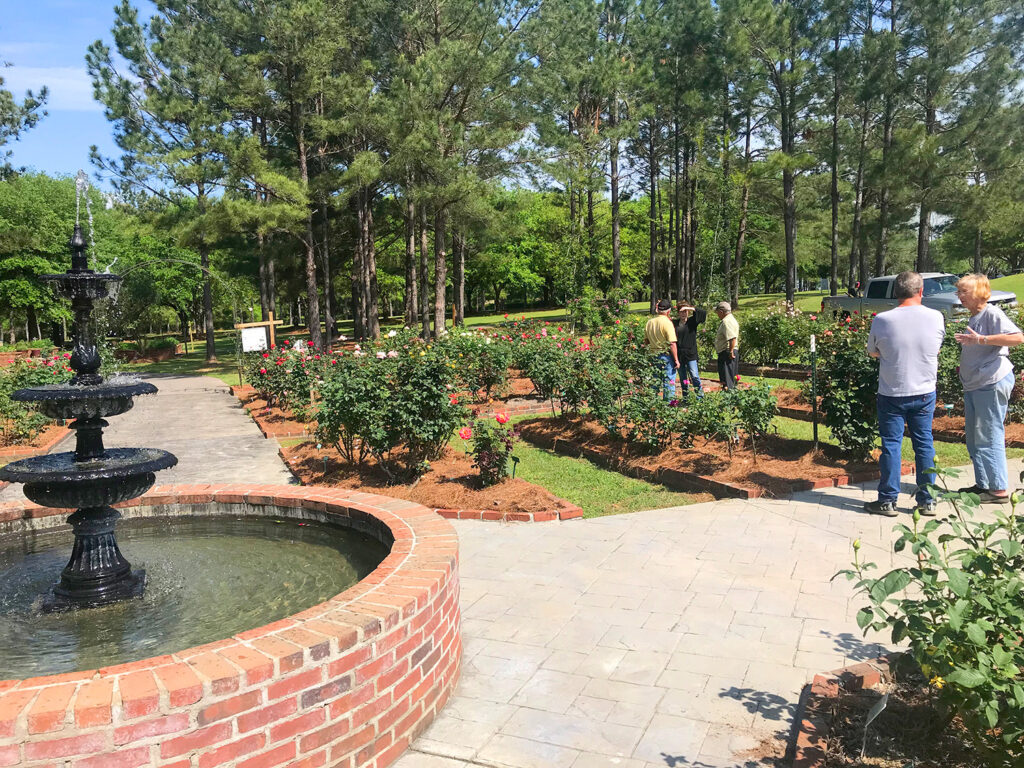
“In the early 1990s, volunteers formed a nonprofit to develop the Botanical Gardens,” says executive director William Holman. “Shortly after, a woman in Bonifay, Florida, called and told us about a family willing to donate some roses if we came and dug them up. We rescued 140, and they were used to create the first garden on our grounds.”
Today, volunteers of the Wiregrass Rose Society deadhead and tend the 308 specimens in the rose garden, keeping the space picture-perfect.
“Growing along an arbor, we have a Peggy Martin rose, which is also known as the Katrina Rose because it famously survived two weeks submerged in saltwater during and after Hurricane Katrina,” says Mickey Breedlove, president of the Wiregrass Rose Society. “We have a bed of Gold Medal roses, which are grandifloras with large yellow blooms and a fruity fragrance that a member donated to the garden. We also have some Kordes roses from Germany, which are naturally disease-resistant and some Old Blush China roses. [The latter] are antique roses, meaning that the variety existed prior to 1867.”
May was the prime time to visit when the blooms reached their glorious peak, but after a midsummer breather, the rose garden will rally again in the autumn.
Delano Park
Decatur
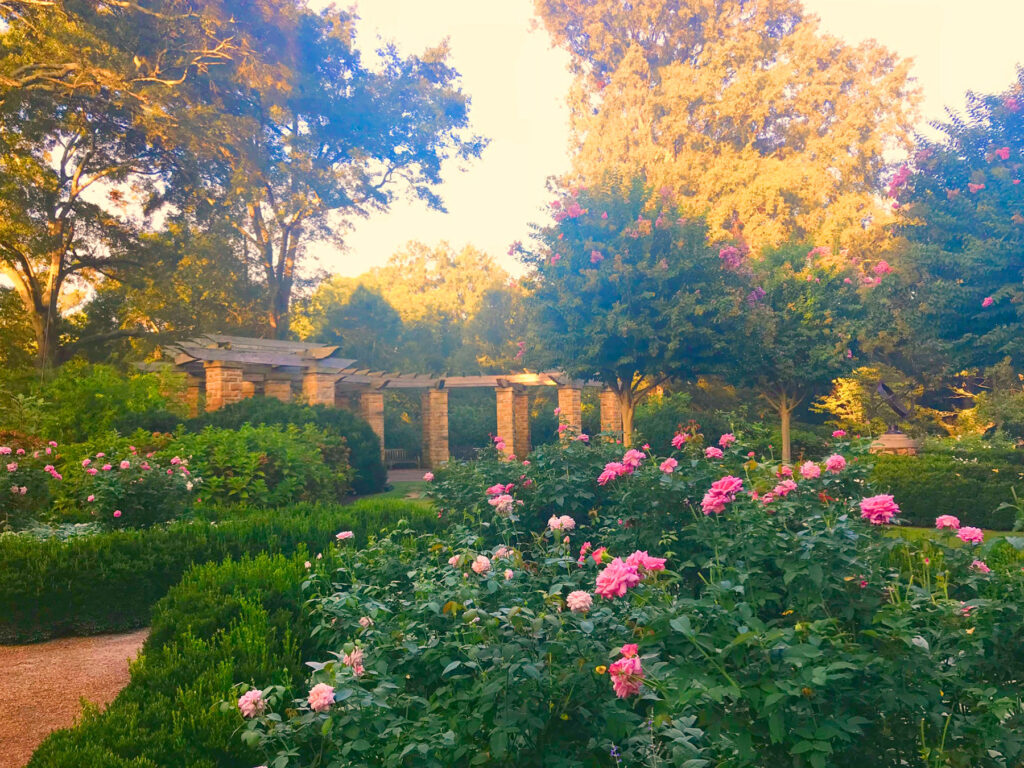
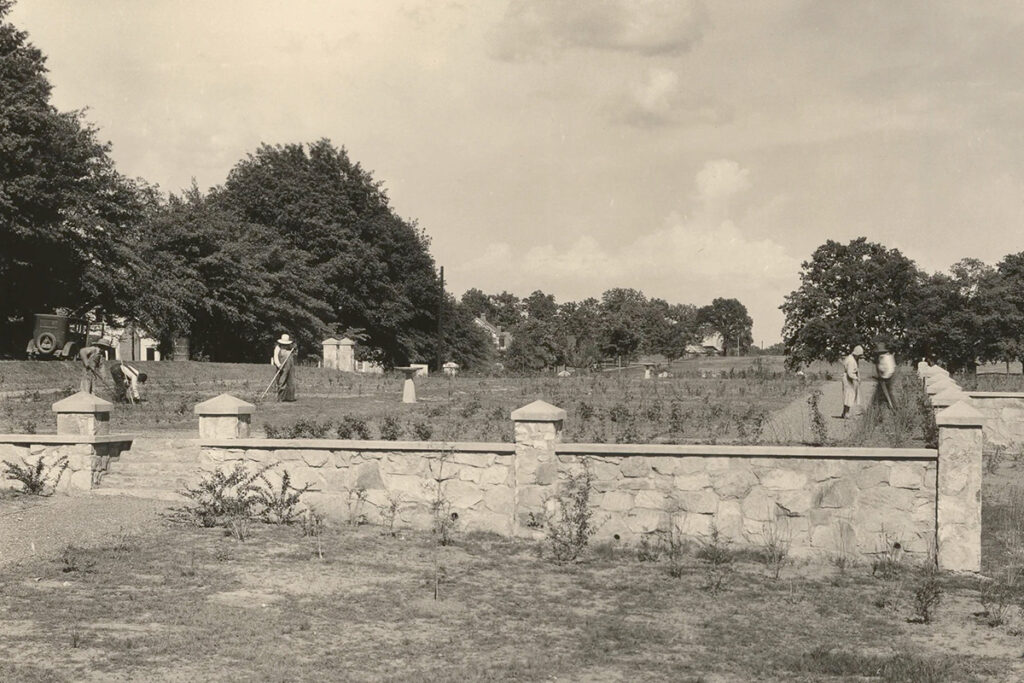
The Historic Rose Garden at Decatur’s Delano Park was built by work crews from the Civil Works Administration (CWA) during the Great Depression. Guided by Carolyn Cortner Smith—one of Alabama’s earliest female architects— approximately 140 men planted 2,000 roses into an elegant elevated garden. It was Franklin Delano Roosevelt’s New Deal in full bloom, and today, this sanctuary is one of the last surviving CWA rose gardens in the country.
The Delano Park Conservancy lovingly rebuilt the garden two decades ago, reconstructing it per the original design. Today, the park’s roses and flowering shrubs create an atmosphere so naturally romantic that it hosts weddings and gatherings with little need for additional decoration.
“There are about 100 roses (in the garden) right now,” says Barbara Kelly of the Delano Park Conservancy. “The rose garden has many old garden roses—some dating back to 1817—like Blush Noisette. There are also Earth-Kind roses that are really bulletproof, like Belinda’s Dream.”
Also look for the double, delicately shaped yellow flowers of the Mrs. Dudley Cross roses and the prize-winning Savannah roses at Delano.
Birmingham Botanical Gardens
Birmingham
Birmingham Botanical Gardens (BBG) doesn’t just wow visitors with one rose garden—it has two.
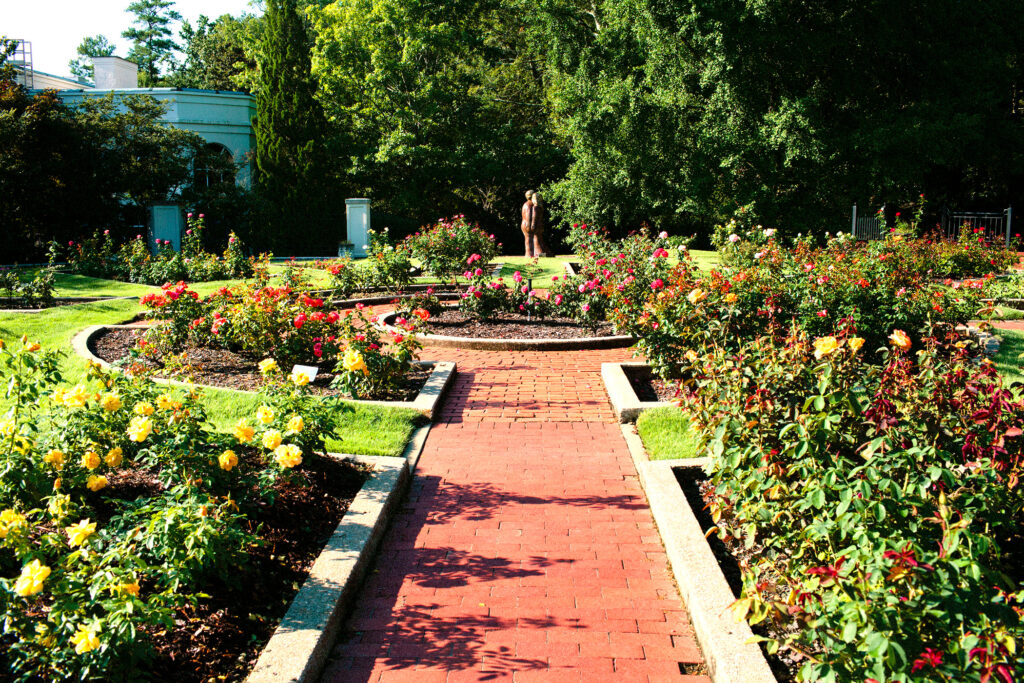
The Dunn Formal Rose Garden is the showier of the pair, announcing itself in a riot of color and scent from as early as March straight through fall. This garden includes 100 beds with over 110 varieties of roses laid out in a formal, geometrical pattern. The circular and crescent beds contain hybrid teas; the rectangles contain grandifloras; the small trapezoids contain floribundas; and the triangles contain miniature roses. Standouts include the grape-hued Plum Perfect, buttery Sunshine Daydream, and the exuberantly patriotic Fourth of July, whose red-and-white-splashed petals look like fireworks.
“The Ireland Old-Fashioned Rose Garden is a quieter, more romantic space where 19th-century varieties reign,” says Cassia Kesler, director of communications and marketing at the BBG. “This garden demonstrates the variety of ways old-fashioned roses can be grown around arbors and beds.”
Here, tea roses like Isabella Sprunt, dating to 1855, grow alongside the peachy Perle d’Or.
Both gardens served as a breathtaking backdrop for Rosé in the Roses, a garden party fundraiser benefiting the BBG’s summer internship program this past spring.
Roses are so perfect that they seem less like flowers and more like art. From sprawling botanical gardens to pleasant parks to historic estates, roses are blooming across Alabama—and they’re well worth a visit.
Join a rose society or gardening club
Joining a community rose club or society (or a general gardening club) is a great way to connect with other rose enthusiasts and learn through workshops, garden tours and the collective wisdom of members. Here are a few around the state:
Auburn Rose Society (auburnrosesociety.org)
Birmingham Rose Society (birminghamrose.org)
Monroeville Garden Club (gardenclubofmonroeville.org)
Ramer Rose Society (Facebook: @RamerRoseSociety)
Wiregrass Rose Society (Facebook: @WiregrassRoseSociety)
Rose Growing Tips
Here are some rose-growing tips from the Alabama Cooperative Extension System.
Select a rose variety that grows well in Alabama.
Select a planting site that receives a minimum of six hours of sunshine each day.
Have your soil tested before planting to determine fertilizer and pH needs. Amend as needed.
Plant roses from mid-November to mid-February in a well-prepared bed of garden soil liberally mixed with organic matter.
Water established roses with at least 1 inch of water each week. New plantings require additional watering.
Inspect roses to prevent insect or disease damage, and treat as needed.
Deadhead roses to promote more blooms.
Mulch plants to conserve soil moisture and suppress weeds.