Photos & Story By Katie Jackson
On a warm, sunny morning last May, five volunteers stood in the dappled shade of the Birmingham Botanical Gardens’ Fern Glade surveying a scene that would make most gardeners cringe, if not cry.
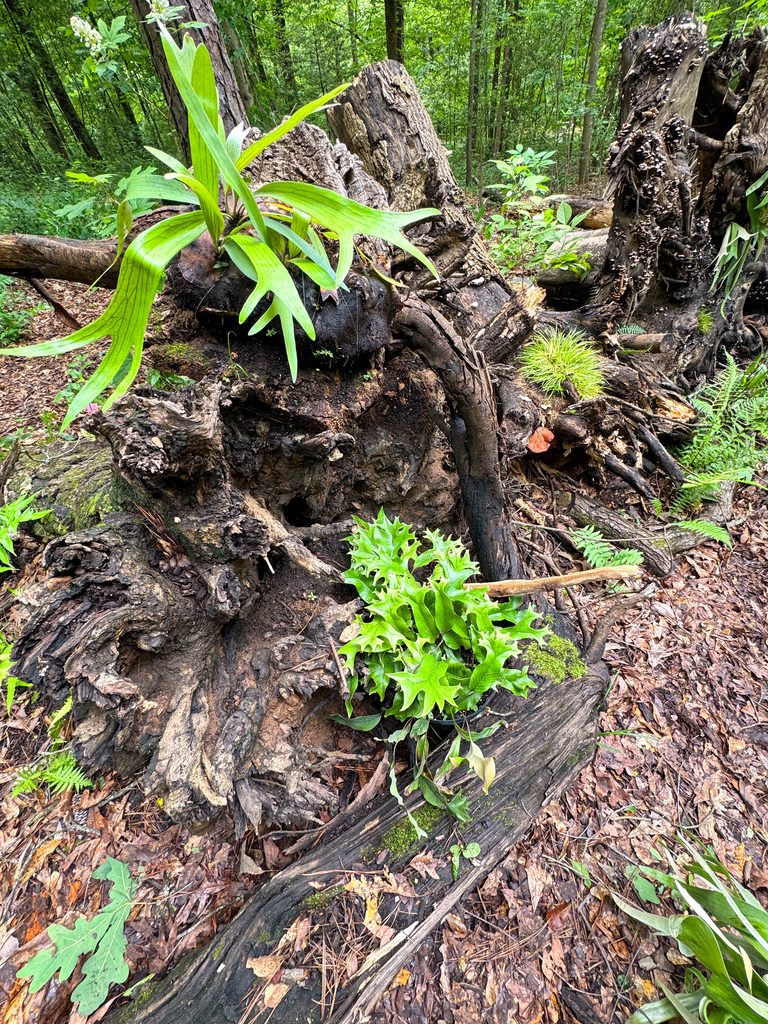
A large tree, toppled during the previous night’s thunderstorm, lay across one of the glade’s newest attractions — its Living Roots display.
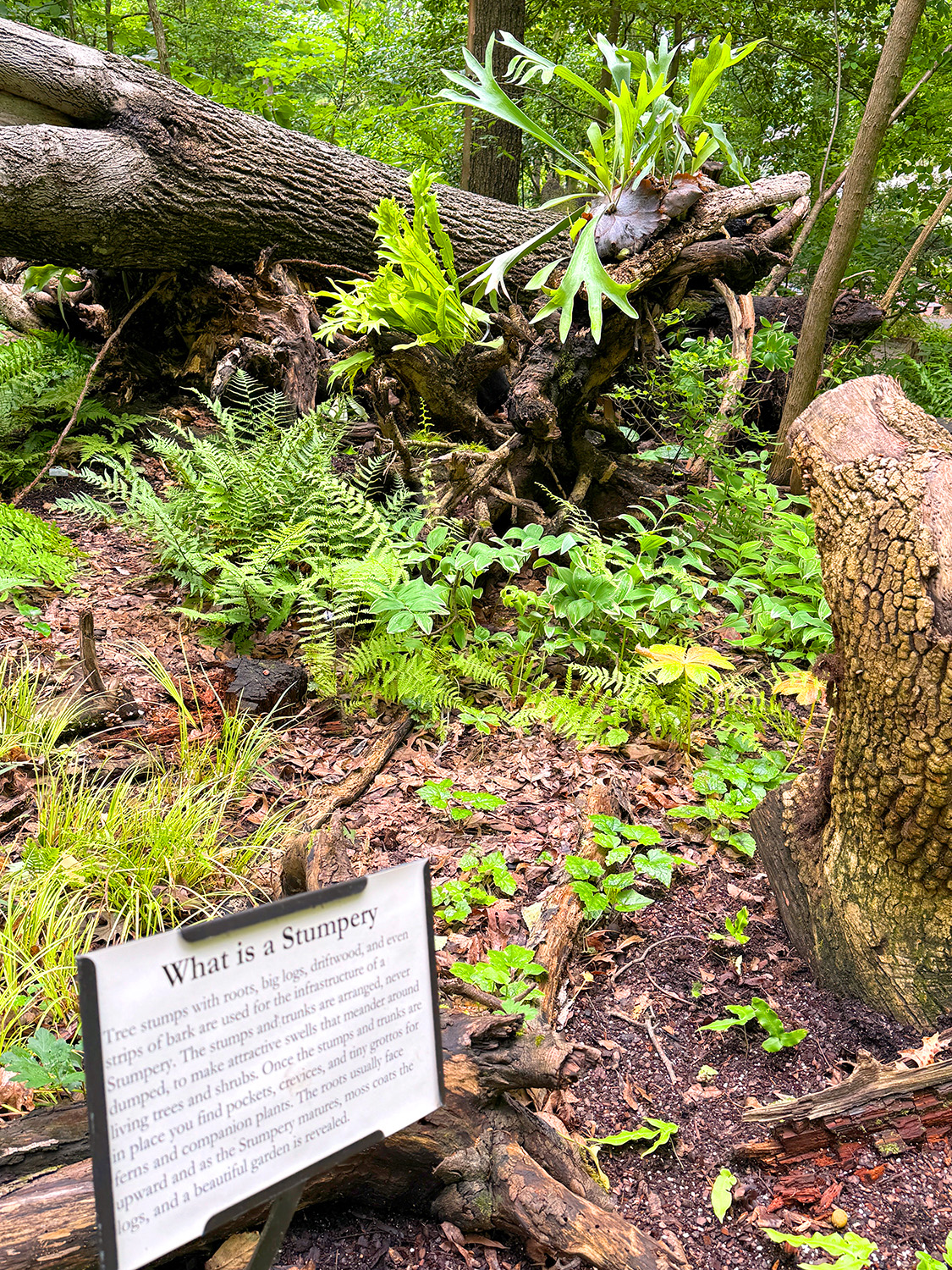
Rather than seeing the fallen tree as a disaster, however, this quintet of dedicated gardeners saw it as an opportunity. Admittedly, at first glance they experienced an “oh no” moment of concern but within minutes, maybe seconds, the five were already discussing ways to incorporate the tumbled tree into the display. Which only makes sense because Living Roots is a stumpery — a garden feature meant to celebrate the beauty and environmental contributions of upended stumps and downed trees.
The stumpery concept originated in Victorian-era England, a time when pteridomania (fern madness) was at its height and fern enthusiasts were seeking new ways to grow and display their collections. It was also a time when naturalism was all the rage and gardeners were creating spaces that mimicked the natural world, including forest and woodland settings where wild ferns thrive on decomposing logs, stumps and leaf litter.
It was this aesthetic that led designers developing gardens at England’s Biddulph Grange estate in 1856 to gather giant hardwood stumps from a debris pile and create what is arguably the world’s oldest and most famous stumpery, which ignited a stumpery craze that swept across Europe and other countries including the U.S.
Though the popularity of stumperies waned in the 20th century, interest was reignited when, in 1996, Britain’s King Charles and Queen Camilla installed what is now considered England’s largest stumpery at their family estate, Highgrove House. In more recent times, a growing interest in more sustainable, nature-focused landscaping also fueled interest in stumperies among gardeners worldwide including members of the Birmingham Fern Society, who serve as the primary caretakers of BBG’s Fern Glade.
One of these members, Louise Billings, first became interested in stumperies after visiting one at the Rhododendron Species Botanical Gardens near Seattle, Wash., home of a test garden run by the Hardy Fern Foundation (HFF), an organization working to gather and build interest in the many hardy fern species found across the globe. (BBG’s Fern Glade is one of HFF’s satellite test sites.)
In 2019, Billings and her husband, Josh, spent a glorious week touring fern gardens in the Seattle area, including the famous Riehl stumpery garden on Vashon Island and making a return visit to the Rhododendron Species Botanical Gardens’ stumpery.
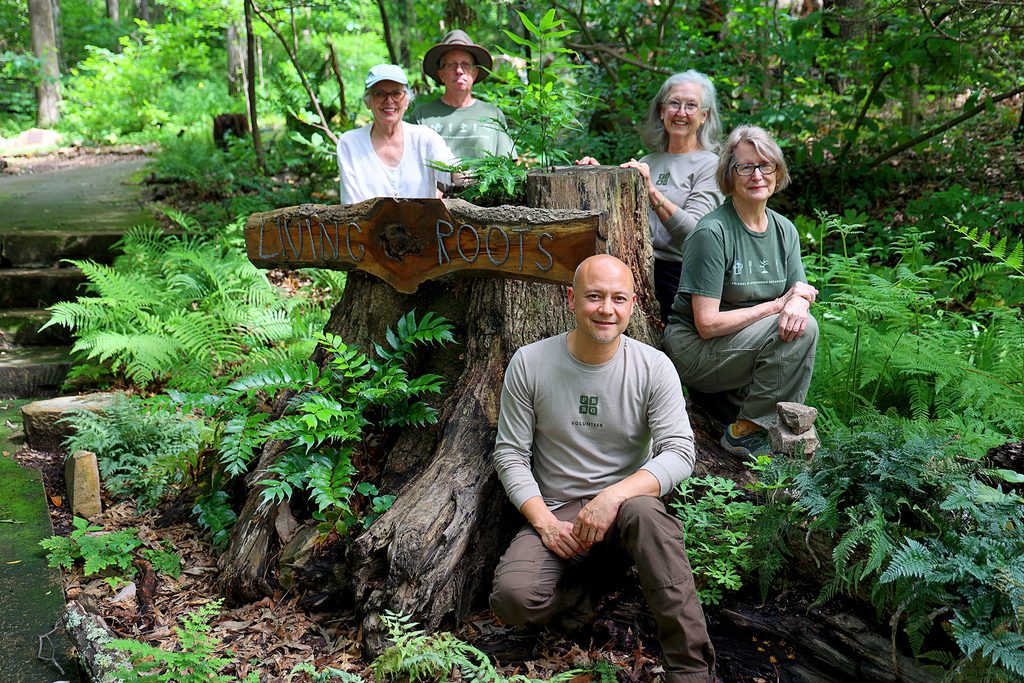
She came home inspired to create a stumpery in the Fern Glade, an idea that became a full-fledged project in early January 2024 when Fern Society members, with help from BBG’s staff, Jefferson County Master Gardeners and other volunteers, began the arduous task of preparing a site in the north corner of the Fern Glade — a task that involved weeks of hard physical labor to remove existing plants, including lots of giant and deeply rooted smilax tubers.
By April, however, the volunteer crew was ready to place hand-picked hardwood stumps (hardwoods are ideal because they decompose more slowly than softwoods), donated by Gray’s Tree Service of Birmingham, roots-up in the site — another labor-intensive undertaking.
Full of possibilities
The volunteers then filled nooks and crannies within the stumps’ root systems with garden soil and planted them with native and hardy ferns, which can thrive year-round, plus a few tropical species for added seasonal interest. Additional companion plants such as mosses, groundcovers and native shrubs were also added to the stumps and throughout the site.
By October 2024, the Living Roots display was ready for its grand opening, which was also a chance for the volunteers to celebrate the fruits of their labors. “It was incredibly hard work,” says Billings, “but we had so much fun doing it!”
And the fun continues because, like all gardens, the stumpery requires regular maintenance. “We try to be out there once a week, sometimes twice a week and sometimes more than that,” Billings says. But there’s no doubt that it’s a labor of love.
Garden visitors have also fallen for the Living Roots stumpery, some even in its early stages of development when the site was only a collection of unended bare roots. “When we first placed the stumps but before they were planted, this guy saw them and said, ‘We could do this to our yard,’” Billings recalls.
According to Billings, who has one in her own yard, stumperies require a bit of effort but are full of possibilities. They provide a host of environmental benefits such as providing habitat for wildlife — the Living Roots display attracts an array of birds and beneficial insects as well as turtles and other wildlife species — and promoting the growth of beneficial fungi and other soil-building organisms. They also offer a gorgeous way to reuse yard debris, including stumps, logs, bark and even driftwood and old lumber.
“Stumperies can be very, very different,” she adds. Varying in size from large installations covering several acres to a single stump, they can also embrace a wide range of gardening styles from formal to naturalized, whimsical to avant garde.
Want to see the beauty and possibilities of a stumpery for yourself? The Birmingham Botanical Gardens’ grounds, including its Fern Glade and Living Roots display, are open seven days a week and admission is free. (Learn more at bbgardens.org).
Interested in creating your own stumpery? Members of the Birmingham Fern Society are happy to share their experience and expertise. BFS is also a fabulous source of information about growing ferns and a source of myriad fern varieties, whether for a stumpery or any garden project, available during their annual plant sale held each June. (Follow their Facebook page for information.)