
As more people are bicycling, walking, running and hiking today, sharing busy highways or narrow backroads with fast-moving motor vehicles make these activities increasingly hazardous. But there is a safer way.
Rail-to-trail greenways convert abandoned railroad beds into smooth, peaceful, shaded places to just ride, walk or jog with no concerns about an accident with a car or truck.
One of the best such greenways is right here in Alabama. It’s now possible to get on a bicycle in Anniston and ride more than 100 miles on a scenic, mostly shaded, paved greenway all the way to Atlanta with no worries about motorized traffic.
East Alabama’s Chief Ladiga Trail was the first such pathway opened in the state back in 1996. Last year it was extended southward to Anniston an additional 6.5 miles, for a total of 39.5 miles from the Amtrak Station in Anniston to the Alabama/Georgia state line. From there, Georgia’s 61.5-mile Silver Comet Trail continues eastward to just outside Atlanta, making the combined length of both trails 101 miles.
The New Section
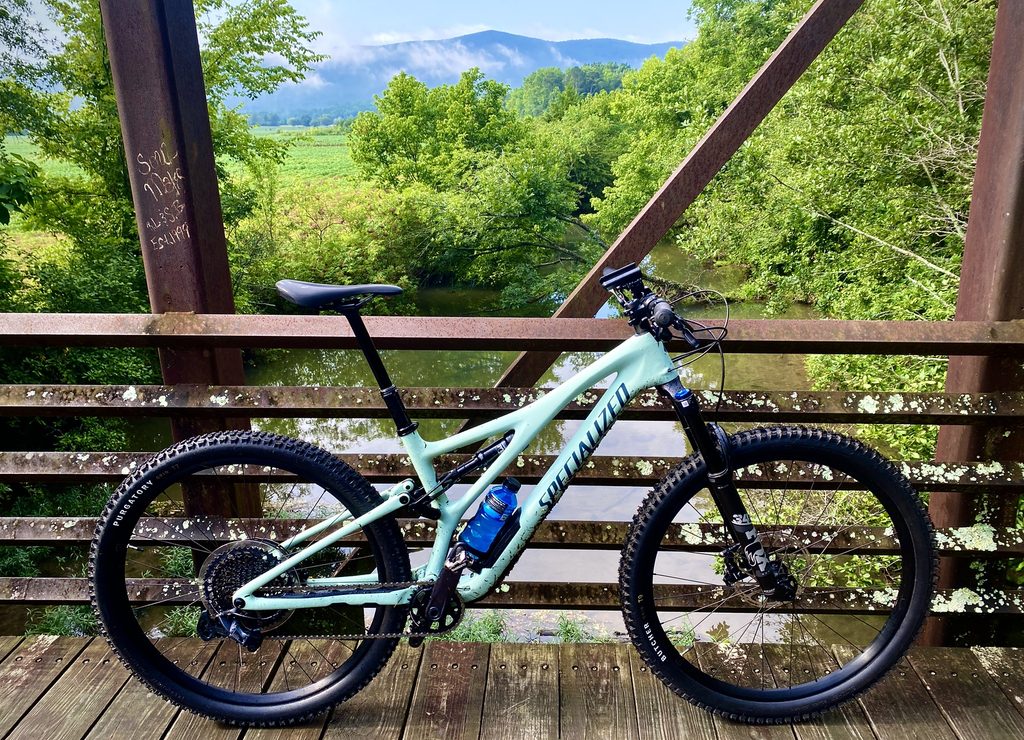
The trail’s newest section opened in April 24, 2025. Anniston Public Relations Director Jackson Hodges says the new section of trail includes several bridges and asphalt paving and cost approximately $7.3 million in city, federal and other funding. As of October 2025, he says, an estimated 2,700 people are using the trail each week, adding that while downtown businesses have reported increased activity, a comprehensive post-extension study has not yet been completed.
A Jacksonville State University study found that the existing Chief Ladiga Trail generated approximately $2.23 million in economic output in 2023 and attracted more than 49,000 visits, Hodges says.
At Michael Tucker Park, the previous southern terminus of the trail, Hodges says improvements are ongoing. These are funded by a $597,520 federal transportation alternatives grant and include improvements to parking, sidewalks, restrooms, shower facilities and lighting. He adds that the city is also coordinating with Amtrak at the Anniston station with the long-term goal of allowing passengers to load and unload their bicycles.
Riding the Chief Ladiga Trail
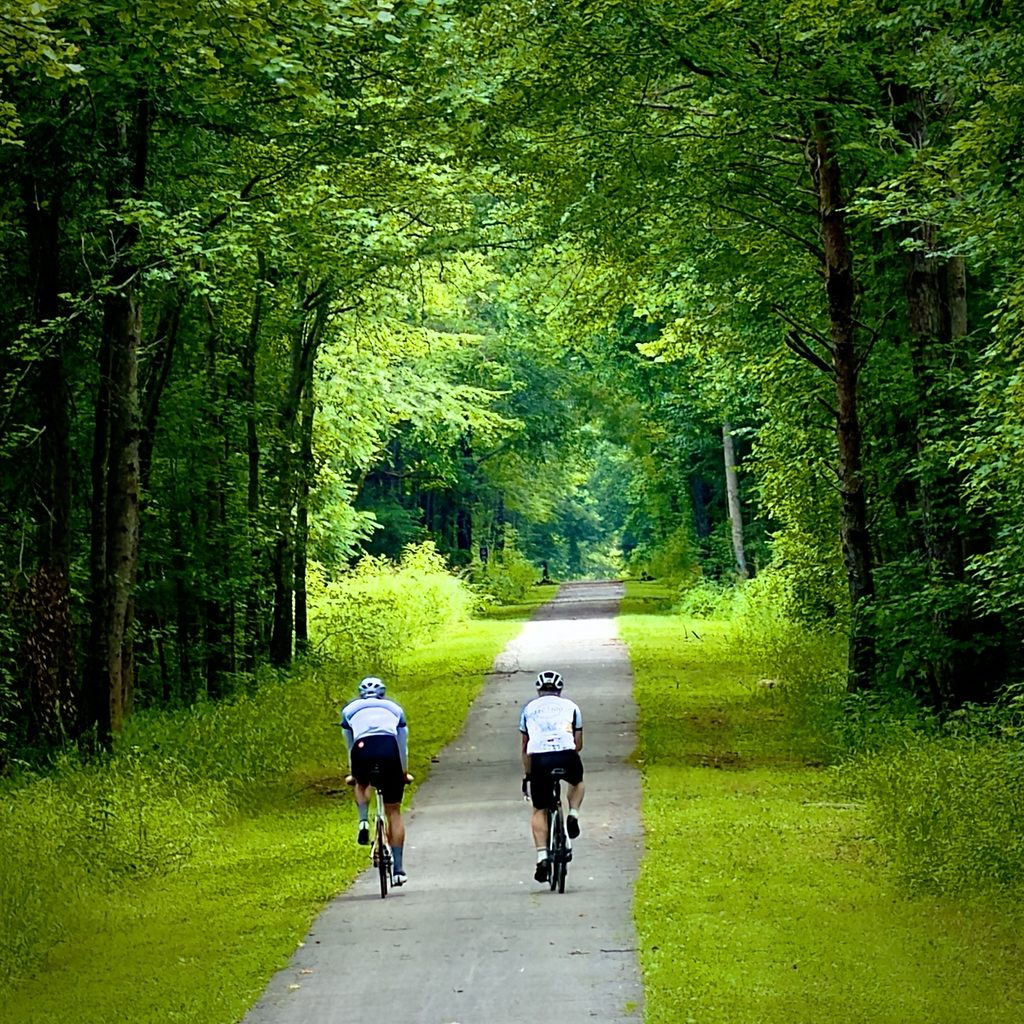
The trail is enjoyed by everyone from novice bicyclists to seasoned long-time riders, hikers, joggers, walkers, and even the occasional skateboarder or unicycle rider. And although it’s almost 40 miles in total length, there are several places to start or stop along the way. Most users do smaller segments for each ride rather than the entire trail at once. Because it follows the now-abandoned railroad bed, the few hills are no problem.
Any bicycle, from single-speed basic bikes to cutting edge race bikes, and these days e-bikes, can easily do a short segment or longer excursions. Along the route, which mostly parallels Alabama Hwy. 21 from Anniston to Piedmont, then U.S. Hwy 278 toward Georgia, there are opportunities for safe parking at numerous points.
Beginning at the southern terminus in Anniston, trail users can park and ride the 6.5 miles to Michael Tucker Park, where the parking lot has just been repaved. This is one of the busier, more populated, sections with bridges spanning two major roadways. There’s also a safety gate where the trail passes through a fire hydrant manufacturing plant, requiring users to press a button and wait about a minute for the gate to open.
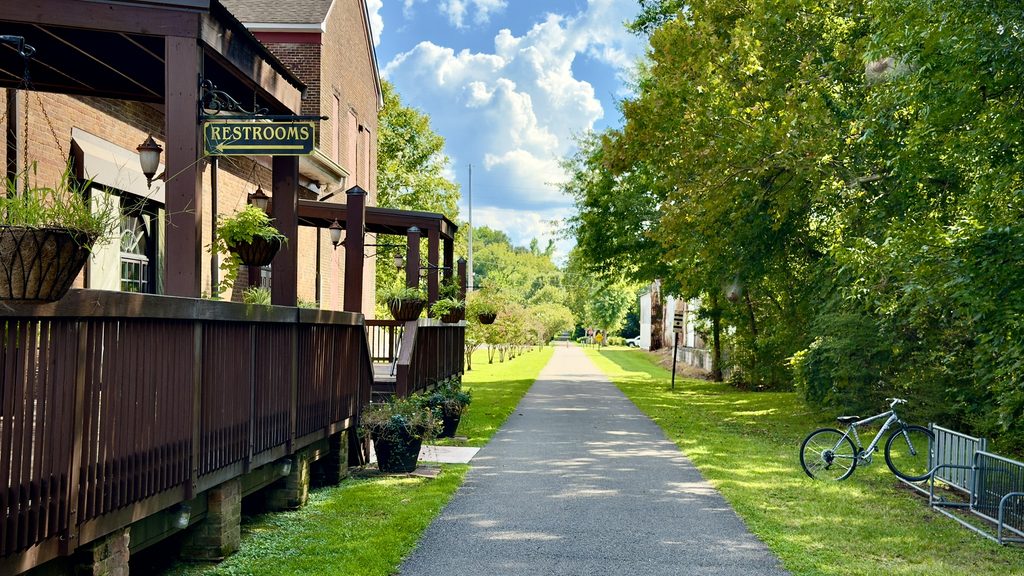
From Michael Tucker Park, the trail becomes more shaded through Weaver and then Jacksonville, where there are restrooms and parking at the former train station. A few miles farther north riders can park at Germania Springs Park after passing through the Jacksonville State University campus.
From there, the next section is nearly continuously shaded for about 10 miles to Piedmont, where the Eubanks Welcome Center offers parking and restrooms. There are several places for lunch in downtown Piedmont as well as bicycle rentals and shuttles.
The 14-mile section from Piedmont to the state line is the most shaded and scenic. While riding here, it’s not unusual to go for miles without seeing another trail user other than the occasional deer or turkey. It passes through broad cotton fields, part of the Talladega National Forest, intersects with the Pinhoti Trail and crosses Terrapin Creek three times on high bridges. Even when temperatures are in the 90s, riding in the shade is surprisingly comfortable with the breeze created at bicycle speeds. There’s one more parking area at Borden Springs, five miles from the Alabama/Georgia state line, but no facilities.
Trail History
The Chief Ladiga Trail began taking shape in 1990 when the City of Piedmont and Calhoun County acquired a portion of the abandoned railroad corridor using a Land and Water Conservation Fund grant. The first 8.9-mile section opened in Piedmont in 1996. Weaver and Jacksonville opened their sections in 1998, and Anniston completed its original section to Michael Tucker Park in 1999. The trail was connected to Georgia’s Silver Comet Trail in December 2008.
The trail is named for Chief Ladiga, a Creek leader with strong ties to the areas that became Jacksonville and Piedmont. He was among the Creek leaders who signed the Treaty of Cusseta in 1832, under which the Creek Nation ceded its remaining Alabama territory east of the Mississippi River during the era of Indian removal.
Ladiga received an individual land allotment and later sold a portion of it to developers whose purchase became Jacksonville. He later settled near present-day Piedmont, where he is buried. The trail was named in recognition of his historical connection to the communities and landscape through which the former railroad corridor passes.