
Professor Carver arrives in Tuskegee
“I cannot offer you money, position or fame,” began the closing line of the job offer from Booker T. Washington, principal of Tuskegee Institute and one of the nation’s leading voices for African American industrial education. “I offer you in their place work, hard work, the task of bringing a people from degradation, poverty and waste to full manhood.”
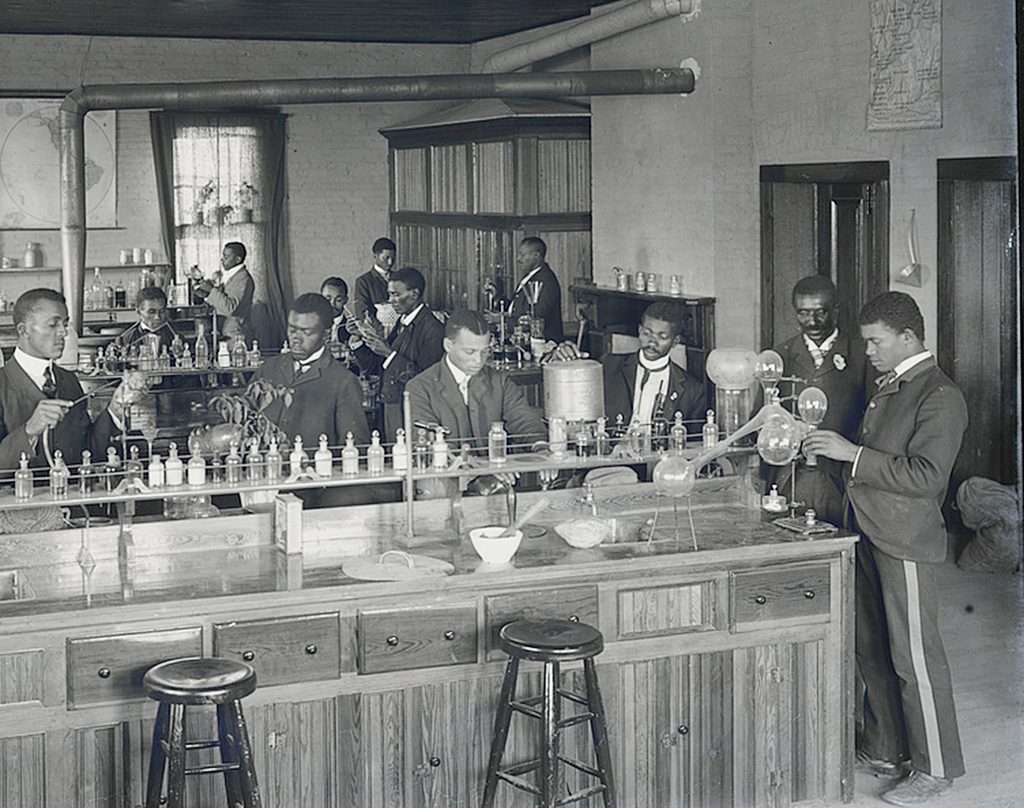
The letter’s recipient was scientist and educator George Washington Carver, who Washington hoped to recruit for Tuskegee’s new School of Agriculture. Born in Missouri near the end of the Civil War, Carver was teaching at his alma mater, the Iowa State College of Agricultural and Mechanical Arts. Accepting Washington’s offer, Carver arrived in Tuskegee in October 1896 and remained there until his death almost 50 years later. His initial annual salary was $1,000 (roughly $40,000 today) plus living quarters and space to build his own research laboratory.
Through his coursework and broader outreach efforts in surrounding farming communities, Carver distinguished himself as one of the nation’s leading apostles of crop diversification. Few did more to break the southern overreliance upon cotton production. He championed a wide array of alternative crops, especially the simple, powerful peanut, for which he identified more than 300 practical uses. His techniques and innovations helped struggling farmers lessen their dependence on expensive commercial fertilizers.
Although declining health eventually took him out of his classroom, he continued on the lecture circuit until his death in 1943. Like Booker T. Washington, he is buried on Tuskegee’s campus. Reflecting the spirit in which he came to the Institute, Carver’s tombstone reads, “He could have added fortune to fame, but caring for neither, he found happiness and honor in being helpful to the world.”
— Scotty Kirkland
Co-ops, forestry to take coordinated approach to wildfire response
Alabama’s landscape is defined by its forests, rural communities, and the people who work every day to protect them. In that spirit of stewardship, representatives from Alabama’s electric cooperatives and the Alabama Forestry Commission are working together to strengthen communication, coordination and mutual understanding in the face of wildfire risks across the state.
An initial meeting held earlier this year marked an important step toward building a stronger relationship between two organizations that play vital roles in Alabama’s rural areas, says Jantzen Flowers, regulatory compliance specialist with the Alabama Rural Electric Association.
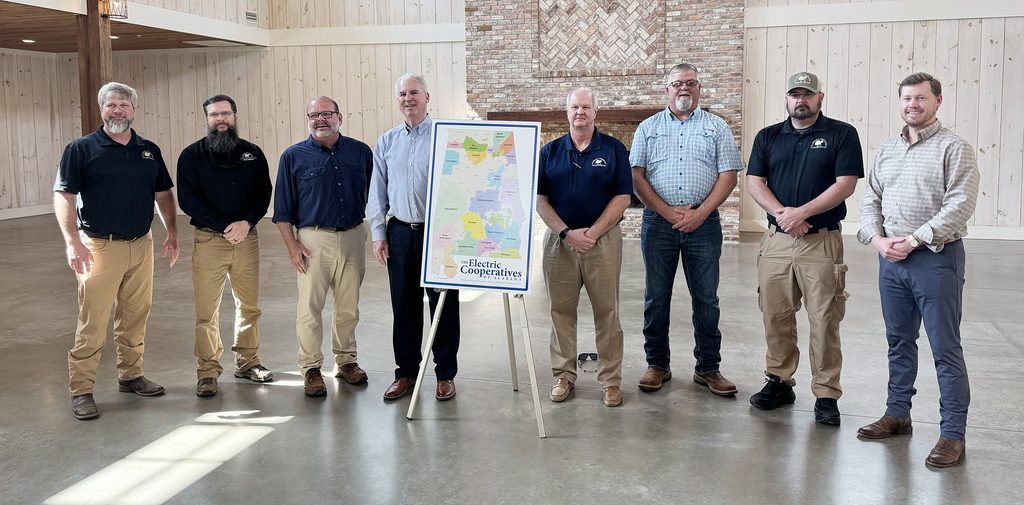
“While each serves a distinct mission, the cooperatives powering homes and businesses, and the Forestry Commission protecting the state’s forests, both recognize that wildfire response is strongest when agencies and utilities work side by side,” Flowers says.
“The meeting focused on building familiarity between teams, understanding each other’s responsibilities, and identifying ways to streamline response efforts when wildfires threaten rural communities,” he adds. “These conversations emphasized the importance of communication, information sharing, and coordinated field awareness during emergency situations.”