Patriotic icon and the American Village are ready for America’s 250th birthday
By Lenore Vickrey
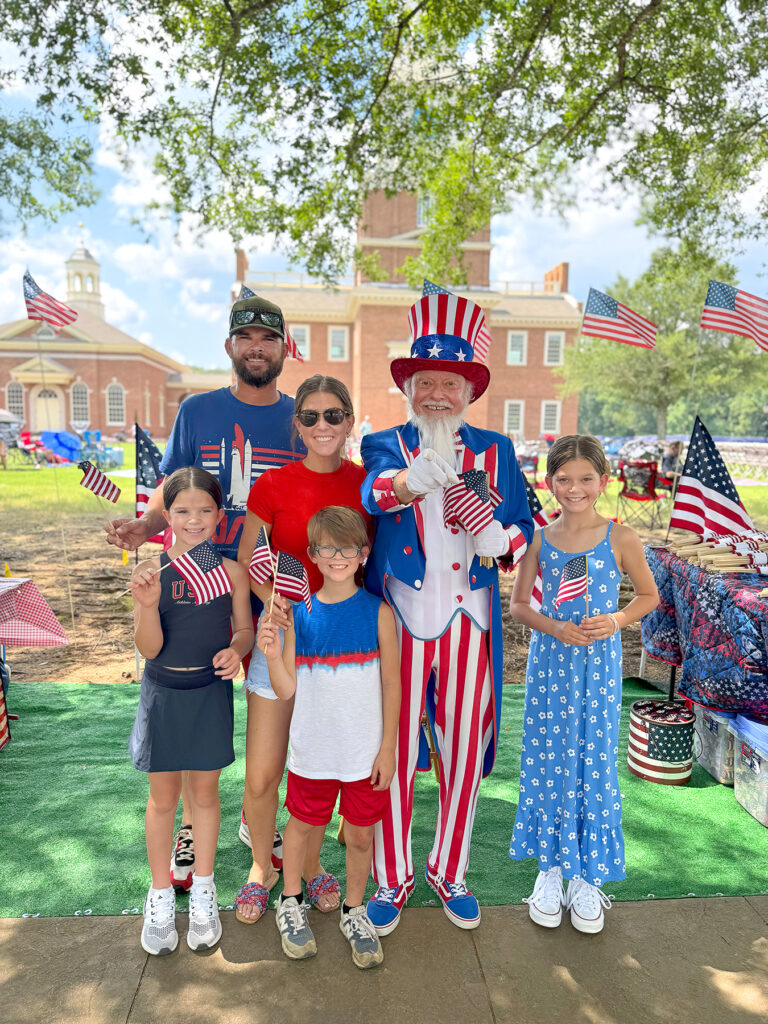
For Katelyn and Anthony Albritton, family traditions matter. They celebrate birthdays. They cherish milestones of their children. They give and receive presents at Christmas.
But every Fourth of July, one tradition stands out.
Before the fireworks burst across the sky, before the hot dogs hit the grill, before the watermelon is sliced and served, the Albrittons make a pilgrimage to the American Village in Montevallo for one essential Independence Day ritual:
A photo with Uncle Sam.
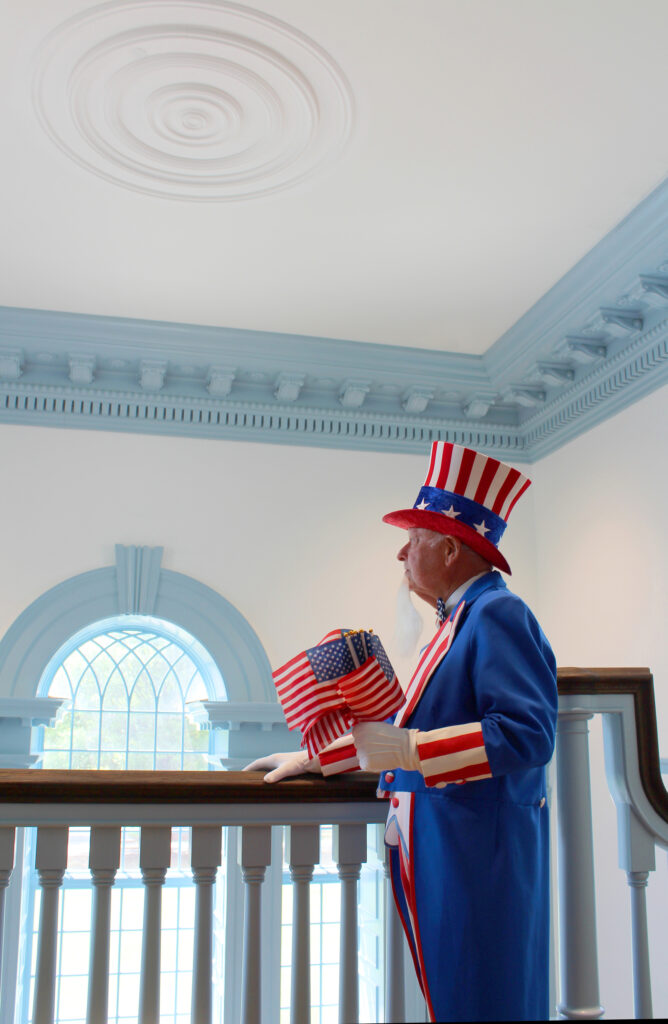
Not the Uncle Sam from posters or history books — but Alabama’s very own.
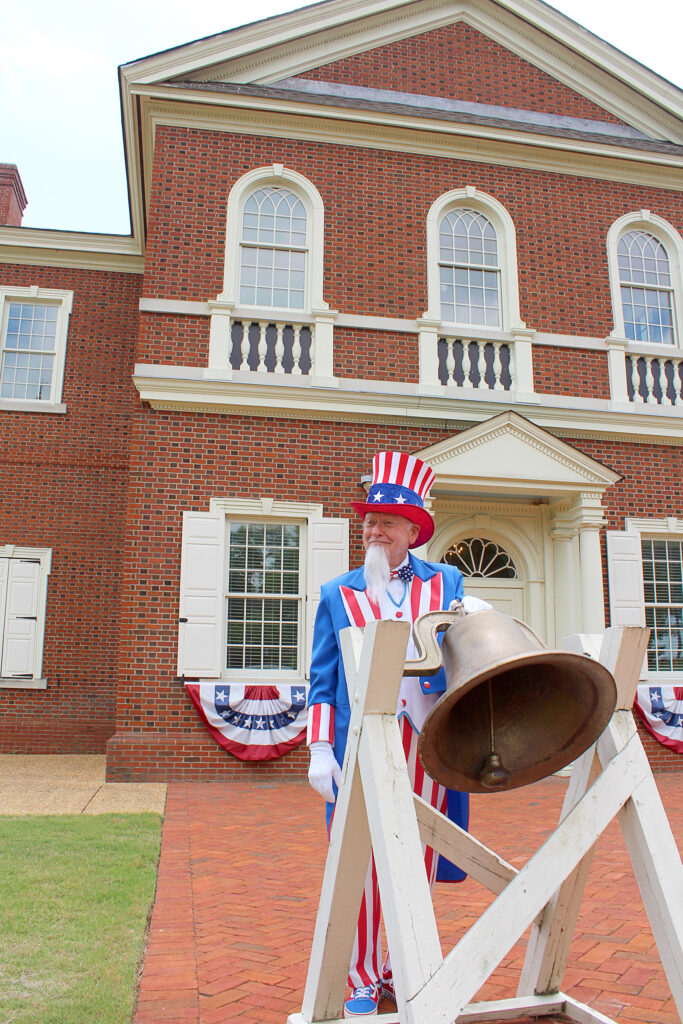
“I enjoy seeing them every year,” says JDanny Cooper of Montgomery, the man behind the white goatee, towering top hat and star-spangled smile. Since 2012, he has portrayed the iconic American figure every July 4 at the American Village, greeting thousands who come seeking a little patriotism and nostalgia amongst the 1776-era buildings and reenactors who create memories they won’t forget.
“People from all over the United States and foreign countries come,” Cooper says. “It’s amazing to me that people will plan vacations and they drive and find a place to stop on Independence Day, and when they read about American Village, this is where they want to stop. And they often want to see Uncle Sam.”
And he’ll be ready to greet them. This year, as America celebrates its 250th birthday celebration, Cooper will appear all day on July 4 during the American Village’s “Sweet Home 250 Festival” July 3-4.
For most people, wearing a full costume with jacket, striped trousers and a top hat in Alabama’s July heat might sound unbearable. But for Cooper, now 78, stepping into the role each year is nothing short of a calling.
“It’s the heart of what I love to do each year,” he says. “Being able to portray someone that people, especially veterans, respond to, is really important.”
Long before he became Uncle Sam, Cooper spent decades in public service and politics, retiring in 2012 after 23 years as executive vice president of a professional association and a distinguished career in state and national government affairs. But his connection to the American Village stretches back even further — to the very beginning, when its founder, the late Tom Walker, first sketched his dream for the campus on the back of a napkin.
Cooper was a close friend of Walker, who first asked him to portray Uncle Sam. “At first, I didn’t think I was tall enough,” says Cooper, “but the top hat makes up for that.”
He worked closely with Walker to turn the dream into reality, through legislative and administrative contacts, and helped him secure funding for not only the 188-acre campus but the educational field trips already experienced by 750,000-plus students, civic educational programs, and the National Veterans Shrine, all while promoting love of God, country and family.
Today he likes nothing better than to be the unofficial guide for the village, pointing out the replicas of historic landmarks and urging visitors not to miss dramatic reenactments like the Battle of Concord Bridge.
On July 4, children will spot him immediately.
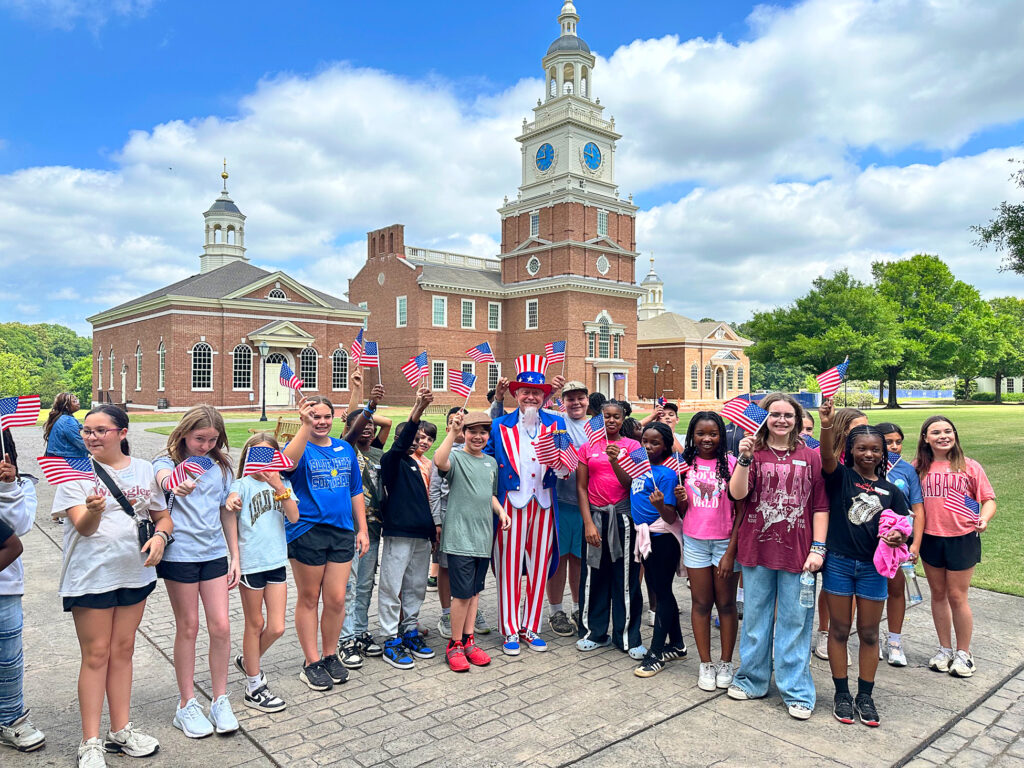
“Uncle Sam! Uncle Sam!” They race toward him, laughing and waving as he hands each one an American flag, distributing more than 7,000 flags each Independence Day. This year, he’s ordered more for the larger-than-
expected crowds.
“I’m not Uncle Sam, but this uniform and these flags represent Uncle Sam,” says Cooper. “I can’t describe how many times I’ve been hugged around the kneecaps on Independence Day! There’s nothing in the world like it.”
For the Albritton family, who live in Montevallo, he’ll always be Uncle Sam. “He’s like a family member that you see each year,” says 10-year-old Emmaline. She and her sister, Nora, 12, and brother Sam, 9, look forward to their parents bringing them to the annual event. Sam, who shares the same name with his “uncle,” is proud of the acrylic flag paperweight Cooper gave them last year.
Sometimes Katelyn’s work schedule as an ER nurse at UAB makes it hard to stay all day at the American Village, but they wouldn’t miss seeing their “Uncle.”
“Last year, we went, took the picture and I went straight to work,” remembers Katelyn. But they kept the tradition going because “any family tradition is important that instills fun, teaches about our culture, and educates about what America is,” she adds. “Hopefully they will do the same with their children when the time comes.”
For Cooper, his role carries profound meaning because it reflects the mission of the American Village itself — preserving America’s story for future generations, just like the Albrittons.
He often repeats the words of Tom Walker:
“Our young people cannot safeguard what they do not cherish. And they cannot cherish what they do not know.”
“To me, those are among the most powerful words any American has ever spoken,” Cooper says. “History repeats itself. Unless we teach our children what to cherish, how can they know what to cherish and to safeguard?”
Emotion overtakes him when he walks through Independence Hall and sees Walker’s portrait hanging inside. Even more moving is stepping into Walker’s office, preserved exactly as it was before his death in September 2025, just hours before the opening of his crowning achievement: the replica of Independence Hall.
There from the beginning
“JDanny was really side by side with Tom in the beginning, even before the campus was established,” says Alan Miller, Walker’s successor as president and CEO. “And he’s been instrumental to our success over the years. He’s really become one of the features of our Independence Day celebration.”
The thousands of photos taken with Uncle Sam and families tell the story of that impact. In the beginning, his costume was humbler: He wore red Converse sneakers and his beard was made of cotton balls. “It looked terrible,” Cooper recalls with a laugh. “The children didn’t notice but the adults did.”
His costume has come a long way. The red and white striped pants, jacket and top hat are now professionally made. His shoes are red, white and blue Van’s. And his goatee is longer and more realistic, thanks to expert help from makeup artists at the Alabama Shakespeare Festival.
Like the Albrittons, being at the American Village on July 4 has become a tradition for Cooper and his own family. With the help of his son, Jay, he arrives the day before to set up a special photo-op area to staple a 10-foot by 20-foot carpet of Astro-turf to the ground in front of Independence Hall for families to stand to have their photo made with Uncle Sam.
Some of his most meaningful encounters happen with veterans. To each one he meets, Cooper presents a $2 bill signed by Uncle Sam on the side showing the signing of the Declaration of Independence and dated July 4. He makes sure their children and grandchildren hear what he says to them. “I want to make sure they know how much they are appreciated, respected and honored and thanked, and they and their families are remembered for their sacrifices.
“I also ask if they have registered at the National Veterans Shrine (at the American Village). It is the only place in America where each veteran can be forever honored by name, service record and their lives before and after their service, if they returned. Some percentage of them have not, but before they leave, they will be.”
Veterans have a special place in his heart. His uncle, Col. Carl Cooper, was one of the longest living World War II veterans in the state and was featured in Alabama Living’s story on Jeff Rease’s Portraits of Honor in November 2020. The Marine colonel, who died in 2021 at the age of 101, is among the veterans featured in the Shrine, as is JDanny’s father-in-law, Henley Carter, who landed at Omaha Beach.
When student groups visit the Shrine, those with veterans in their family are allowed to ring a ceremonial bell in memory of or to honor their relative. “You can hear the bell ringing all over the campus,” says Cooper. “It is one of the sounds of freedom heard here every day.”
Although problems with his back prevented him from serving in the Vietnam War after he graduated from college in 1970, Cooper has spent a lifetime honoring those who did serve in uniform. Every year he personally places American flags on veterans’ graves, a tradition that began with 36 graves at his home church in Chilton County and has grown to 108.
He pauses, recalling the words of a special teacher. “The most important thing about Uncle Sam is to represent something that I hope would make my 9th grade civics teacher, Billy Wyatt, proud. He ended every class by saying, ‘Say something positive about your country today. When you see the flag, always put your hand over your heart for a second. Say something friendly to a neighbor or to a student.’
“This gives me a chance to do that and, hopefully, I inspire young people and adults to do it also.”
Editor’s note: Uncle Sam is available to speak to veterans’ groups, historical societies, churches and other groups. Contact him at unclesamflagwaver@gmail.com.
So who was Uncle Sam, really?
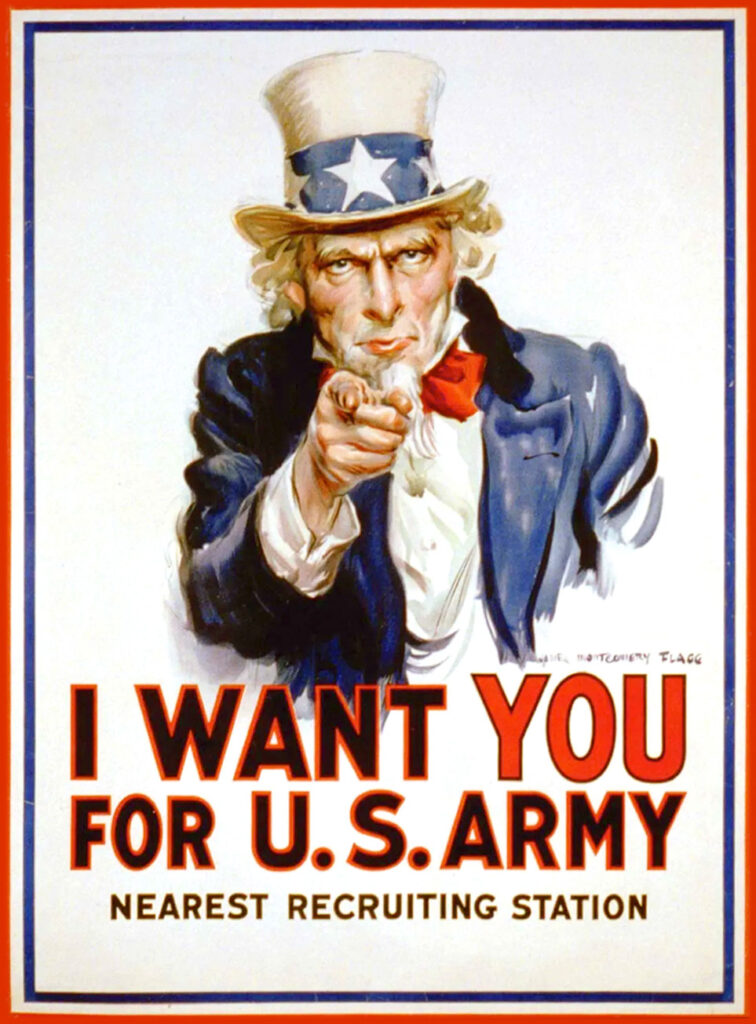
The white haired, goateed man in the top hat and striped pants has been part of American lore for more than 200 years. Legend says the original person was a meat packer named Samuel Wilson of Troy, N.Y., who provided packages of preserved meat for soldiers during the War of 1812. The packages were stamped with U.S., for United States, but some of the troops who knew Sam Wilson told their buddies it stood for Uncle Sam. A newspaper picked up on the nickname, and by the end of the war, the name had become synonymous with the United States. Cartoonist Thomas Nast created an illustration for Uncle Sam for the cover of Harper’s Weekly in 1872 and he was often depicted in political cartoons of the day. In 1917, artist James Montgomery Flagg drew the stern-looking character, using himself as a model, for the famous Army recruitment poster, “I Want YOU for the U.S. Army,” the image that endures today.