Off-the-beaten-path atmosphere in the center of Alabama’s popular beach destination
Story & photos by Colette Boehm
“It sure would make a great trail system.”
That simple thought crossed Phillip West’s mind more than 20 years ago when, as a graduate student, he toured 590 acres of Gulf maritime forest owned by the City of Orange Beach. He saw natural alignments in the land—corridors that seemed to invite exploration. He noticed connections that extended onto adjacent state park property.
Later, when West began working for the city, he shared his vision with longtime Gulf State Park superintendent Hugh Branyon.
“Of course, the big question initially was whether the superintendent of Gulf State Park would even allow us to pursue it,” West recalls. “After meeting with Hugh a few times and going over the alignments and the possibilities, he became enthusiastic about it.”
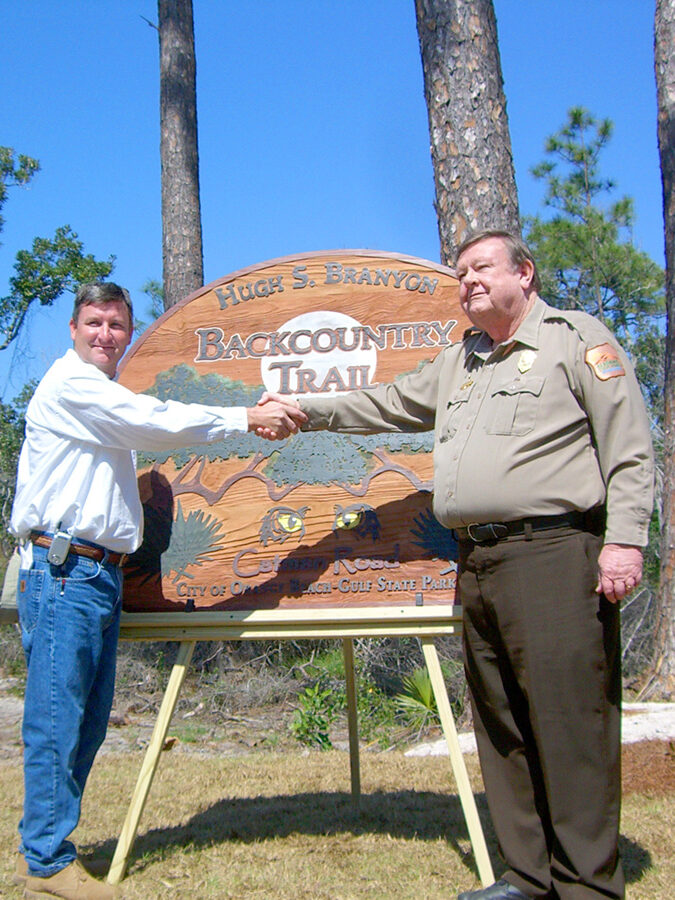
The two began studying maps, weighing options, and imagining what could be. Their first step was modest: a 1.5-mile section of what is now known as Catman Road. From there, they built the trail piece by piece.
More than two decades later, that early vision has grown into a nearly 30-mile trail system winding through Gulf State Park and surrounding communities—now recognized as one of the finest of its kind in the country.
The Hugh S. Branyon Backcountry Trail now bears the name of that longtime superintendent, and readers of USA Today voted it the “Best Recreation Trail in the U.S.” last year. The Alabama Tourism Department named it the 2025 Attraction of the Year.
According to a Jacksonville State University study, more than 770,000 unique visitors use the trail annually. Yet despite its popularity, it still offers an off-the-beaten-path atmosphere in the heart of Alabama’s busy beach destination. What began as a welcome addition to local recreation has become a major draw for residents and visitors.
The Hugh S. Branyon Backcountry Trail was a groundbreaking collaboration when it launched in 2003—and it continues to set records, gain recognition, and attract visitors to Gulf State Park. It was Alabama’s first multi-use recreational trail to be designated a National Recreation Trail, a distinction reserved for some of the country’s highest-quality trail systems.
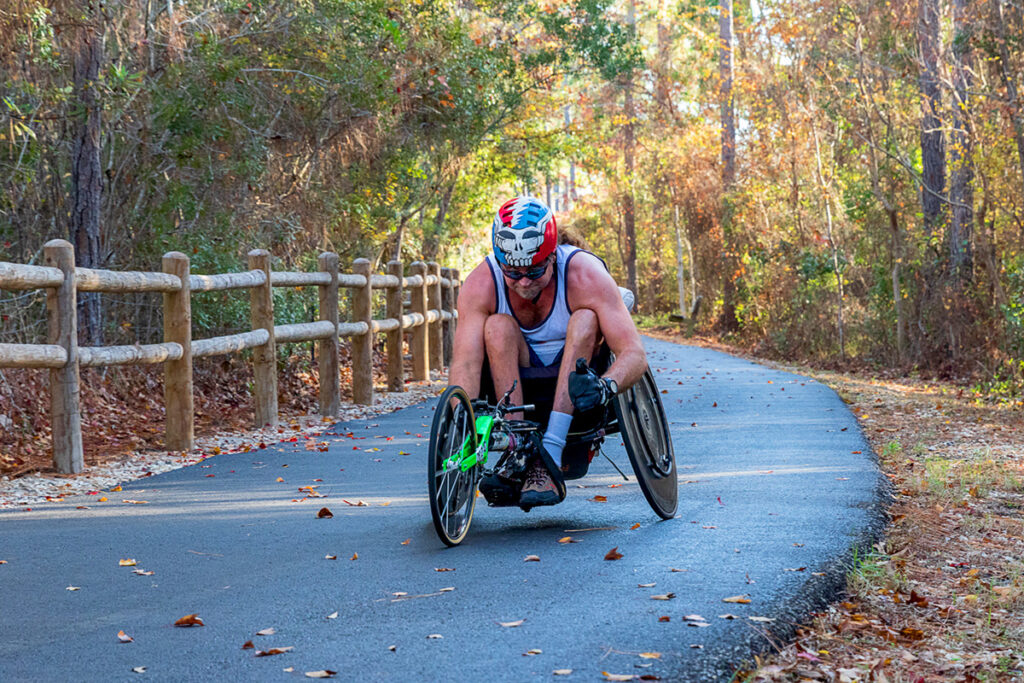
Today, miles of paved pathways wind through the park’s diverse ecosystems and extend into the cities of Orange Beach and Gulf Shores. With another expansion already underway, the trail is poised to become one of the longest ADA-compliant recreational trail systems in the Southeast.
“We welcome thousands of visitors to our campground, fishing pier, and beachfront lodge each year,” says Matthew Capps, director of State Parks for the Alabama Department of Conservation and Natural Resources. “But the Backcountry Trail gives people who might not otherwise go into the park an introduction to its beauty and biodiversity.”
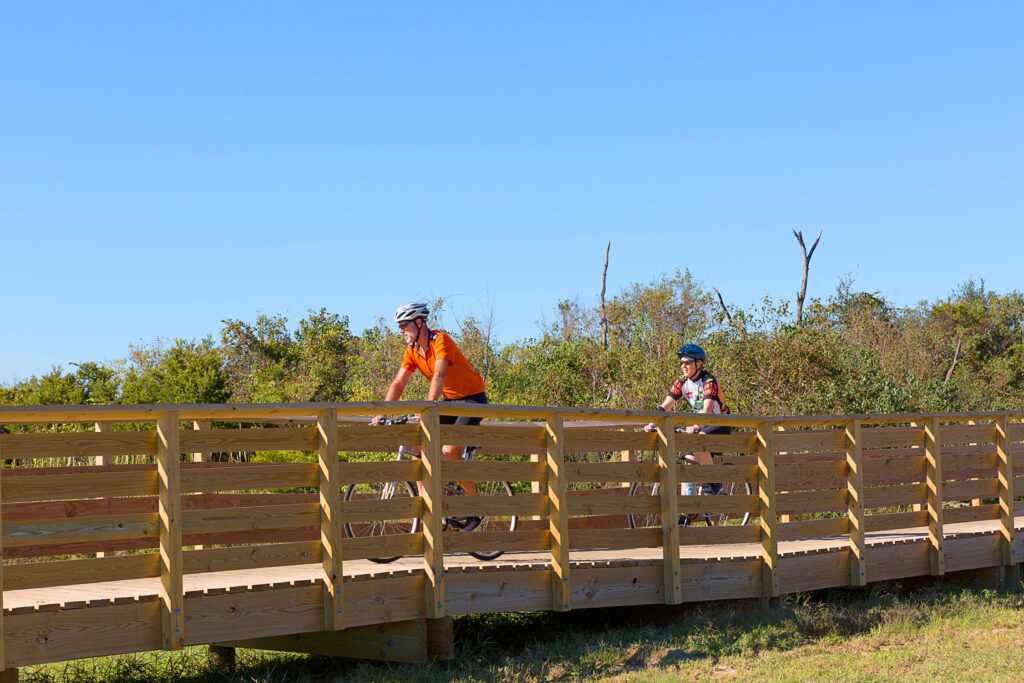
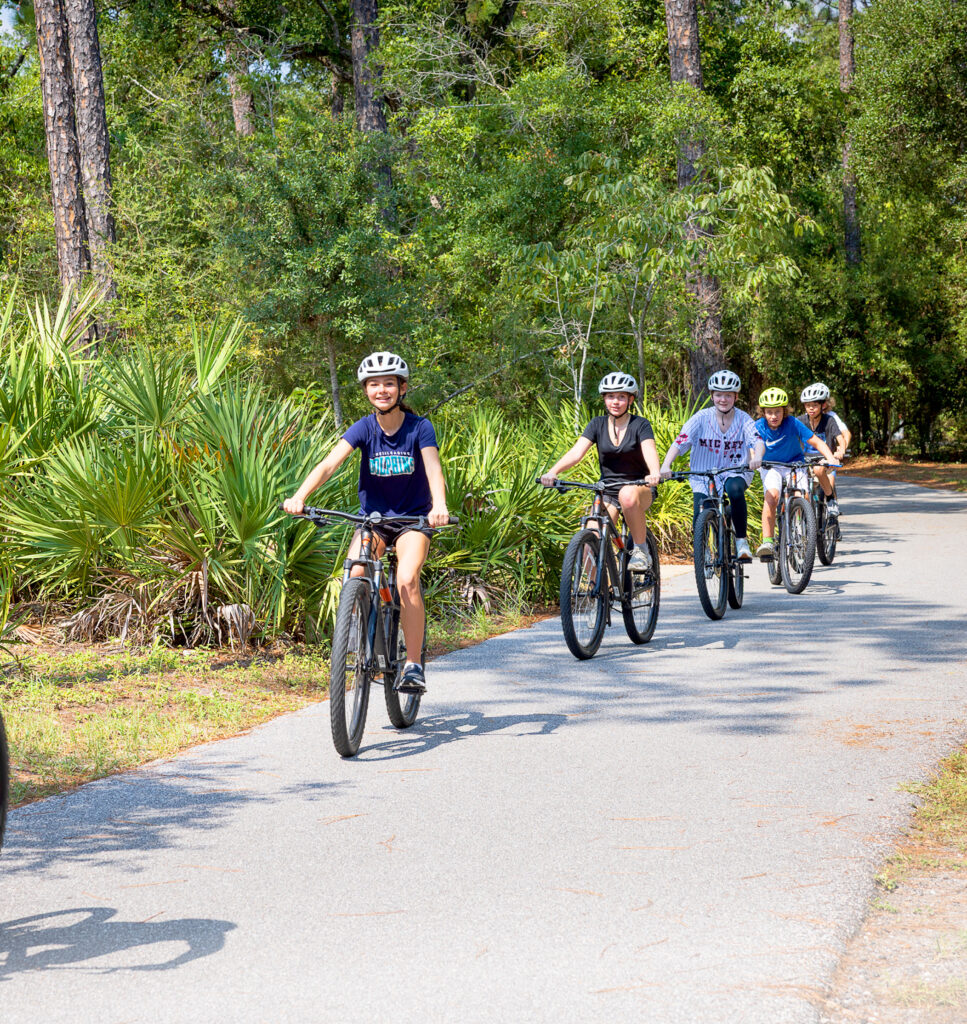
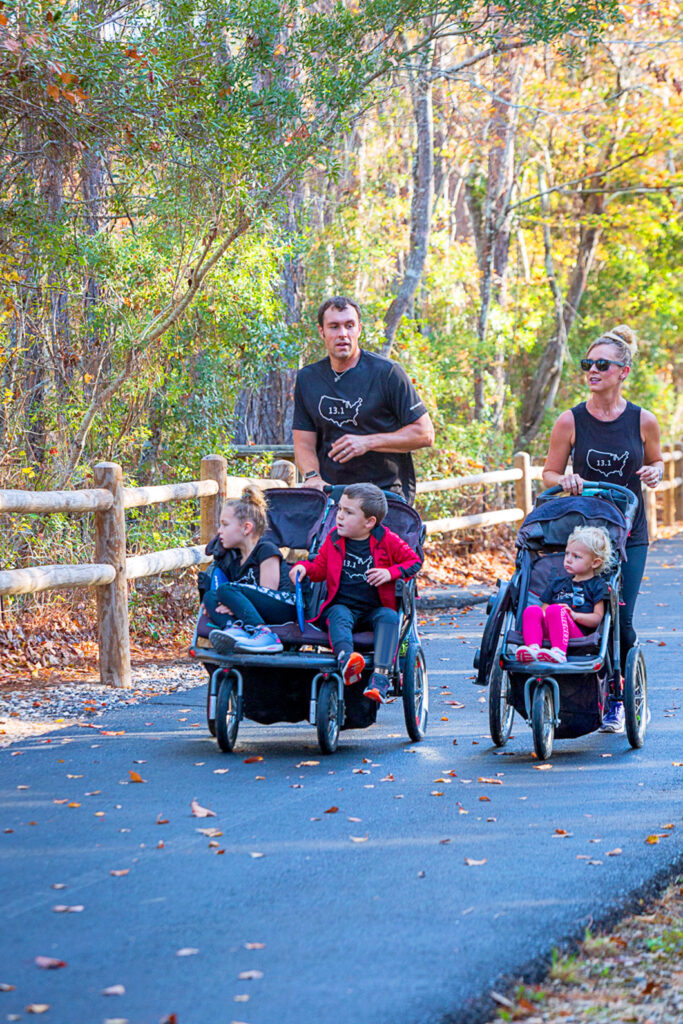
Over the years, the trail has expanded through grants, partnerships, and cooperation among the park and the cities of Gulf Shores and Orange Beach. Those collaborations have created a system designed for a wide variety of users—walkers, runners, cyclists, birdwatchers, and families.
One of those users is Stacia Collins, a local resident who retired to Orange Beach after a sales career in Atlanta. She can be found on the trail nearly every day.
“Monday through Sunday,” she says with a laugh. “I’m out here every day.”
While she once ran competitively, Collins now simply enjoys spending time outdoors. She runs in the morning and bikes in the afternoon, greeting everyone she passes with a smile and a kind word.
“I think. I pray. I’m just grateful I can do it,” she says. “The diversity and the beauty of nature—and the people I meet—are just wonderful. And they keep it so gorgeous,” she adds, referring to the maintenance crews she greets during her daily outings.
“I ride my bike about 17 miles every day,” Collins says. “But when I want to see something further, I’ll go into Gulf Shores and I’ll ride through there. There’s always something new to see.”
That sense of discovery is part of the trail’s appeal.
“Gulf State Park’s diverse ecosystems create a wide range of experiences along the trail,” Capps explains. “That diversity, combined with easily accessible and ADA-compliant trailheads, allows the park to welcome a broader audience. Locals and visitors alike can enjoy views that range from dune habitats to lakeside scenery and maritime forest.”
Modern overpasses now connect the trail to the beach at the Gulf State Park Pavilion and Interpretive Center and at The Lodge at Gulf State Park. The trail also links to Woodside Restaurant and a variety of amenities, including a butterfly garden, pavilion, boulder park, parkour course, scenic overlook, and eagle-viewing platform. Free bicycle rentals are available at several trailheads and parking areas within the state park, and Segway tours operate from the Lake Shelby access point.
Branyon’s early enthusiasm has carried forward through the many park and city employees who maintain the trail—and the thousands of visitors who use it. Because of its success, Hugh Branyon’s name has become widely recognized among outdoor enthusiasts across the region.
West remembers working alongside Branyon before his retirement in 2009 and reflects on the decision to name the trail in his honor.
“I remember thinking, ‘This really isn’t enough of an honor,’” West says. “He deserves entire parks named after him.”
Over time, however, West says he has come to appreciate the significance of the tribute.
“The more we started seeing the trail’s name in magazines, and then recently, big accolades, national awards, the Attraction of the Year designation…(I realized) Hugh would be proud of that.”
The Value of Local Partnerships
The trail’s growth is far from finished.
A new connection under construction by the Alabama Department of Conservation and Natural Resources will provide even more opportunities for users. A multi-use path is being extended along Highway 180. When completed, the City of Gulf Shores’ six miles of trail along that corridor will link together the full 22 miles of the highway—also known as Fort Morgan Road—with the existing trail system.
“When that connection is complete, we’ll have a 50-plus-mile, ADA-compliant trail spanning multiple ecosystems and habitats,” says West. “It’s unique. It’s diverse and unique in the fact that we have such an array.”
For Capps, the trail represents something even larger
than recreation.
“This trail is an outstanding example of the value of local partnerships and what they can accomplish together,” he says. “We are grateful for the leadership and foresight Mr. Branyon showed all those years ago. And of course, the parks system is proud of the work we continue to do alongside the cities of Gulf Shores and Orange Beach.”