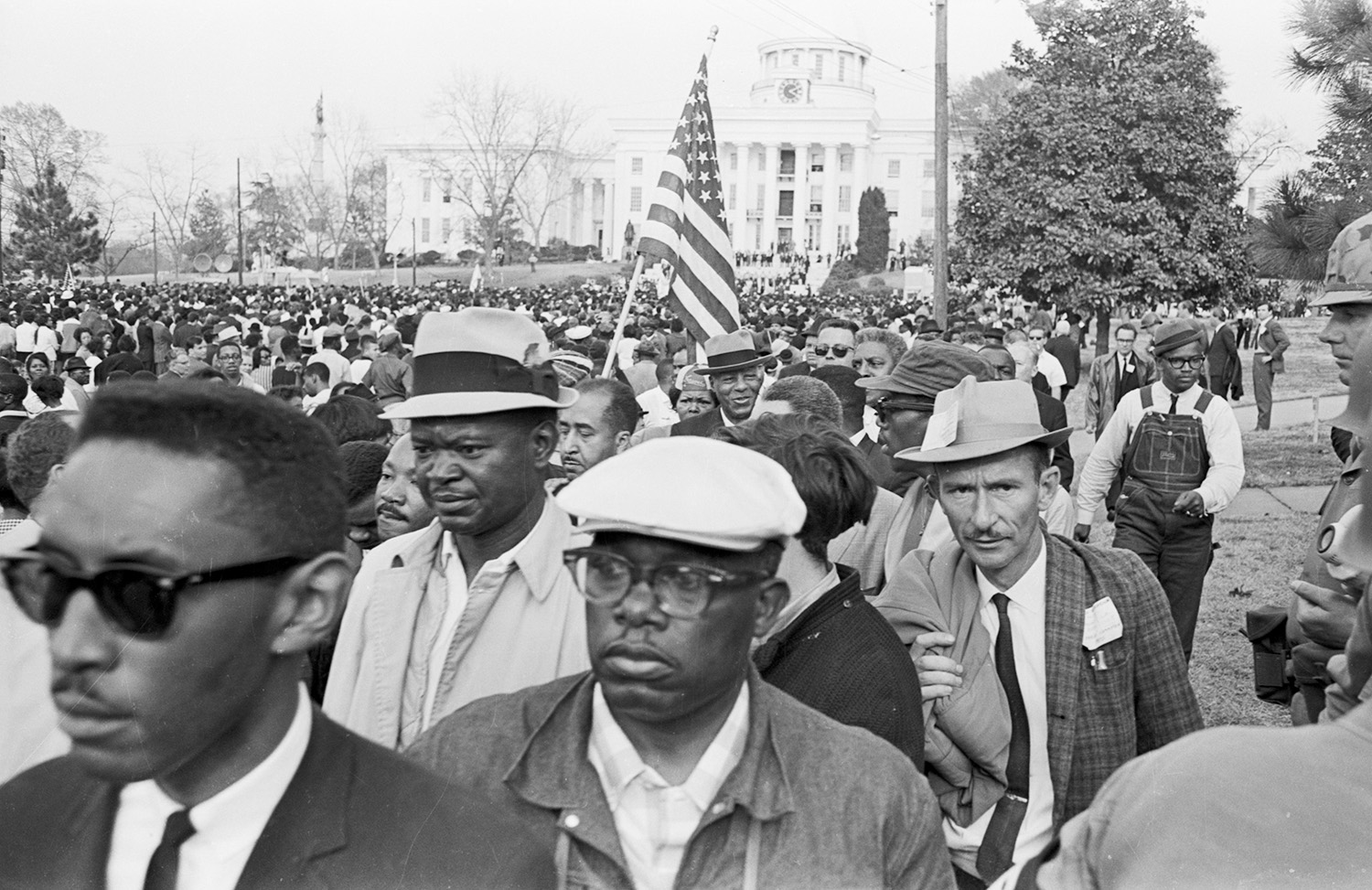
Some of Alabama’s mirthful monikers, explained
By Emmett Burnett
“What’s in a name?” said Shakespeare, in “Romeo and Juliet.”
“Plenty!” answered Alabama, the state with dozens of municipality, community, and bridge monikers – whimsical, curious, and slap out odd. Actually, ‘Slap Out’ is one of them. Let’s look at it and seven more.
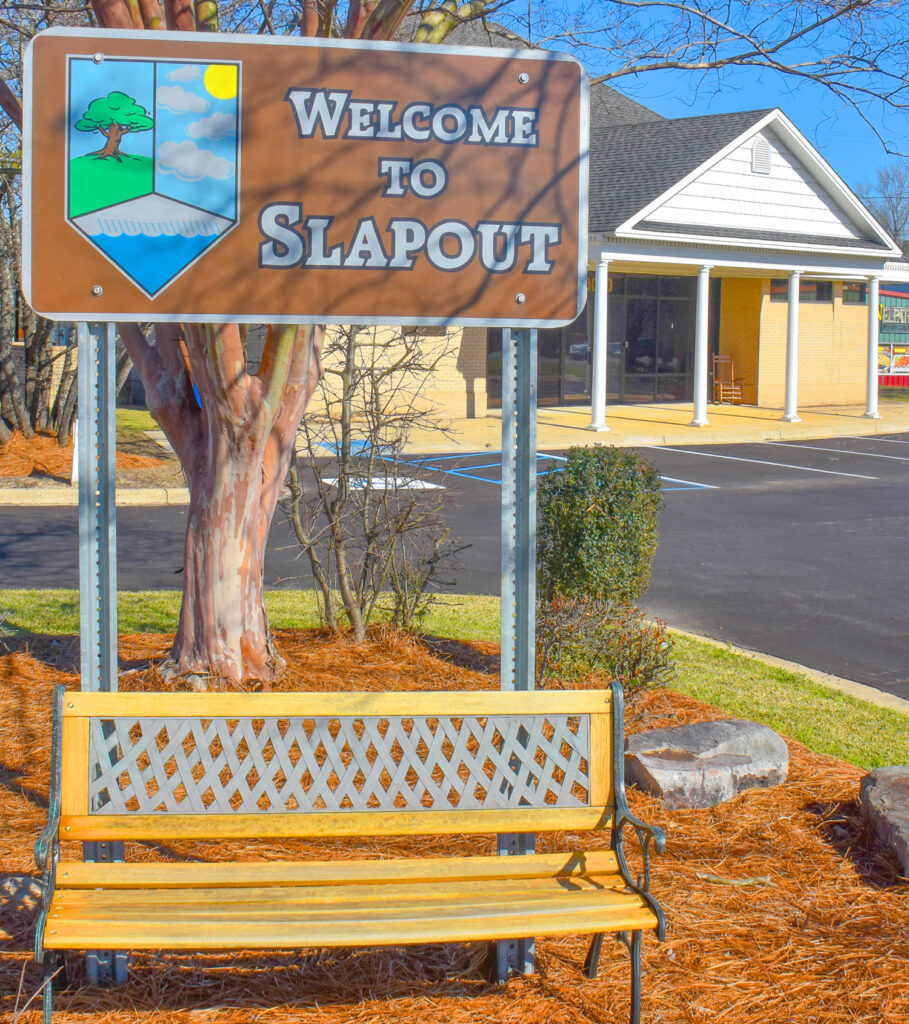
Slapout
A community of Holtville, Slapout, Alabama was named for a storekeeper who was not a very good one. The shop often had items out of stock on days ending in Y.
When customers requested to purchase a want or need, the storekeeper’s default mode was, “I’m sorry, we are slap out.”
“American Idol” TV star and Slapout native from early childhood Jessica (Jess) Meuse tells the story. “He would say, ‘I’m slap out of this and I’m slap out of that,” she recalls, about the hometown legend of the 1920s. Meuse adds, “Before you knew it, boom! that’s the name of the town and the name never went away.”
Despite Slapout’s name, according to the “American Idol” competitor, the people never lacked support. “They have been with me every step of my career,” she says. “When it comes to support, they were not slap out.”
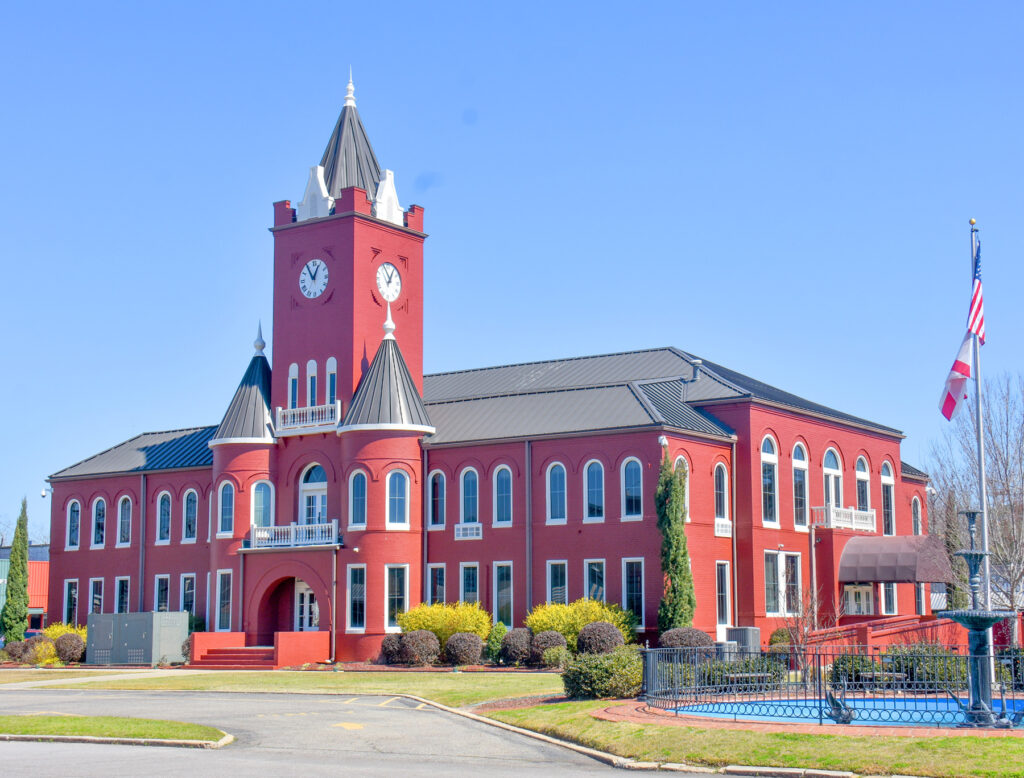
Elba
Before there was Elba there was Bridgeville and then Bentonville. But the townsfolk wanted something different than the monikers bestowed upon their town. But what could they do? You can’t just draw a name out
of hat.
Actually, that is exactly what they did.
“Our town fathers assembled and each placed their name choice in a hat,” says Elba historian Nell Gilmer. She says that on Dec. 8, 1851, “The probate judge had recently read a book about Napoleon Bonaparte and his exile to the Mediterranean Island of Elba. Inspired by the book, the judge put Elba in
the hat.”
His choice was drawn. Elba was the winner. The town incorporated on April 13, 1853. Napoleon died May 5, 1821, never knowing his tie to Coffee County’s hat selection.
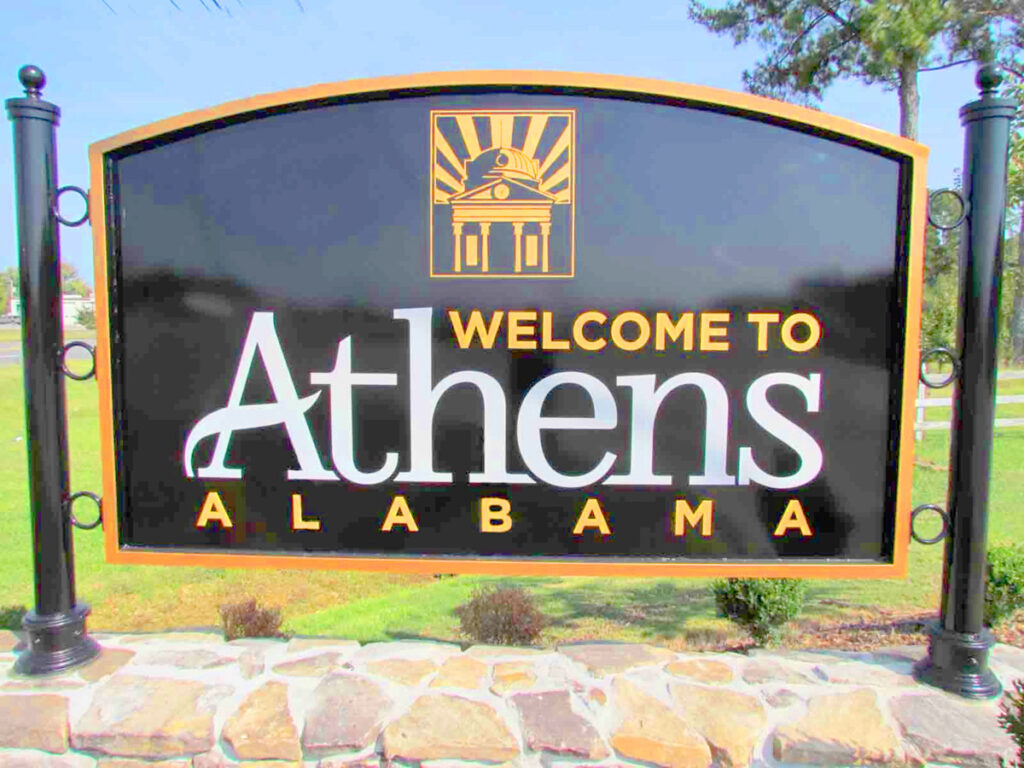
Athens
No one knows exactly the connection of Athens, Greece, to Athens, Alabama. A prevailing theory is offered by Limestone County archivists: “Our settlers were powerful and wealthy people from Virginia. One of the first things they did when coming here, was to build and open a school.”
They wanted the new land to be synonymous with education and culture. With a nod to ancient Greece, the Alabama settlers adopted Athens as its name.
But hold the baklava. Alabama’s city of Athens was incorporated in 1818. Greece’s City of Athens was incorporated in 1856. Though Athens, Greece, is 9,000 years old, Athens, Alabama incorporated first. Therefore, it is older.
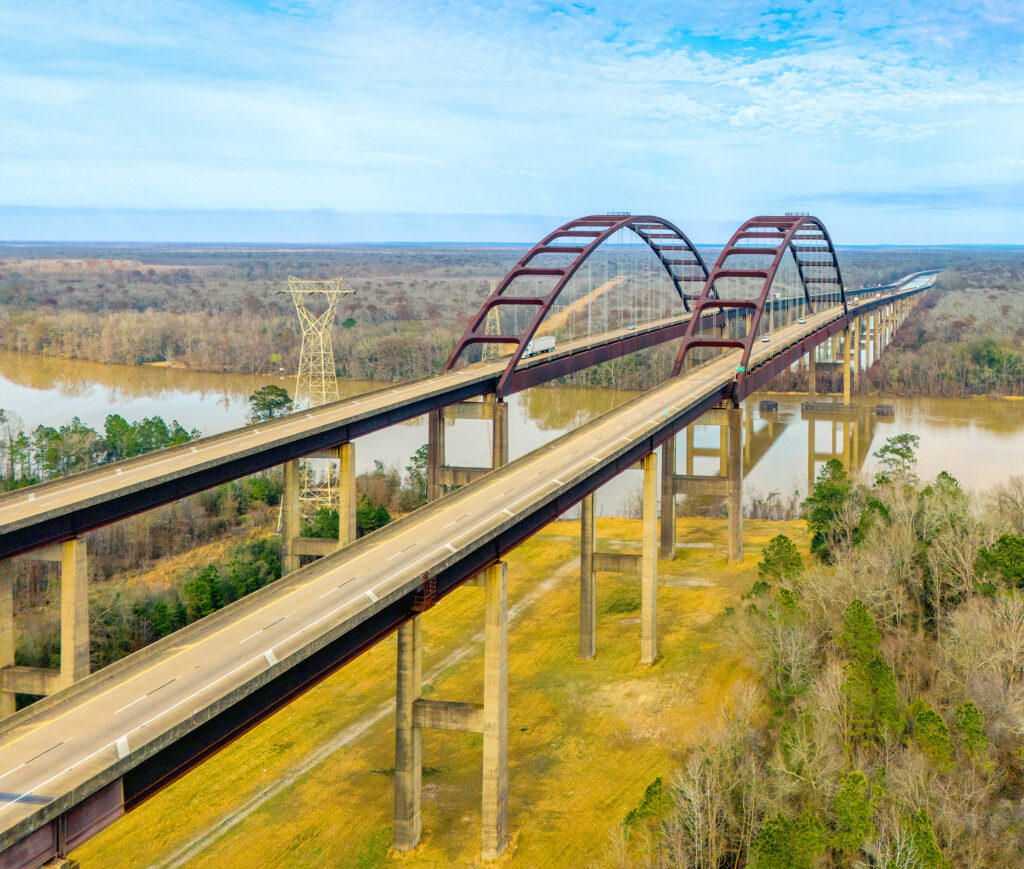
The Dolly Parton Bridge
Spanning six miles over the Mobile-Tensaw Delta is perhaps the most misidentified overwater passage in Alabama. Officially, it is the General W.K. Wilson Jr. Bridge. Wilson was a chief of engineers with the U.S. Army Corps of Engineers and was honored for his service.
With much fanfare, ceremony, and celebratory ribbon-cutting, the bridge opened in 1980. Within days after its debut, somebody said what many may have been thinking, “This bridge reminds me of Dolly Parton!”
And forevermore the Delta throughfare with its two parallel arches would be dubbed the Dolly Parton Bridge.
Over the years, campaigns were launched, urging people to refer to the bridge by its rightful namesake. So far, the efforts have failed.
Mobile
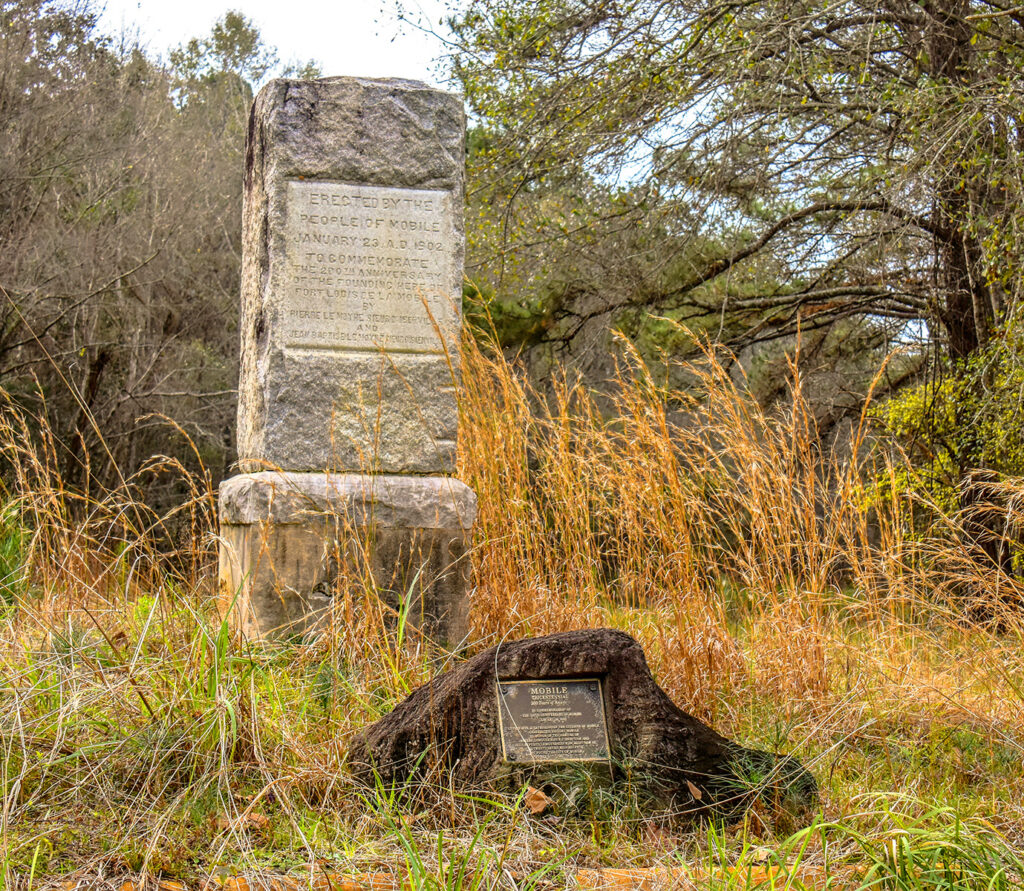
Mobile was not always in Mobile. Originally named Maubila by Spanish Conquistadors, Alabama’s oldest city established roots in the early 1700s as a French settlement, perched on Twenty-Seven Mile Bluff, at Lemoyne, overlooking the Mobile River.
A celebration of the city’s early beginnings is held onsite in January, once every 100 years. Citizens, including mayors, business people, ministers, and more, assemble at Twenty-Seven Mile Bluff. While there, they unveil
a monument.
The Twenty-Seven Mile Bluff site, which is on private property, is almost as remote now as it was then. Markers note the group’s visits in January 1902 and January 2002. The next event is slated
for January 2102. See you there.
Fairhope
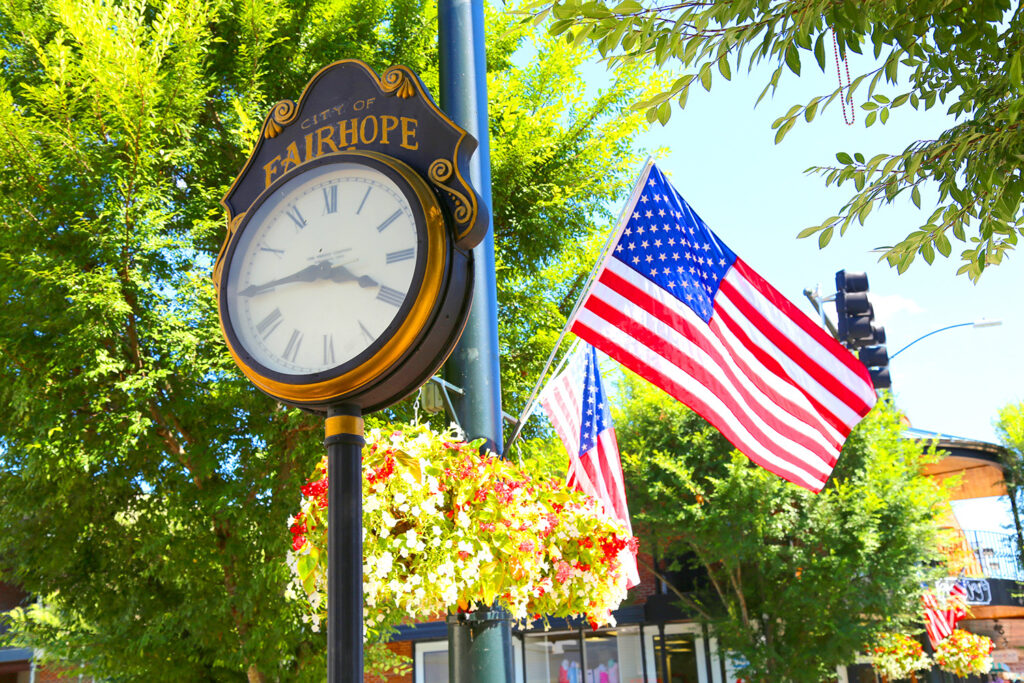
On Nov. 15, 1894, on an Alabama eastern shore bluff, an exciting experiment in community living was founded. The small group was a single tax colony. Its corporation purchased a large tract of land which members leased as single tax parcels.
“We don’t know exactly who named the town, but we know the idea came from a meeting room,” says Gabriel Gold-Vukson, director of the Fairhope Museum. Encouraged by their innovative ideas, someone said the prophetic words, “We have a fair hope of success.” The mystery person was correct.
According to the latest U.S. Census, the town with 22,500 residents had a population increase of 50 percent in 10 years. People still seek the fair hope
of Fairhope.
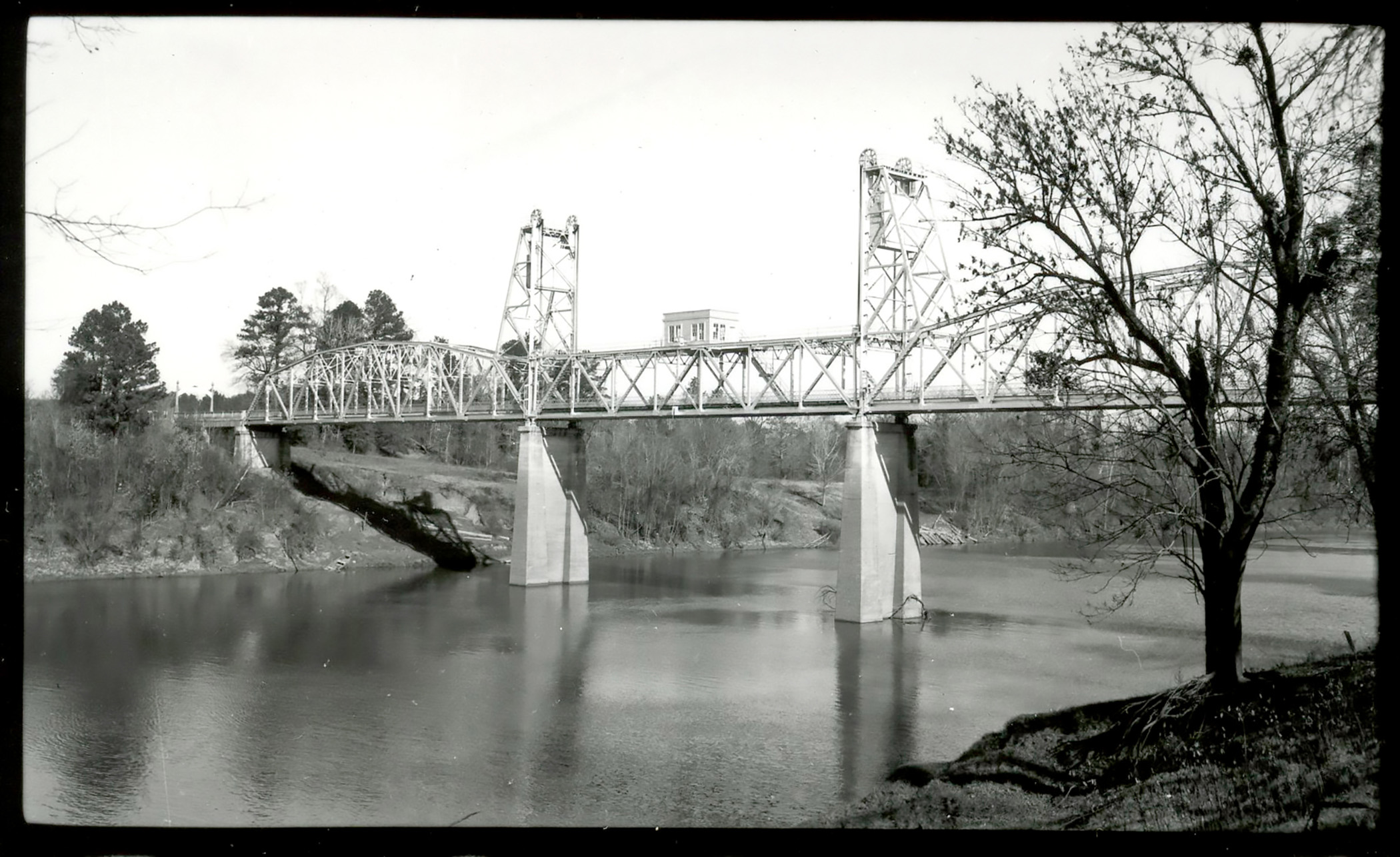
Rooster Bridge
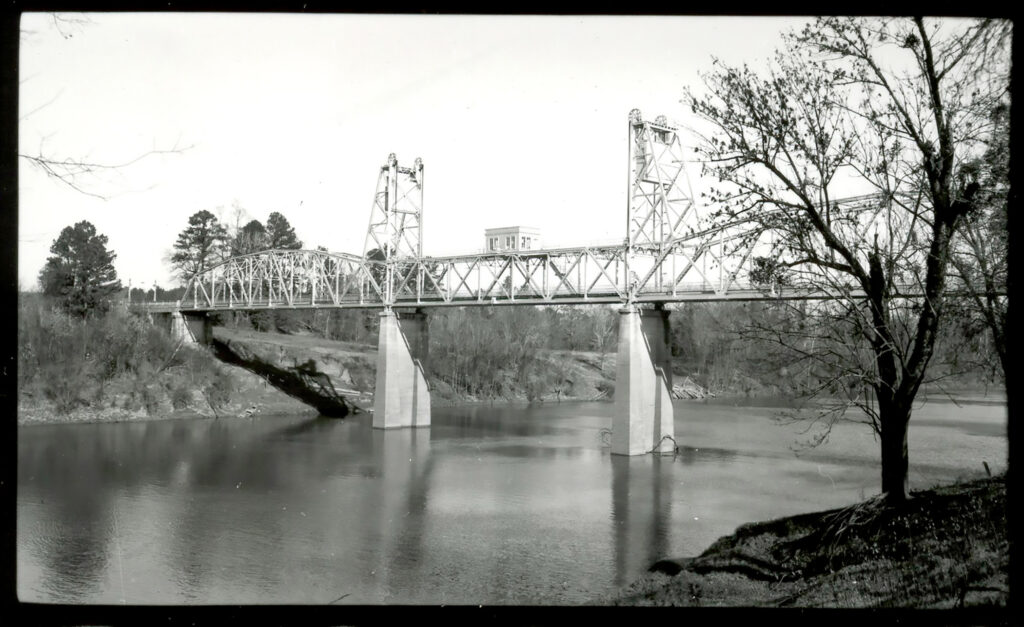
In the early 1900s, the Dixieland Highway project was near completion. But a bridge over the Tombigbee River was vital for Alabama’s Marengo County piece of the project.
Local auctioneer Frank I. Derby had an idea to help raise money – “let’s auction roosters!” And so they did.
Word spread throughout Alabama and beyond. Auction roosters were donated from celebrities of the day, like Fatty Arbuckle, Mary Pickford, President Woodrow Wilson, the King of Belgium, and the Prime Minister of England.
Helen Keller, the disability rights advocate from Tuscumbia, donated a blue hen which laid an egg. The egg was donated too.
The auction was held Aug. 14 and 15, 1919, in the Demopolis Public Square.
“Sadly, many bidders did not honor their poultry pledges,” says Kirk Brooker, with the Marengo County Historical Society. “After expenses, only about $40,000 profit was turned over to the project.”
In 1920, the overpass was built with federal, state and chicken money. It was named Memorial Bridge, but nobody called it that.
The name was officially changed by the Alabama State Legislature in 1959 to Rooster Bridge.
The structure was demolished in 1980 to make room for a new Tombigbee overpass, a mile upriver, also named Rooster Bridge.
Montgomery and Montgomery County
The Capital City of Montgomery is the county seat of Montgomery County, but they are named for two different Montgomeries.
The city is named for an Irishman, Richard Montgomery, a former soldier with the British Army. During the Revolutionary War, he sided with American patriots and become a major general in the Continental Army. He died in battle Dec. 31, 1775, under the command of Maj. Gen. Benedict Arnold.
Montgomery County is named for Maj. Lemuel P. Montgomery, the first soldier killed in the Battle of Horseshoe Bend. He died March 27, 1814. A statue of Lemuel Montgomery is on the grounds of the Montgomery County Courthouse in the city of Montgomery, which is named for the other Montgomery.
These are eight of probably 80 more. From fledging communities to major cities and bridges long or short, Alabama is a land of titles of distinction, character, and at times, strangeness.
You name it.
More Unusual town names
Spend any amount of time staring at a map of Alabama, and you’ll find dozens of unusual town and community names. Some of them are incorporated and others have become essentially ghost towns, although they still can be found on maps. Here are just a few of the ones we spotted. Did we find your favorite? If we missed it, send it to us at [email protected].
- Scarce Grease (Limestone County)
- Chigger Hill (DeKalb County)
- Slicklizard (Walker County)
- Brilliant (Marion County)
- Ballplay (Etowah County)
- Blues Old Stand (Bullock County)
- Burnt Corn (on the border of Monroe and Conecuh counties)
- Cuba (Sumter County)
- Detroit (Lamar County)
- Dodge City (Cullman County)
- Gamble (Walker County)
- Muscadine (Cleburne County)
- Phil Campbell (Franklin County)
- Smut Eye (Bullock County)
- Frog Eye (Tallapoosa County)
- Scratch Ankle, (Monroe County)
- Lick Skillet (Madison County)
- Boar Tush (Winston County)
- Possum Trot (Calhoun County)
- Coffee Pot (Limestone County)
- Gobbler’s Crossing (Walker County)
- Shinbone Valley (Clay and Cleburne counties)
- Pansey (Houston County)
- Scant City (Marshall County)
- Pull Tight (Marion County)
- Blow Gourd (Blount County)
- Needmore (Pike, Clay and Marshall counties)