Among the oldest, simplest and still most effective techniques for catching various species, a popping cork rig can put more redfish, speckled trout, flounder and other fish in the boat quickly.
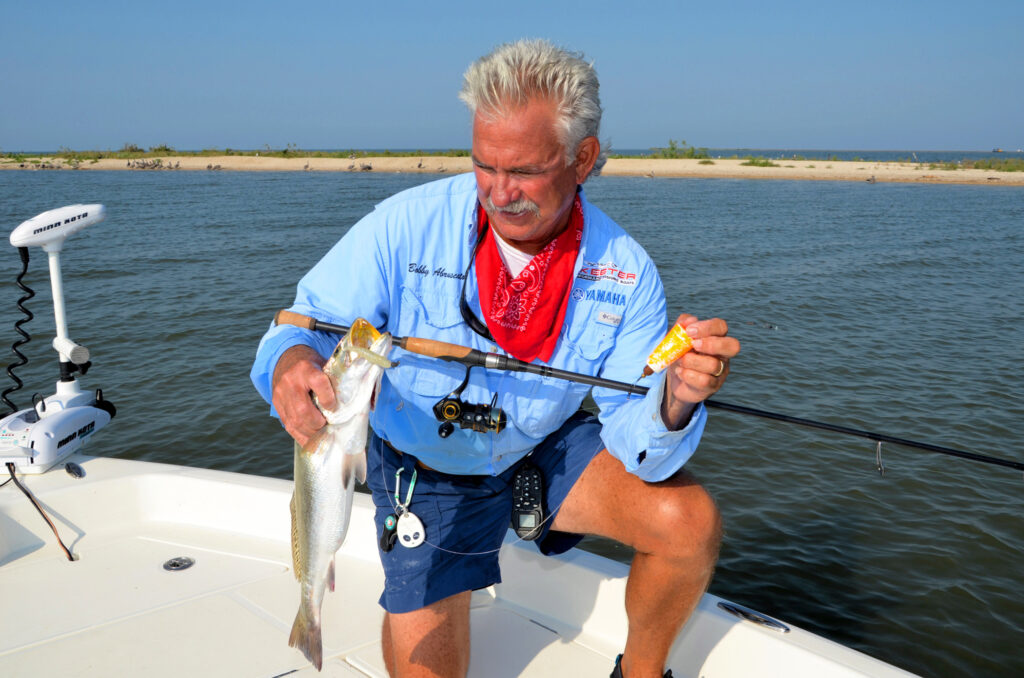
“I use a popping cork rig all year long,” says Bobby Abruscato of A-Team Fishing Adventures on Dauphin Island. “It can work when nothing else does. Anyone can use it effectively for great numbers of fish.”
Simple to use, just cast to a likely spot and let it sit a few moments. Periodically jerk the rod to make the cork pop the surface and then let it sit again. When a fish pulls the cork down, set the hook. In the right spot, action can some fast.
A popping cork rig essentially consists of a float holding up an enticement. Some corks somewhat resemble an old topwater popper lure. When jerked, the concave cork disrupts the water like a fish striking prey on the surface. Other corks take a more traditional round or oblong shape, but create the same commotion.
“All of my popping corks have cup-shaped tops,” Abruscato says. “That top makes a sound more like a trout striking, almost like a topwater popper. A popping cork rig imitates fish striking bait. That brings them in closer. Then, they spot the bait or smell it if it’s natural or has some scent.”
Anglers can attach a float directly to the line about 18 to 36 inches above a hook, depending upon the depth they want to fish. Some anglers tie a swivel to the line and attach a length of fluorocarbon leader to the swivel. For added casting heft, some anglers add weight to the rig. Some companies sell pre-rigged packages that come equipped with a cork, leader, weight, rattles and plastic or metal beads that create additional noise and vibration.
“I make my own rigs,” Abruscato says. “I buy three-inch corks with cupped tops and use titanium wire for the stem because it doesn’t become misshapen like some other wires. I’ll slide a couple brass beads on the wire above the cork. I add extra weight to my popping cork rigs. By putting that extra weight on the rig, I can throw it much farther. Generally, the person who throws a bait the farthest catches the most fish.”
With popping corks, anglers can fish many types of live or other natural baits including minnows, small mullets, croakers, menhaden, fish chunks or crab pieces. However, most people use live or fresh shrimp. Hook a live shrimp under the horn. Carefully avoid hitting the black spot in its head, which could kill it.
Various artificial temptations like plastic shrimp, jigs and flies also work well with popping corks. When spooked, a live shrimp naturally flicks its tail to escape and frequently rises to the surface. When an angler pops a cork, a plastic shrimp flies up toward the surface and then slowly sinks again, just like a live shrimp.
Fish hear the commotion and think one of their cousins took a shot at a shrimp and missed. Then, they see the morsel sinking and run in to grab the meal before another fish eats it.
“I use both live and artificial baits on popping cork rigs,” Abruscato says. “For artificial baits, I prefer a Gulp! Shrimp in new penny color. I also like a Vudu Shrimp. In the spring, I typically use artificial baits until the summer when natural baits become much more plentiful for fish to eat. With any of those baits, anyone can catch just about anything in
salt water.”
Popping corks generally work best in shallow water. Drift corks along weedy shorelines or over oyster reefs and other structures. Points make excellent places to fish popping corks for redfish, flounder and trout. Toss the rig so that the prevailing wind or tidal flow carries the bait across the point.
During a falling tide, the mouths of marshy drains make outstanding places to fish popping corks. Toss a cork as far upstream as possible and let the current carry the temptation down the tributary.
Although most people fish with popping corks in salty waters, the rig can also work great in fresh water. In brackish systems like the Mobile-Tensaw Delta, a bass can’t resist snacking on a live shrimp or a shrimp imitation. Bass also hit live minnows and other baitfish under a cork.
John N. Felsher is a professional freelance writer who lives in Semmes, Ala. He also hosts an outdoors tips show for WAVH FM Talk 106.5 radio station in Mobile, Ala. Contact him at [email protected] or through Facebook.