Inside the World of Collectible License Plates
By Jim Winnerman
Did you know Alabama license plates were once fired in an oven and made of porcelain?
Vance George, 60, of Huntsville, and Paul Majerick, 82, of Montgomery, own several of those historic first state plates, which date to 1912. The men are two of 4,500 avid license plate collectors nationwide who belong to the American License Plate Collectors Association (ALPCA).
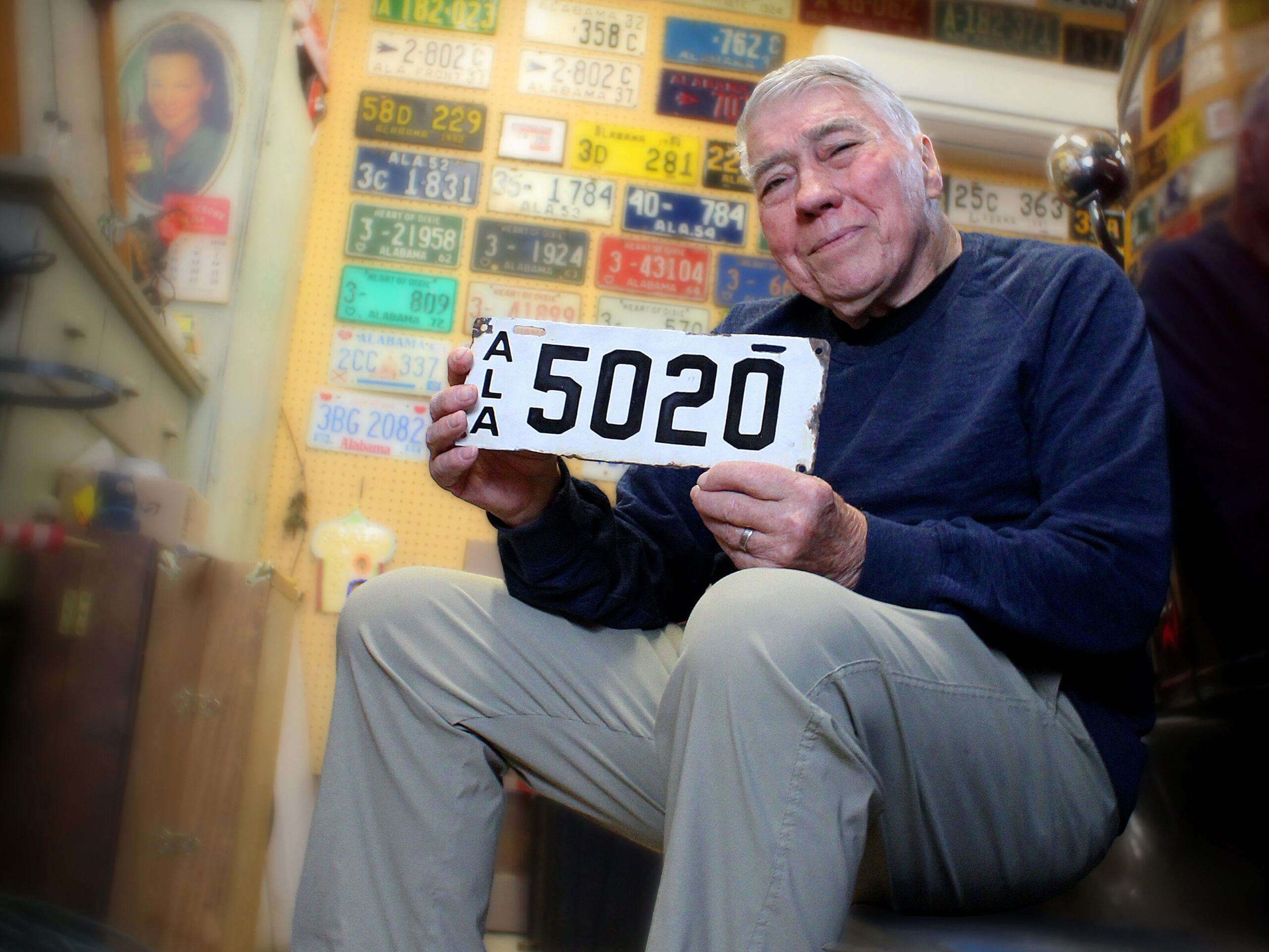
Majerick was only 15 in 1959 when he his father lent him the money to buy a Model “A” Ford Tudor, and the car piqued his interest in acquiring historic Alabama plates. By 17, he already had a sizable collection. Today the retired Army brigadier general estimates he has more than 2,000 Alabama plates.
George, a NASA contractor at Marshall Space Flight Center in Huntsville, says he and his brother Lance dabbled in collecting license plates for decades. They didn’t start collecting in earnest until 2015, when he acknowledges they “became addicted.” Since then, they have made up for lost time.
“I estimate we have over 5,000 plates,” he says, “and most are Alabama.”
The earliest plates in Alabama date to the years 1909, 1919 and 1911. “They were made of porcelain and issued by the cities of Montgomery, Mobile and Birmingham,” Majerick says. “The first Alabama statewide plates were cobalt blue and appeared in 1912 and were also porcelain, but by 1916 plates were being made of steel.”
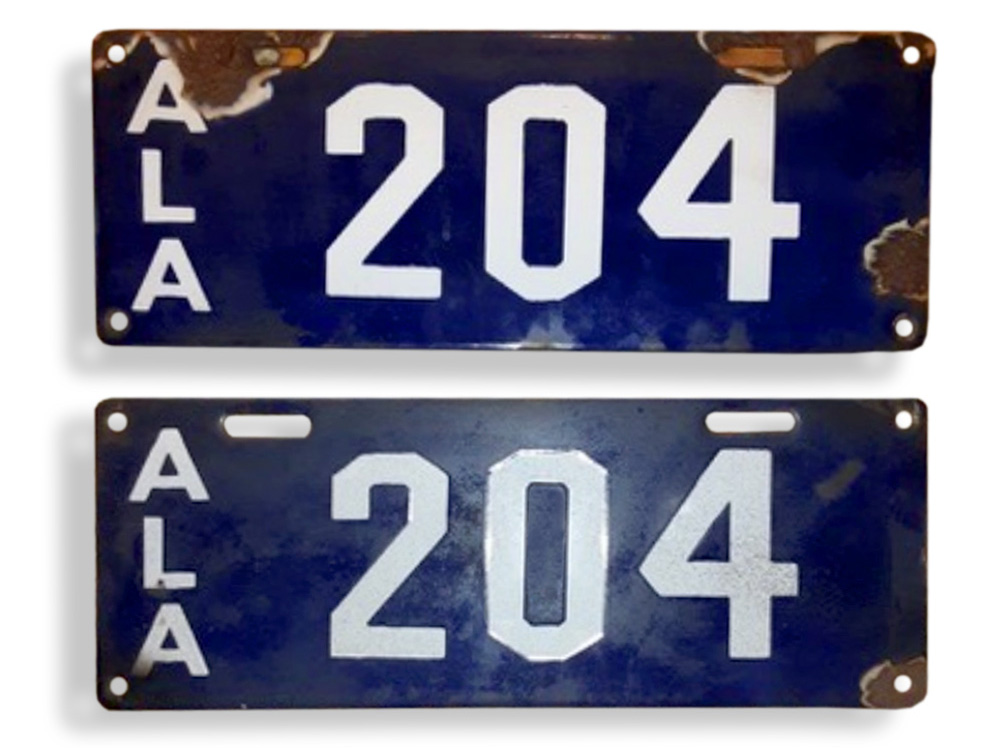
The only known pair of 1912 Alabama plates. All others were non-matching single plates. Photo courtesy Vance George
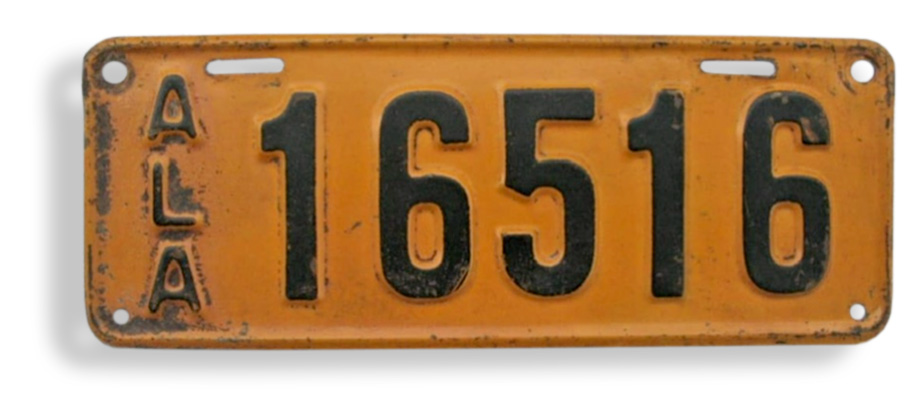
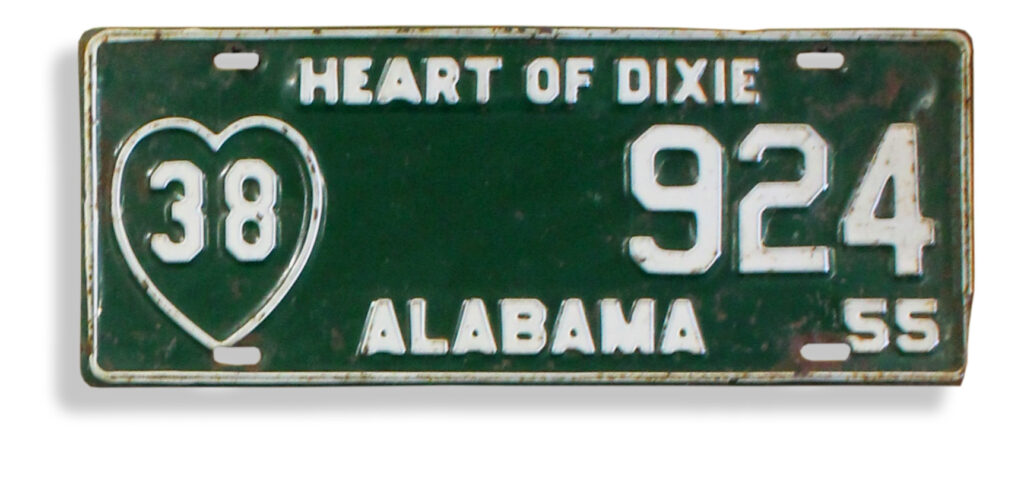
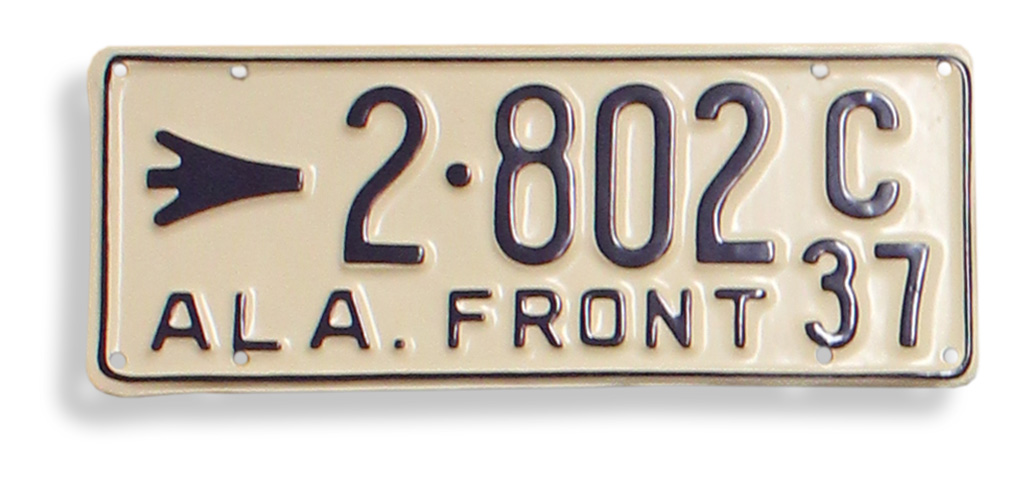
Most Alabama collectors try to accumulate a complete “run,” or an example of one plate issued each year since 1912. In Alabama that can be more difficult than in most states. Alabama has only required one plate per car most years, so the supply of historic plates is diminished.
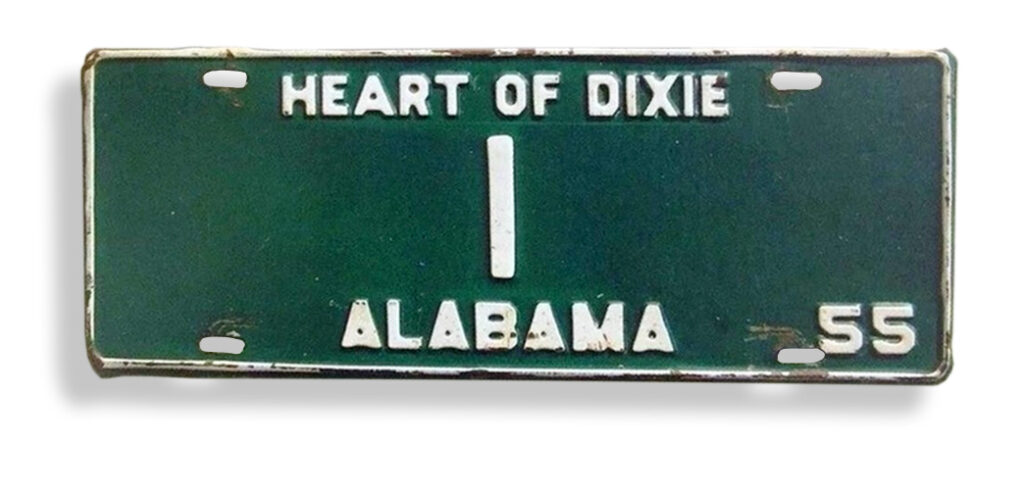
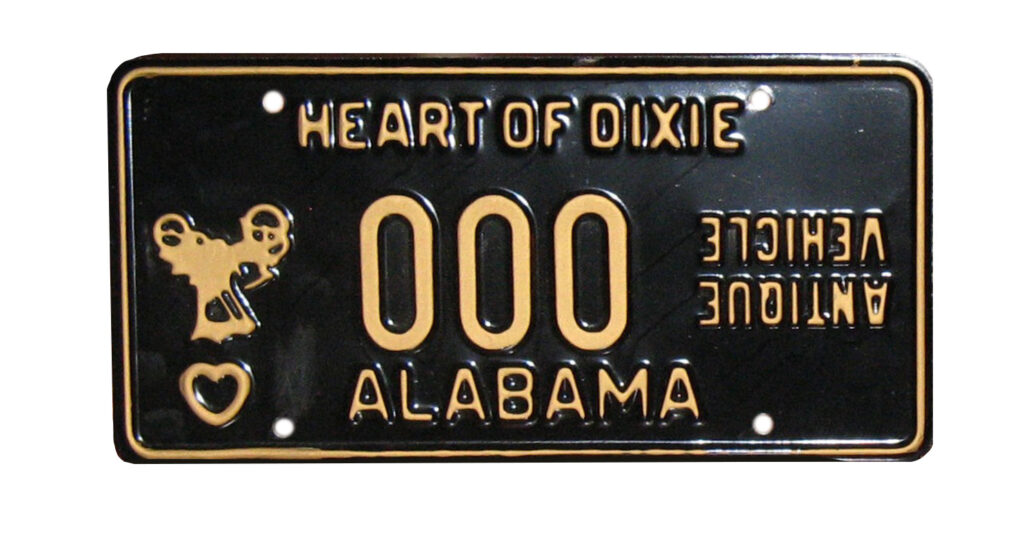
Specific plate years are more sought after than others, such as the 1955 tag. It was the only year to carry a simple heart emblem, symbolizing the “heart of Dixie.” Subsequent years have included the phrase and a heart.
Another popular plate is from 1937, which was one of several years when Alabama was issuing plates in pairs. One tag had the word “FRONT” stamped on it to prevent people from using the two tags in one set as separate plates on two different automobiles.
Plates issued before and during World War II are also scarce, as every bit of scrap steel was being collected for the manufacture of goods in support of the conflict.
Majerick searches for any plate issued by Alabama, which is extensive. In 2025, there were 394 different specialty plates, including those issued for special interest groups like amateur radio, mental health, wildlife rehabilitation, retired military, Farming Feeds Alabama, Save the Cahaba River, and many more. (Images of all current Alabama plates styles can be found at alabama.gov/license-plates/)
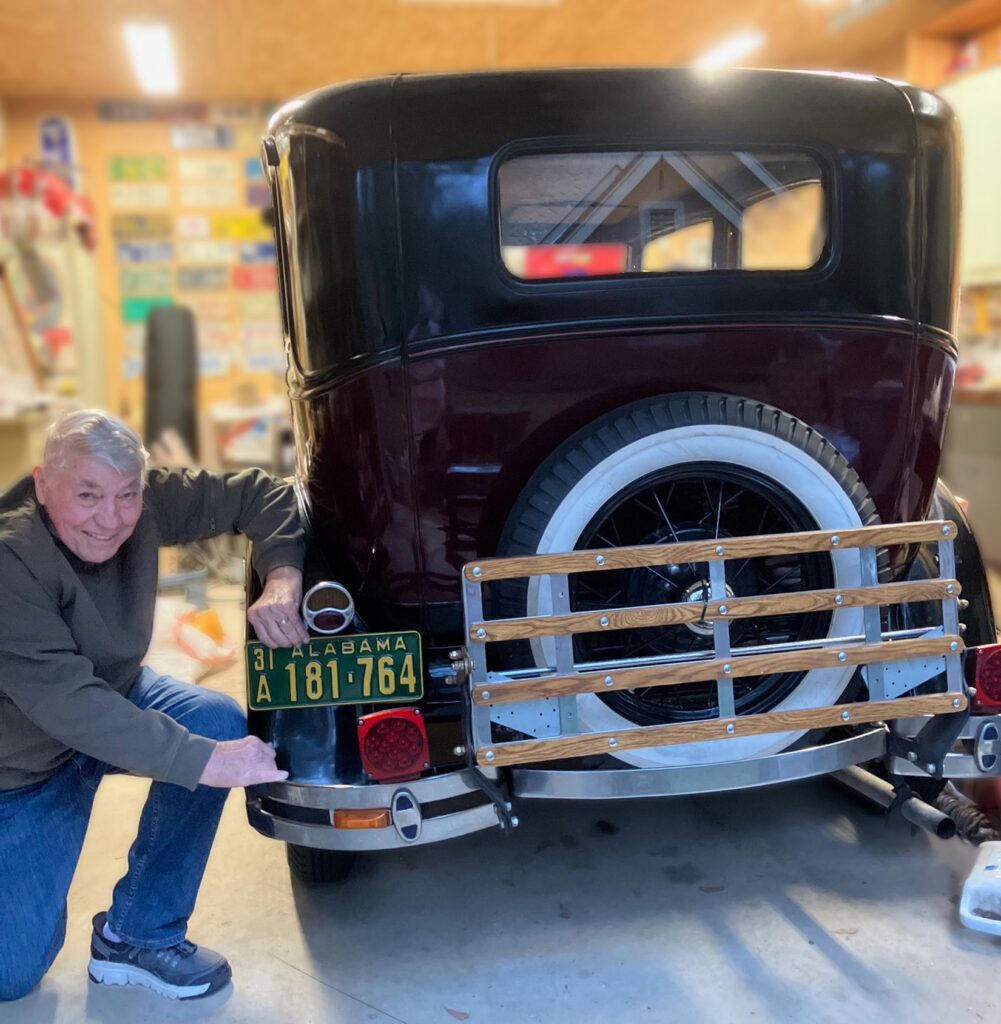
Since 2016, vintage plates can be registered and used on antique automobiles if the plate was issued before 1976 and matches the year the car was manufactured.
Collections with themes
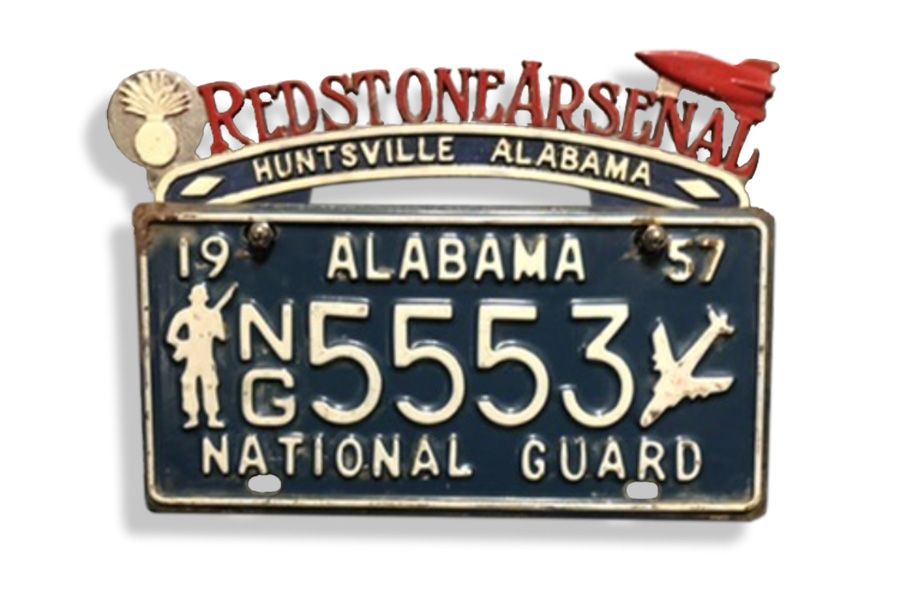
Many collectors have associated collection themes which appeal to them, such as collecting only plates with errors, A popular Alabama error plate is the 1957 National Guard specialty plate with the silhouette of a soldier and a jet plane. “The direction of the plane was pointed steeply down, as if it were going to crash,” George says. “It was changed the next year, and every year since.”
Most license tag enthusiasts also collect “plate toppers,” which are small decorative signs once attached to the top of a license plate. Popular from the 1930s to the 1950s, they functioned as an advertisement for everything from gas stations and political campaigns to displaying where a traveler had vacationed.
“I have one that bolts to the top of a vintage plate that reads ‘Roosevelt for President,” Majerick says. Eventually toppers were replaced by bumper stickers, printed license plate frames, and custom vanity plates.
“There are almost as many focus areas as there are collectors, so the possible niches are as extensive as the imagination of the collector,” George says. “I also collect Alabama plates used on the governor’s cars with the numeral ‘1.’”
The hobby is well organized in the United States, with a myriad of regional meets taking place throughout the year. Organized by ALPCA, they provide a place where enthusiasts can swap or purchase plates. There is also an active market for plates on the internet, but they can still be found at flea markets and antique shops.
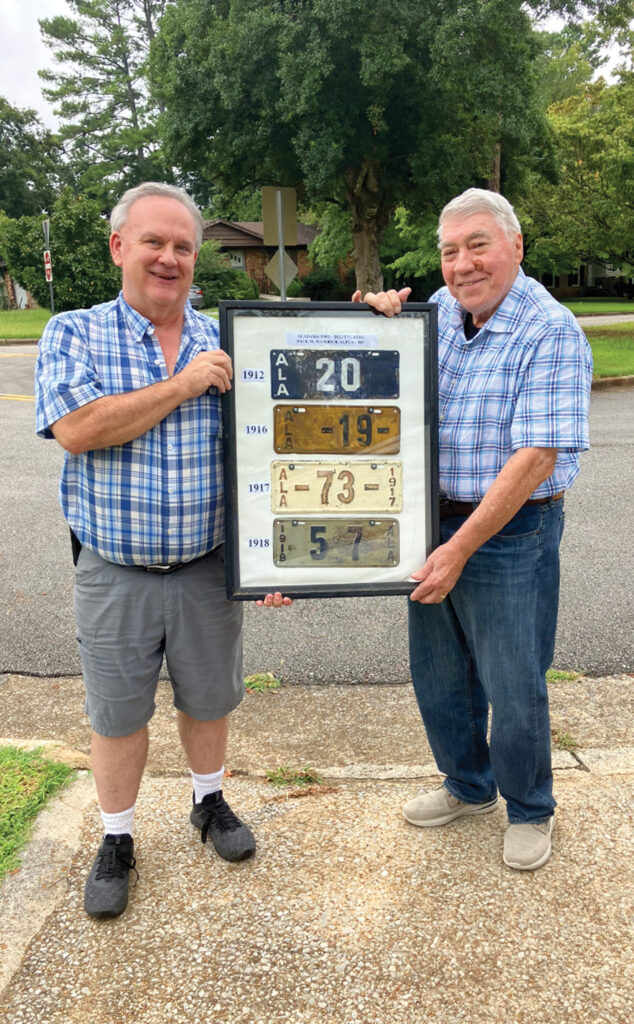
While many historic plates can be purchased from $5 to $50, a 1912 Alabama plate is among the most elusive. Out of the 3,500 issued, only 45 are known to exist. “Depending on their condition they can sell for up to $8,000,” Majerick says. “However, there are more dealers today who are only interested in buying and selling, and that has driven up the price for older plates.”
Lucky collectors can still discover plates nailed to a wall in an old barn or garage. When Majerick was 17 and just beginning to collect, friends told him of plates they had seen in someone’s garage. “I drove my Model A over and the owner said I could have them if I would clean out his garage,” he remembers. “I did. Those plates were 1920s and in perfect condition, and I still have them.”
Stories on the internet tell of historic plates discovered being used as shingles on a shed or being found in old trash
disposal sites.
Despite the popularity of the hobby, there are no permanent “public” displays of plate collections in Alabama. “Collectors will create a display for themselves or to exhibit at a meet, but I do not know of any displays in a museum in the state,” George says.
A growing hobby
Today the hobby is growing with more younger people collecting. “Everyone is welcome,” says Majerick, who would like to see more people in the hobby. “Most begin with a set of plates from each state issued the year when they were born, and then start on a specific state,” he says.
“The Alabama license plate collecting hobby has been greatly enriched by several knowledgeable older-generation collectors, the foremost being Paul,” George says. “I call him “’‘the King’ of Alabama License Plates.”
Majerick says he hopes his grandchildren take up the hobby, and he has given them a good start. “I have a full run of Alabama plates waiting for each of them,” he says.
License plates through time
- The world’s first license plates were issued in Paris, France, in 1893
- In the early 1900s, car owners made their own plates from materials like leather or metal and displayed their initials.
- New York was the first state to require license plates in 1901.
- By 1918, all states had started issuing their own plates.
- Favorite collectible plates outside of Alabama include Tennessee, where plates from 1936 to 1956 were in the shape of the state.
- A standard 6-by 12-inch size was agreed upon by the U.S., Canada, and Mexico in 1956.
- Digital license plates are coming. Resembling a large cell-phone screen, they will enable plate renewals without a visit to the county license plate issuing office and messages to be displayed below the required numbers and letters.