Story and Photos by Katie Jackson
More than a decade ago, my husband and I made what we thought would be a quick stop just off the Natchez Trace National Scenic Byway in Alabama to see a wall. Not just any wall, though. It was the Wichahpi Wall, a mile-long, hand-built stone wall erected in honor of an extraordinary Native American woman named Te-lah-nay.
Two hours and many fascinating stories later, we reluctantly drove away from the Wichahpi Wall and its creator and story-keeper, Tom Hendrix, grateful that we had been able to spend time in a remarkable place with a remarkable man.
Hendrix, who was 78 at the time of our visit, had spent the previous three decades constructing the wall as a memorial to Te-lah-nay, his great-great grandmother and a member of the Yuchi (Euchee) tribe that once inhabited the Tennessee River region of northwest Alabama. In the late 1830s, she and her sister, both teenagers, were captured and forced to walk nearly 800 miles along the infamous Trail of Tears from their home in Lauderdale County to Indian Territory in Oklahoma.
Deeply homesick for her native land and for the voice of the Tennessee River — known by the Yuchi as the “Singing River” — Te-lah-nay managed to slip away from their Oklahoma camp and set off alone for home. Some five years later, she arrived back in Alabama where, though at risk for recapture or worse, she earned the affection and support of local white settlers who relied on her gifts as a healer and herbalist.
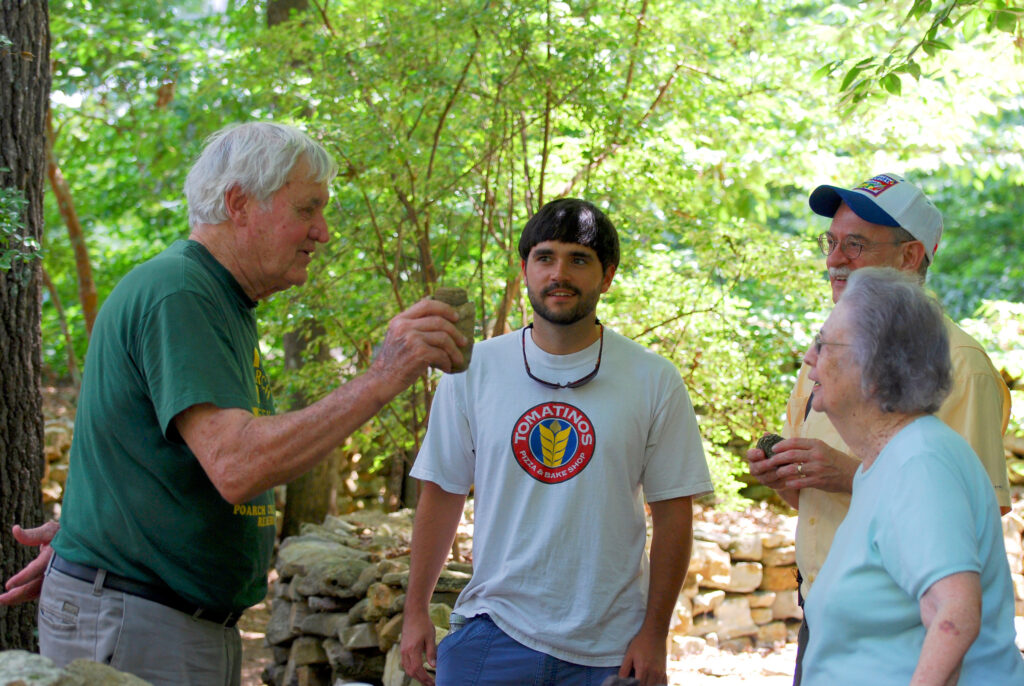
Hendrix grew up listening to his grandmother tell traditional Yuchi stories and the story of Te-lah-nay’s extraordinary journey and life. “She captured this little boy’s imagination a long, long time ago and she made me one of the most passionate old men that you’re ever going to run into in your life,” Hendrix told us on that first of what would become several visits to Wichahpi Wall, also known as “Tom’s Wall.” (Wichahpi is a Lakota word meaning “like unto a star.”)
Those stories stuck with Hendrix — called to him — and in the mid-1980s that calling led Hendrix to visit members of Oklahoma’s Yuchi community where he met Minnie Long, a tribal elder. “I told her (Long) I wanted to do something to honor my great-great-grandmother,” Hendrix said.
“Well, listen to my words, Brother Hendrix,” Long replied. “Listen very closely. It’s going to change your life. We shall all pass this earth and only the stones will remain. We honor our ancestors with stone.”
“Boom! I knew I had it made because Lauderdale County has more rocks than any place I know of,” Hendrix said, though just how he could use them to create a monument was unclear. Long suggested he mull that over during his 780-mile drive home from Oklahoma and by the time Hendrix pulled into his Alabama driveway, he had a vision for the project: “I’m going to build her two walls: one to honor her journey from Lauderdale County to the Indian Nations; the other for her journey back home.”
A lifelong project
When Hendrix told Long about his plan, she gave him explicit directions: use no mortar, cement, or anything “foreign” in the wall; lay one stone at a time for each step Te-lah-nay made; and “work on it for the rest of your life.”
He set to work collecting sandstone and limestone rocks from the local landscape, and over the next three-plus decades, personally brought 8.5 million pounds to the memorial’s site, where he unloaded them into a wheelbarrow before carefully placing them into what would become the wall. In the process, Hendrix actually moved more than 25 million pounds of rock and, as he liked to say, “wore out three trucks, 22 wheelbarrows, 3,800 pairs of gloves, three dogs and one old man.”
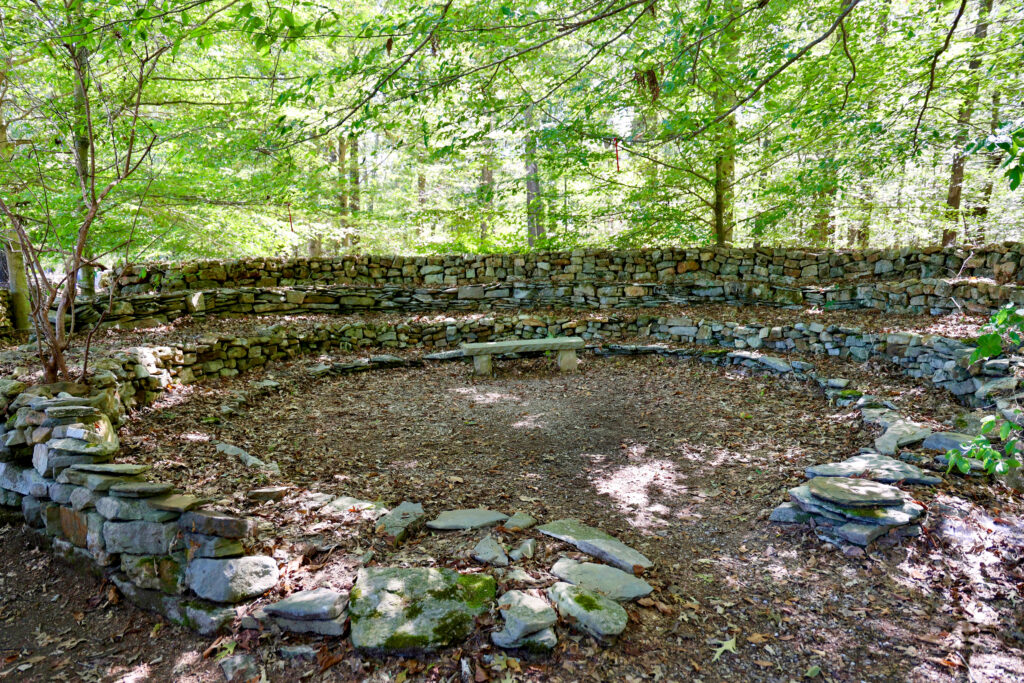
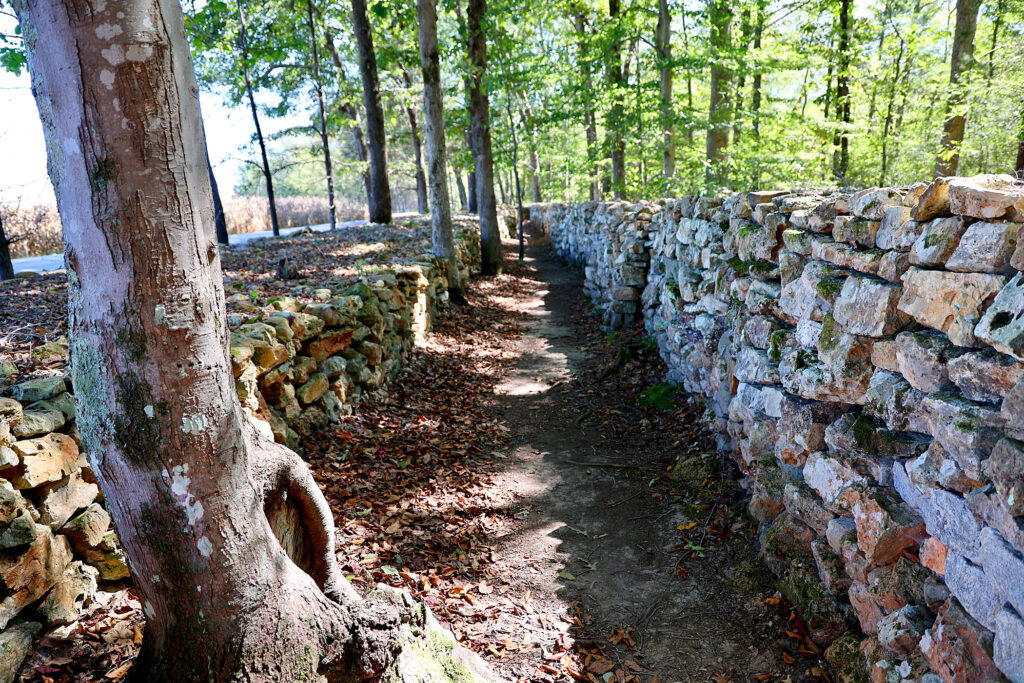
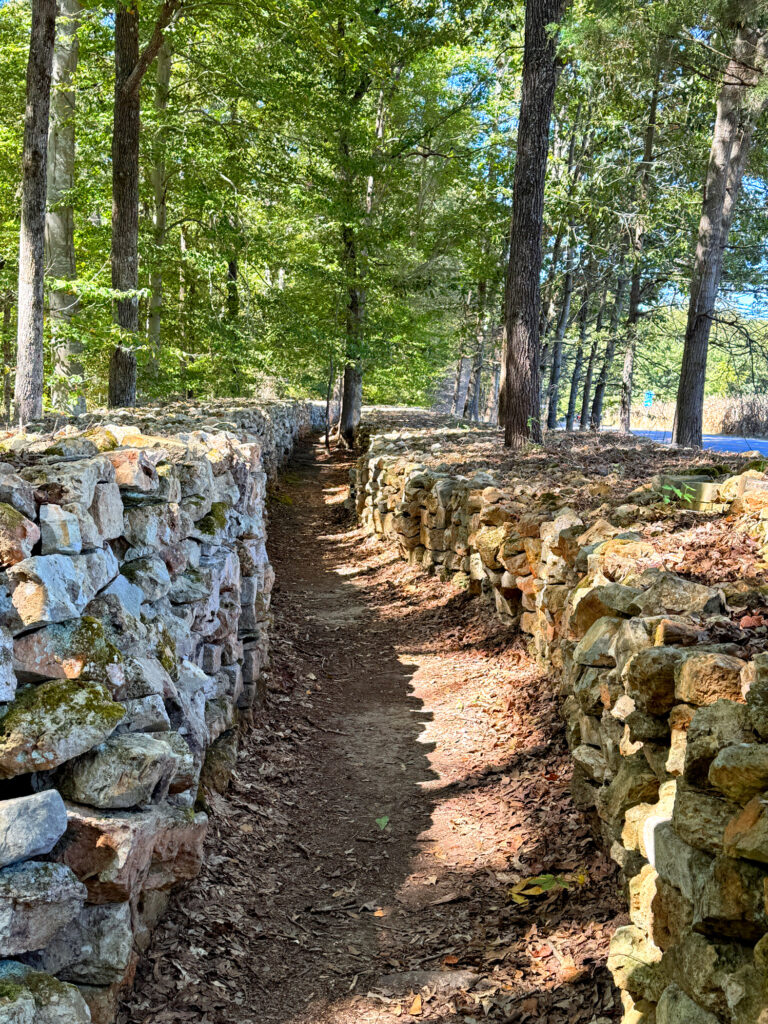
Working without a blueprint, the memorial took shape as he worked and eventually became two beautiful, wooded pathways — a straight path on one side of the entrance representing Te-lah-nay’s journey to Oklahoma, and a winding, meandering path on the other side representing her walk home. Near where the two paths connect, Hendrix also built a prayer circle, which he created in four distinct rock layers to represent birth, life, death and rebirth.
A master storyteller, Hendrix loved sharing the wall and the prayer circle, encouraging visitors to walk the paths and sit in the circle in quiet meditation, “using your third eye,” he would say. He also happily regaled visitors with tales of Te-lah-nay and Yuchi culture, stories he also captured in his book, If the Legends Fade.
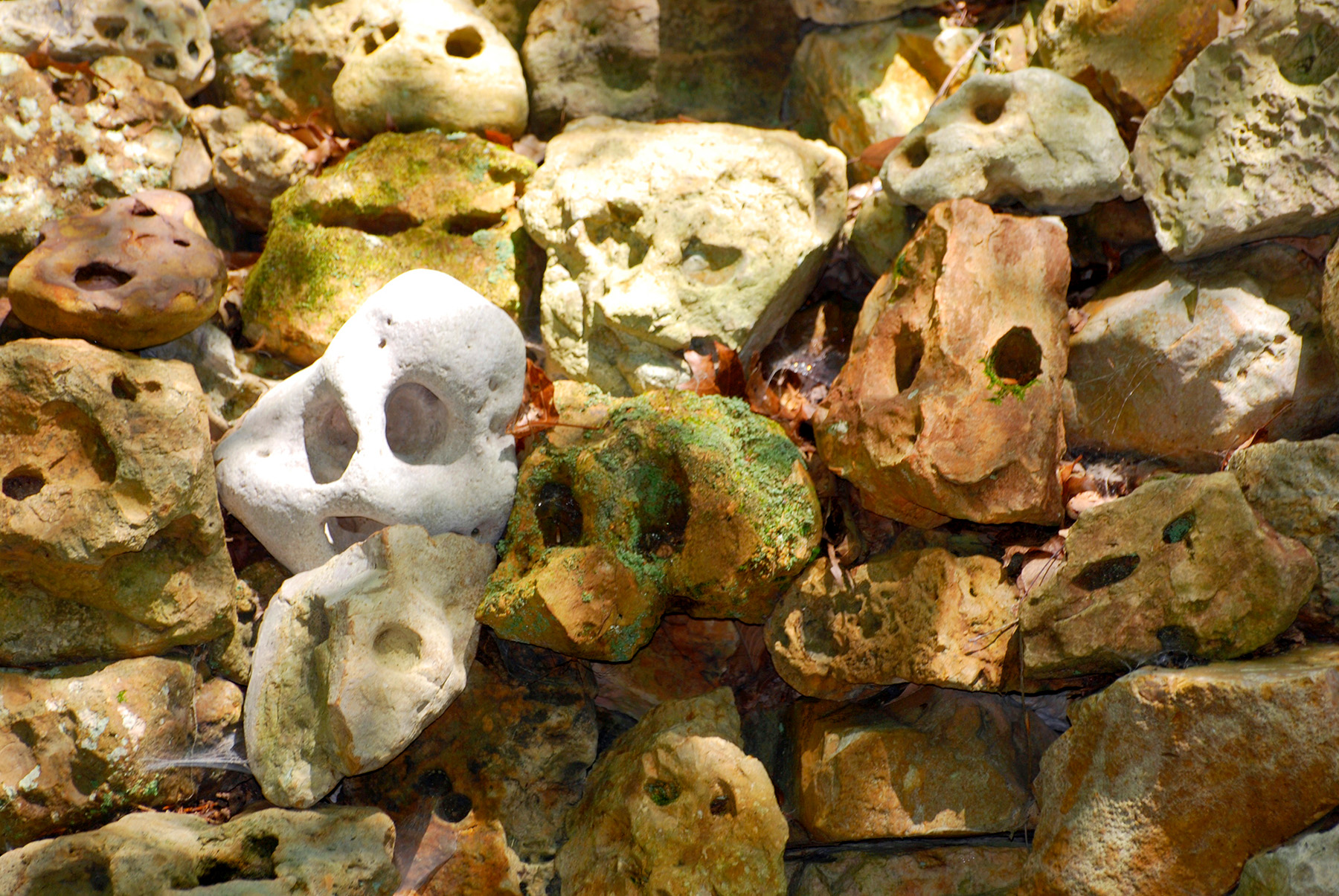
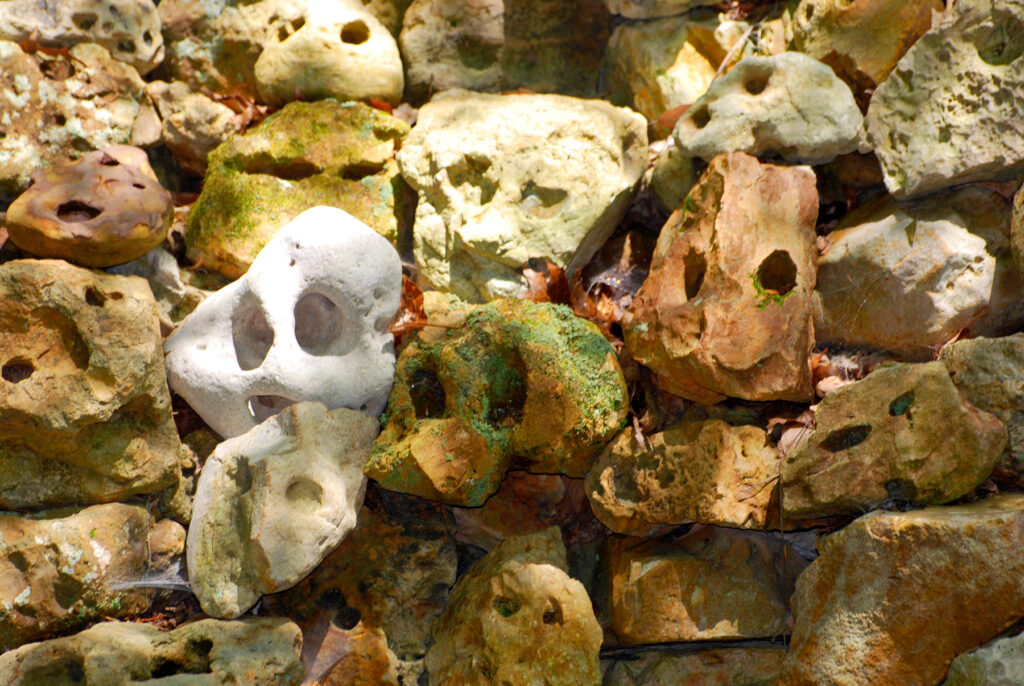
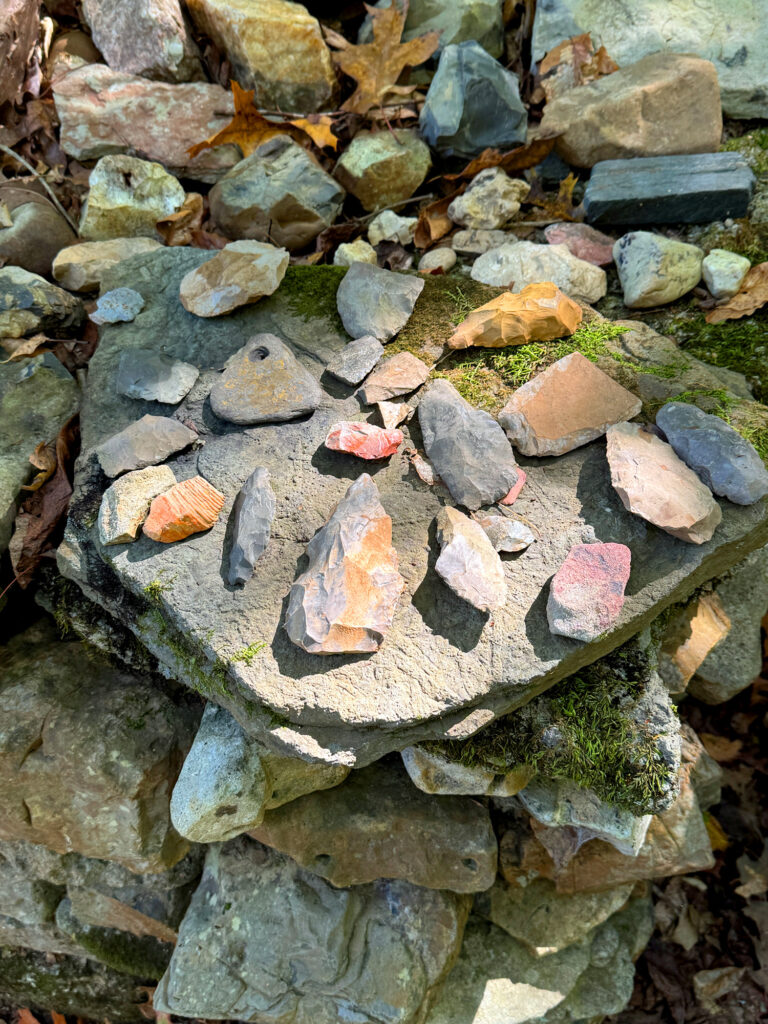
Tom’s Wall, the largest un-mortared rock wall in the U.S., is regarded as one of the most sacred spaces in the state — perhaps in the Southeast and beyond — and attracts people of all religions and beliefs from around the world, many of whom bring their own commemorative stones, fossils and other tokens of remembrance to add to the wall. It is also considered an exemplary work of environmental and outsider art and is the only monument ever built to honor an Indigenous woman. Indeed, Hendrix wanted the wall to be a memorial not just to Te-lah-nay but to all women.
A legacy continues
Tom remained dedicated to Te-lah-nay’s memory and to Long’s directive for the rest of his life, tending to the wall and sharing stories with visitors until his death at the age of 83 in February 2017. And that legacy continues still in the hands and heart of Tom’s son, Trace. Trace, who was in his 20s when Tom began working on the wall, helped his father collect and place stones. (In fact, Trace himself gathered at least another million pounds of stone for the site.)
Since his father’s death, Trace has become the wall’s primary caretaker and tale-sharer, encouraging visitors to see it with their third eye: “their heart,” Trace says.
“This place recharges my battery,” Trace says. “If you’re open to it, this wall can really affect you.” And Trace has felt that and seen it happen to others, such as the veteran who visited the wall one day and brought along a rock he’d found during his first tour of duty in Vietnam. He told Trace that the rock represented all the “bad things” the veteran had brought home from the war, but after wandering the wall’s paths, he gave the stone to Trace saying, “I no longer have that problem. This place has taken care of that.”
It’s an experience that is available to anyone and free of charge. The gates to Tom’s Wall are open every day except Christmas and New Year’s from 8 a.m. to 4 p.m. It’s located on Lauderdale County Road 8 just 15 miles from Florence and a mere 150 yards off Natchez Trace Milestone 338. You’ll be glad you did and once will not be enough.
To learn more about Tom, the wall, and Te-lah-nay, visit natcheztracetravel.com and search for Wichahpi Wall.