Nature usually takes care of itself, but sometimes, nature needs a little help.
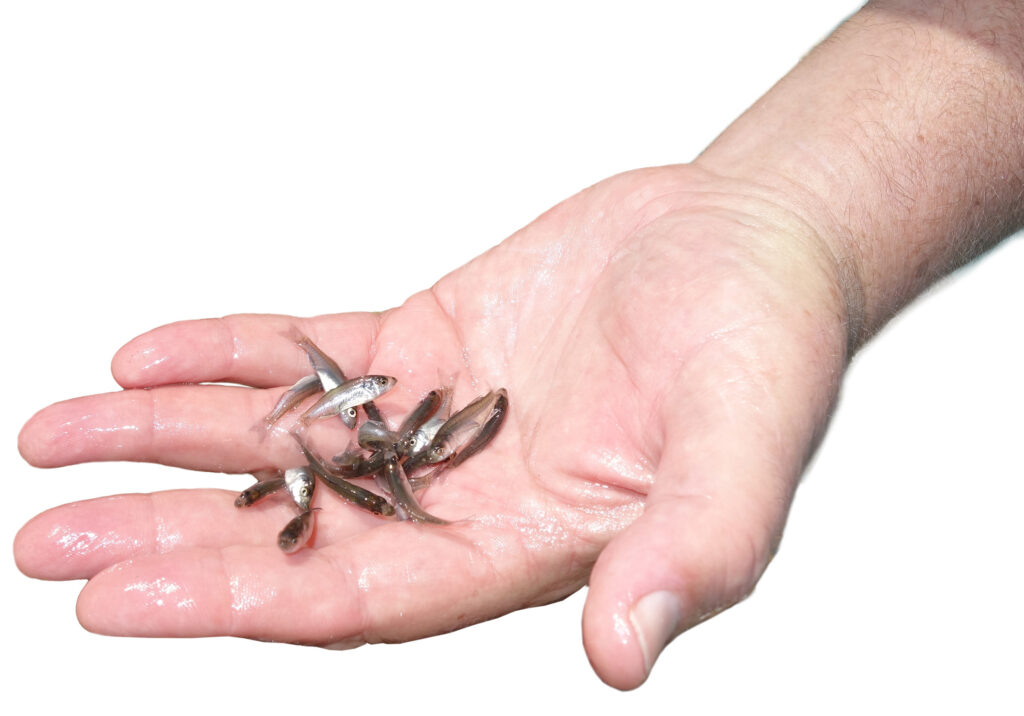
“In a typical year, the three Alabama state fish hatcheries produce about three million fish for stocking into public waters,” says Matthew Marshall, the Alabama Wildlife and Freshwater Fisheries Division chief of fisheries in Montgomery. “Those hatcheries produce a variety of fish including Gulf-strain striped bass, hybrid striped bass, white bass, redeye bass, southern walleye, bluegill, redear sunfish, channel catfish and largemouth bass for stocking in
public waters.”
The first state fish hatchery at Eastaboga opened nearly 100 years ago. The state also operates freshwater hatcheries at Carbon Hill and Marion. Most species, like catfish, largemouth bass and bluegill, do well on their own, but the state stocks them in places like the 23 public fishing lakes as well as community park ponds to create public fishing opportunities.
Other species need help. Right now, the state focuses on two priorities: Gulf-strain striped bass and southern walleye. Natural striped bass populations exist in the Atlantic Ocean and along the Gulf Coast. In nature, Atlantic stripers live in salt water, but enter freshwater streams
to reproduce.
“We did some genetic testing on native striped bass,” Marshall says. “Gulf-strain and Atlantic-strain stripers are not different species, but there are some small differences in the two. While doing some telemetry studies, we noticed that very few Gulf stripers go into salt water. Typically, they stay in cooler river systems and cooler spring-fed waters.”
Native to the Mobile, Alabama and Tombigbee River drainages, Gulf striped bass naturally range from Louisiana to Florida. The species nearly disappeared a few decades ago as dams blocked their coastal spawning streams and various other reasons. Alabama stocked some stripers into the Mobile Delta system and other places.
Years ago, the state released striped bass into Lake Lewis Smith and Lake Martin to serve as a broodstock source and for recreational fishing opportunities. Lake Lewis Smith covers about 21,000 acres on the Sipsey Fork of the Black Warrior River in Cullman, Walker and Winston counties. The deepest lake in Alabama drops to more than 200 feet in places.
Lake Martin, not to be confused with Lake Logan Martin, covers about 44,000 acres in Tallapoosa, Elmore and Coosa counties. One of the oldest reservoirs in Alabama, it dates to 1926, the largest manmade waterbody in the world at that time.
“We are one of the largest producers of Gulf-strain striped bass among the Southeastern states,” Marshall says. “Now that we have our Gulf-strain broodstock source, we are able to maintain those fisheries. We try to raise about 700,000 to 800,000 pure Gulf-strain striped bass every year in our hatcheries. Those two lakes receive 30 to 40 percent of our total striped bass stockings, but we’ve also stocked some stripers in the Mobile Delta area.”
Alabama anglers could also fish for another species. Even the most ardent Alabama anglers probably don’t know that they can catch walleye in the Cotton State. Although typically a cold-water species of northern states and Canada, a southern strain inhabits Alabama waters. These native fish can tolerate warmer temperatures than their northern cousins.
“Southern walleye are genetically distinct from the northern species,” Marshall says. “Walleye never were very abundant in Alabama, but they are native. We are trying to maintain those genetic stocks and maintain a broodstock so we can start stocking walleye. We want to bring back a native species and give people another fishing opportunity in Alabama.”
Northern walleye and sauger, a close cousin, exist in the Tennessee River drainage and the upper Coosa River. Southern walleye lived throughout the Mobile River system as well as the Coosa, Tallapoosa and Black Warrior rivers. However, most disappeared from their traditional waters years ago. The state wants to reverse that trend and bring back these very tasty fish.
“Walleye in Alabama are naturally reproducing, but struggling,” Marshall says. “They are absent from many areas where they were 20 to 30 years ago. We are trying to restore southern walleye to their historical ranges throughout the state. Right now, the best places to fish for walleye in Alabama are the Mulberry Fork of the Black Warrior River, Blackwater Creek and
Hatchet Creek.”
Private organizations also stock fish in public waters. For instance, Restock Alabama recently released 50,000 largemouth bass into Lake Logan Martin. Fish stockings can never outproduce nature, but they can give nature a helping hand in restoring or maintaining fish populations.
John N. Felsher is a professional freelance writer who lives in Semmes, Ala. He also hosts an outdoors tips show for WAVH FM Talk 106.5 radio station in Mobile, Ala. Contact him at j.felsher@hotmail.com or through Facebook.