By Emmett Burnett
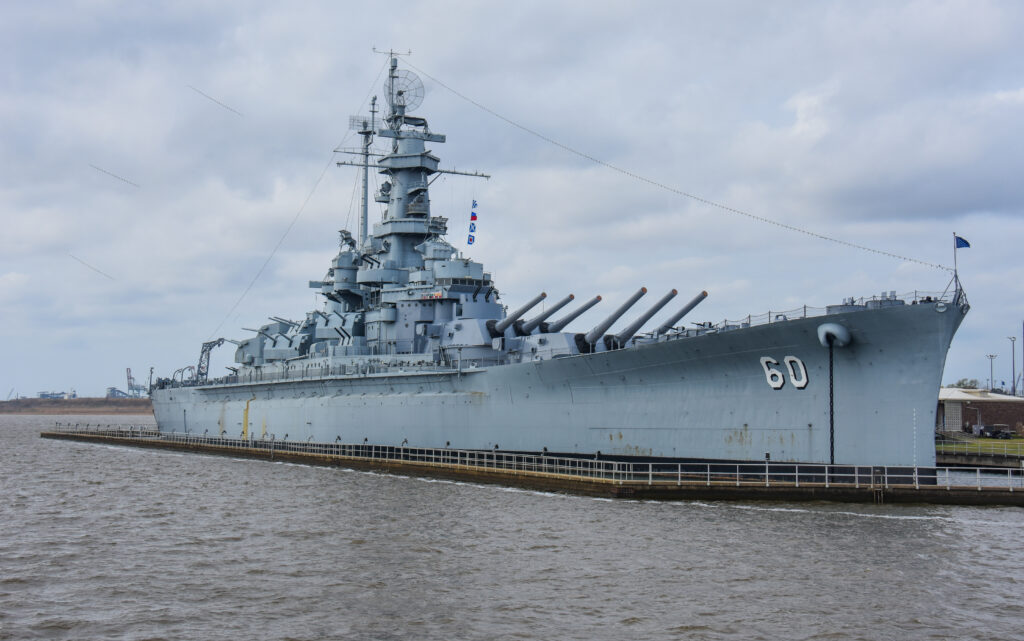
Chances are, you know a lot about the USS Alabama. We studied its history: A World War II Navy fortress and “City on the Sea,” with adventures in the North Atlantic in 1943, followed by duty in the South Pacific.
We learned how the epic ship was saved from the scrapyard and ended up in Mobile, Alabama, as a national landmark seen by millions.
Surely we must know it all, right? Not so much.
From documents, journals, and the crewmembers’ stories told to the ship’s curator, Shea W. McLean, here are 10 things you probably did not know about the amazing “Mighty A.”
1. The ship had an orchestra.
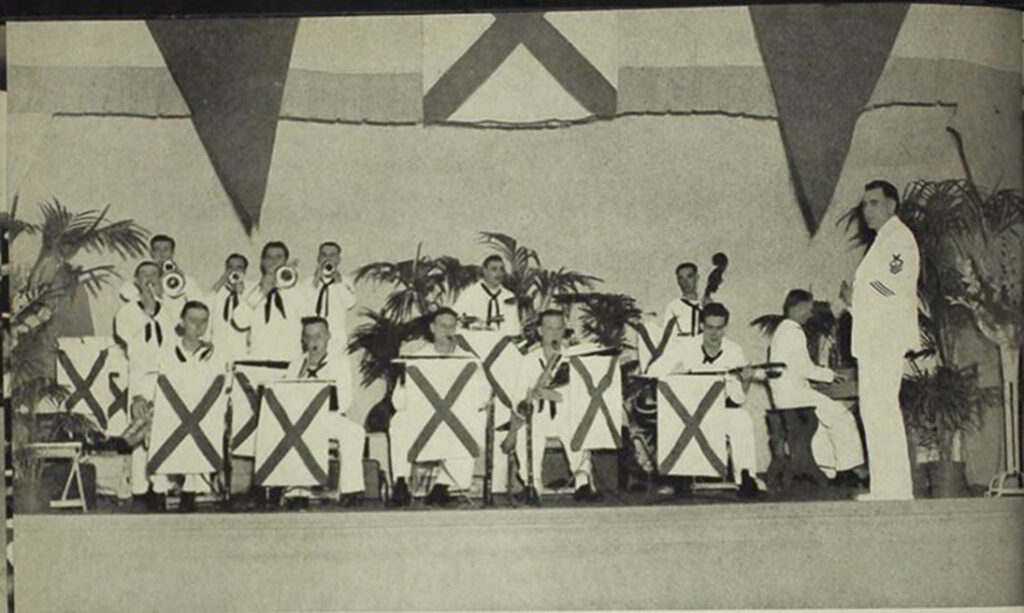
“From what veterans told me, the orchestra was pretty darn good,” recalls Shea. The musical shipmen performed with a full array of instruments including violins, trumpets, clarinets, saxophones and a piano. “Now when the ship was in combat,” he adds, “orchestra members threw down their horns, picked up their weapons, and joined the fight just like everybody else.”
The orchestra’s 1940s piano is still onboard and still plays.
2. Passing through the Panama Canal was like threading a needle.
The USS Alabama traveled through the Panama Canal twice – but just barely. The canal locks are 110 feet wide. The ship is 108 feet wide. There was 12 inches clearance on each side of the vessel.
3. Captain Wilson rocked the boat.
Crewmen tell the tale of an incident off the coast of Norfolk, Va. While testing the USS Alabama’s performance and abilities, the great ship got stuck on a sandbar. “The best way to ruin your naval career was to get stuck on a sandbar and require help getting out of it,” says Shea.
Captain George B. Wilson had a plan to dislodge the 680-foot-long vessel. He ordered all hands on deck. The men assembled on the side of the ship. The captain commanded, “Everybody run to the other side!” They did. “Now run back!” he shouted.
They did.
The back and forth, side-to-side running from hundreds, perhaps a thousand, crewmen caused the ship to slightly rock. The engines fired and Wilson’s strategy worked. The rocking ship was free.
Wilson not only saved his career, but he was later promoted to admiral.
4. The ship had a baseball team.
“Our records and former crewmen’s testimonies show the ship’s baseball team was very good and a force to reckon with,” notes Shea. “The team’s excellent record was probably due in a large part to our pitcher, USS Alabama crewman Bob Feller. He was also an All-Star pitcher for the Cleveland Indians and to this day is considered one of the greatest professional baseball pitchers of all time.”
5. The ship received a Medal of Valor from Russia.
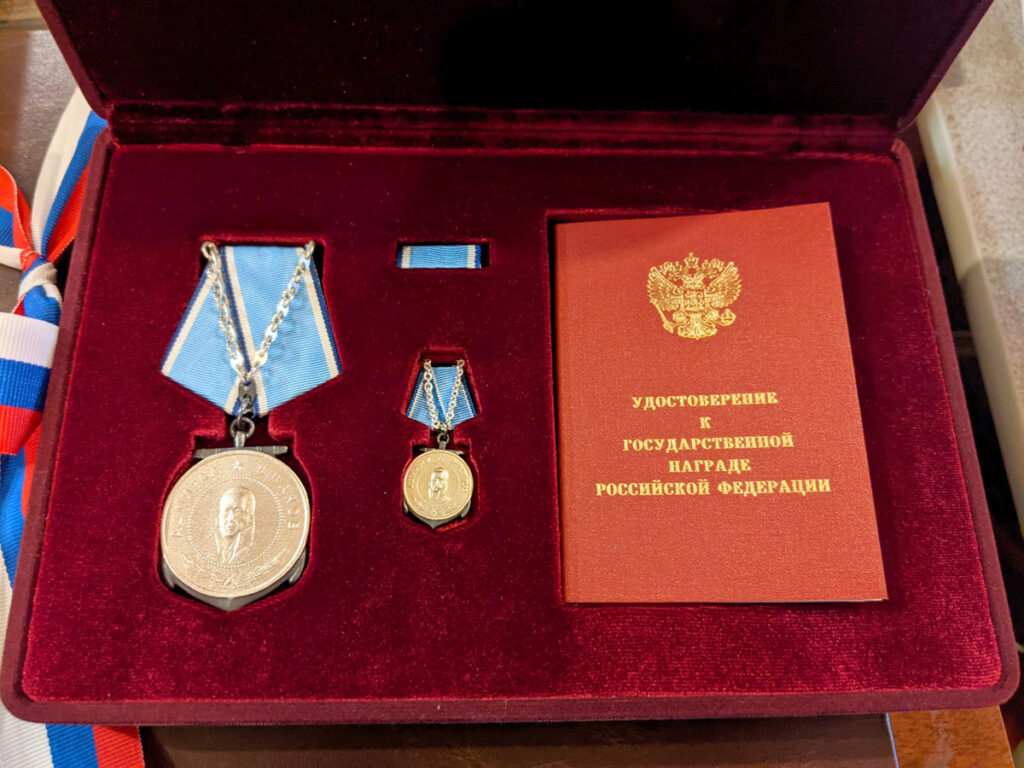
In the early 2020s, five USS Alabama crewmen were awarded Russia’s Ushakov Medal, so named for Russian Admiral Fyodor Ushakov, Patron Saint of the Russian Navy. The award recognizes the USS Alabama’s sailors who protected Artic supply convoys to Murmansk, Russia, during the “Great Patriotic War” (WWII).
Only living USS Alabama crew members were eligible for the award which was signed off by Russian President Vladimir Putin. The medals were personally delivered to the men’s homes by the Russian Embassy.
One recipient of the Ushakov was the late crewman, Leo Goulet. In 2020 his daughter donated her father’s medal to the USS Alabama Battleship Memorial Park where it is on display aboard ship. (See more in the April 2021 Alabama Living story, “From Russia With Love,” alabamaliving.coop/articles/from-russia-with-love/)
6. Contrary to popular belief, the USS Alabama is not set in concrete.
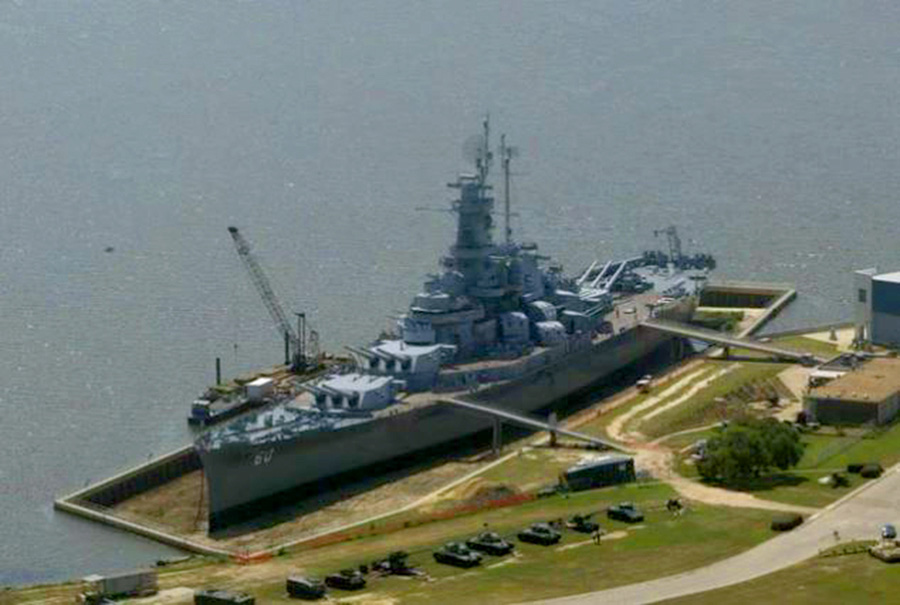
“It was never set in concrete,” says Shea. “It is set in mud.” The battleship is surrounded by a cofferdam. Workers can lower the water level around the ship for maintenance and inspections. The mud the ship sits in is oxygen-free, and therefore there is no oxidation (rust). It perfectly preserves the metal that is below the mud’s surface.
7. The USS Alabama has been in movies.
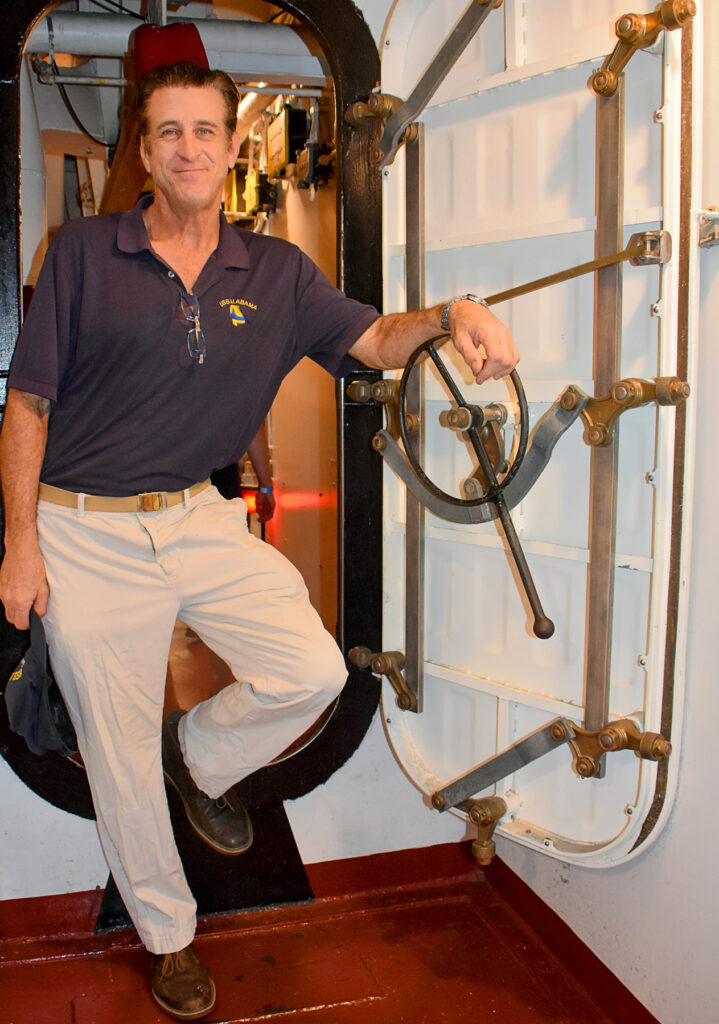
The ship had starring roles in “USS Indianapolis: Men of Courage (2016),” “Under Siege (1992),” and more. In “Under Siege,” the movie depicts a scene where actor Steven Seagal jerks a door open and runs inside a large room to save captured sailors. In reality he opened the door and ran into a small closet. Film crews later added the large room and captured sailors.
8. The sailors enjoyed movie night.
In good weather and when not in combat, or ship duties, crewmen set up a big screen at the fantail area of the ship for outdoor movies on deck.
Also, when the ship was in range, sailors listened to radio broadcasts of both friend and foe.
“Japanese propogandist Tokyo Rose’s broadcast
was piped in the ship,” Shea recounts. “Her attempts
to persuade men to abandon ship and go home were so outlandish and farfetched, the crew
listened for laughs.”
9. The Battleship Park is not a park in the traditional sense.
Spreading 155 acres, the USS Alabama Battleship Memorial Park is not a federal or state park. It does not receive federal or state funding for daily operations. Yet it is one of the top tourist destinations in the state of Alabama.
Since opening in 1965, the park has hosted over 20 million visitors. Approximately 300,000 to 350,000 visit annually.
Battleship Park is also unique in that it hosts not one, but two National Historic Landmarks: The ship and the submarine USS DRUM.
10. Sailors sacrificed a lot to be onboard.
“They gave up everything to serve on this ship,” says Shea, about the men who answered the call of service. “Many put their careers on hold.” Some came from a life of fame (Cleveland Indians’ Bob Feller). Others gave up wealth. They all signed up to serve and protect their country.
The ship was decommissioned in 1947. During its tenure, at any given time, 2,500 crewmen were on the ‘Mighty A,’ making a total of approximately 7,000. At press time only two are known to be still alive. ν